The Power of Your First $10,000: A Wealth-Building Catalyst
Reaching your first $10,000 in savings is more than just a number; it’s a critical turning point in your financial journey. This initial milestone acts as a powerful catalyst, setting the stage for significant wealth accumulation over time, especially when combined with consistent saving and a reasonable rate of return.
The Compound Interest Advantage
Imagine starting with $10,000. Now, let’s add a consistent saving habit of $200 per month. If you can achieve an average annual return of 8% on your investments, the magic of compound interest begins to work its wonders.
Compound interest is like a snowball rolling downhill. It earns returns not only on the initial amount you invested but also on the returns that amount has already generated. Over time, this effect can dramatically boost your savings.
A 30-Year Projection: From $10K to Over $400K
Consider a 30-year-old individual who has managed to save their first $10,000. They plan to work for another 30 years, aiming to see what this initial sum can grow into by age 60. By saving an additional $200 each month and earning an average of 8% annually, their initial $10,000 can transform.
In the early years, say the first five years, the majority of the account’s value comes from direct contributions. For instance, after five years, with $10,000 initially and adding $200 monthly ($12,000 per year), your contributions would total $70,000 ($10,000 + $6,000 x 5). The account might be worth around $79,000 ($10,000 + $6,000*5 + growth). However, the transcript highlights that after five years, contributions are $22,000, and the account is worth $29,000, showing early growth.
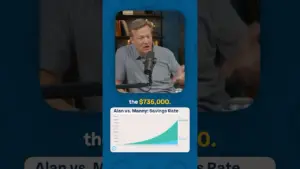
But as time progresses, the growth generated by compound interest starts to outpace your regular contributions. The ‘exponential graph curve’ becomes evident. The money your money earns begins to earn its own money, accelerating your wealth growth significantly.
After 30 years of consistent saving and investing, this individual’s initial $10,000, combined with $200 monthly contributions, could grow to over $400,000. This remarkable growth is a testament to the power of starting early and staying consistent.
Market Impact: The Early Bird Catches the Worm
This scenario illustrates a core principle in finance: time in the market is often more crucial than timing the market. The ability of your money to grow over extended periods, thanks to compounding, is amplified by starting with a solid initial sum and adding to it regularly.
Different asset classes can offer varying rates of return. Historically, diversified stock market investments have provided average annual returns around 8-10% over long periods. However, past performance is not a guarantee of future results, and all investments carry risk.
What Investors Should Know
- The Significance of the First $10,000: Reaching this initial savings goal is a major psychological and financial boost. It proves you can save and sets a foundation for future growth.
- Compound Interest is Key: Understand that your returns start earning their own returns. The longer your money is invested, the more powerful this effect becomes.
- Consistency Matters: Saving $200 a month might seem small, but when combined with compounding over decades, it leads to substantial wealth. Regular contributions help smooth out market ups and downs.
- Long-Term Perspective: Wealth building is a marathon, not a sprint. The example shows that consistent effort over 30 years can yield significant results.
- Investment Returns Vary: While an 8% average return is used for illustration, actual returns can fluctuate based on market conditions and investment choices. It’s important to research and understand the risks associated with any investment.
For new investors, the focus should be on establishing good saving habits and understanding the long-term benefits of investing. The journey from zero to $10,000 is the hardest part, but it unlocks the door to potentially much larger financial gains through the power of time and compounding.
Source: Why Your First $10K Matters More Than You Think (YouTube)