Honor’s Latest Device Blurs the Line Between Android and iPhone Aesthetics
In a move that blurs the lines between operating systems and design philosophies, Honor has released a new device, the Honor Power 2, which bears a striking resemblance to Apple’s iPhone 17 Pro Max. This strategy appears aimed at Android users who appreciate certain aspects of the iPhone’s design but prefer the flexibility and features of the Android ecosystem.
Design and Aesthetics: A Familiar Look
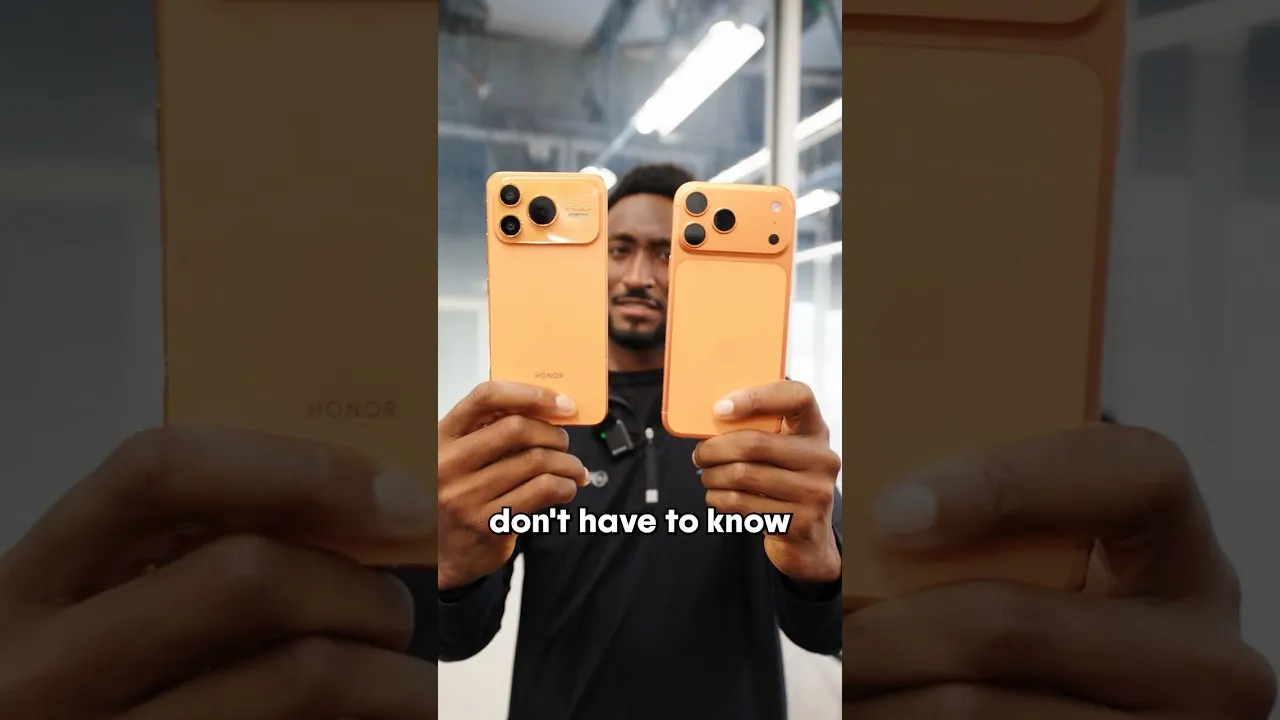
The Honor Power 2 has been engineered to mimic the iPhone 17 Pro Max in several key areas. This includes replicating the color palette, with an identical orange finish available, and adopting a similar design language. The camera bump on the rear is notably the same shape, even down to the arrangement of lenses.
However, this is where the visual mimicry becomes somewhat deceptive: the Honor Power 2 features a dual-camera setup, while the iPhone 17 Pro Max typically boasts a triple-camera system. The primary camera on the Honor device is 50 megapixels, paired with a 5-megapixel ultrawide lens. The inclusion of a third, non-functional camera housing on the Honor Power 2 appears to be purely for aesthetic replication.
Software and User Experience
Beyond the physical design, Honor has also incorporated software features to enhance the illusion. The device includes a ‘transparency mode’ within its user interface, designed to present a ‘liquid glass’ appearance, a visual effect often associated with premium smartphone designs. This software-level imitation further supports the device’s goal of appealing to users who might otherwise be drawn to the iPhone’s aesthetic.
Hardware Advantages: Where Android Shines
Despite the visual similarities, the Honor Power 2 differentiates itself significantly in terms of hardware capabilities, particularly concerning battery life and charging. While the iPhone 17 Pro Max is stated to have a 5,000 mAh battery with 40-watt charging, the Honor Power 2 boasts a substantially larger 10,000 mAh battery.
This larger capacity is supported by 80-watt wired charging, significantly faster than its Apple counterpart. The substantial battery enables 27-watt reverse wireless charging, allowing the Honor Power 2 to function as a power bank for other devices and accessories.
Why This Matters
The Honor Power 2’s strategy highlights a growing trend in the smartphone market: the convergence of design and the increasing importance of user preference over strict ecosystem loyalty. For consumers, this offers more choice. Users who admire the iPhone’s build quality and design language but are tied to Android for its openness, customization, or specific features now have an option that caters to both desires.
This approach challenges the traditional notion that design is an exclusive identifier of a particular brand or operating system. It also highlights the competitive landscape where manufacturers are looking for innovative ways to capture market share by appealing to a broader range of consumer tastes. The emphasis on battery life and charging speeds also points to a continued focus on practical user needs, where the Honor Power 2 clearly aims to outperform its iPhone-inspired counterpart.
Availability and Pricing
Information regarding the specific pricing and exact availability of the Honor Power 2 was not detailed in the provided transcript. Further details would be required to assess its market competitiveness against both other Android devices and Apple’s iPhone lineup.
Source: This is NOT an iPhone (YouTube)