OnePlus’s Arc: From ‘Flagship Killer’ to Mainstream Contender
The smartphone market, long dominated by giants like Apple and Samsung, has seen many ambitious brands attempt to carve out a niche. OnePlus, once a darling of the tech enthusiast community, has navigated this challenging landscape for over a decade. Its journey from a niche ‘flagship killer’ to a more mainstream player offers a compelling case study in brand evolution, survival, and the inherent tension between pleasing early adopters and appealing to a broader audience.
The Genesis: The OnePlus One and the Enthusiast Appeal
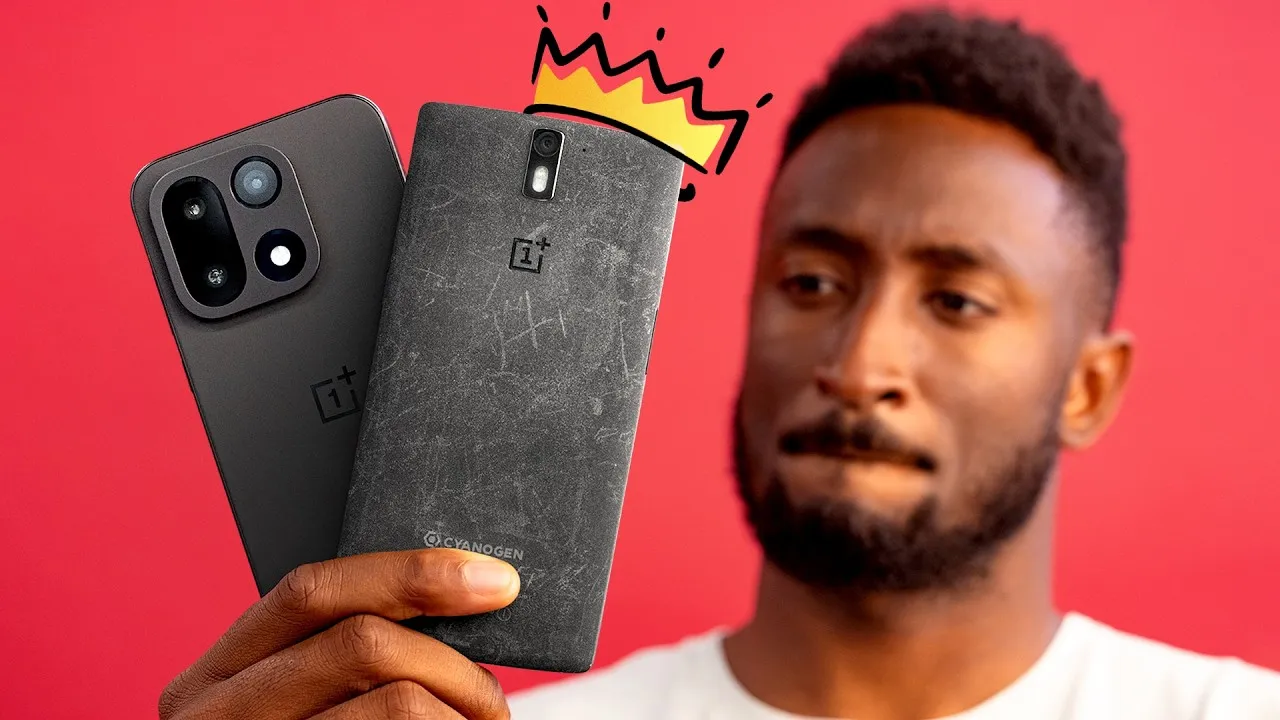
Launched in 2014, the OnePlus One was a revelation. It boasted flagship-level specifications, including a Snapdragon 800 series processor, at an unprecedented $300 price point. Coupled with a clean, bloatware-free software experience (initially CyanogenMod) and a distinctive design featuring a sandstone finish, it quickly earned the moniker ‘flagship killer.’ However, acquiring one wasn’t straightforward; an invite-only system created exclusivity and further fueled the hype among tech-savvy consumers.
This strategy successfully captured the attention of the enthusiast market – a group known for its high standards, deep technical knowledge, and, crucially, its fickleness. While this initial success put OnePlus on the map, it also presented a fundamental challenge: enthusiasts, while passionate, represent a small and demanding segment of the overall smartphone-buying public. The long-term viability of this model depended on bridging the gap to the mass market.
Navigating the Transition: Early Stumbles and Refinements
The second generation, the OnePlus 2, saw the company attempt to balance its enthusiast roots with broader appeal. While retaining many of the successful elements of its predecessor, it also saw a slight price increase to $330.
More OnePlus introduced the OnePlus X, a smaller, mid-range device that deviated from the ‘flagship killer’ ethos. While competitively priced, it failed to resonate with the core enthusiast base, marking an early wobble in their strategic direction.
Subsequent models, like the OnePlus 3 and 3T, brought the company back to its high-performance, enthusiast-focused roots. By the OnePlus 5 and 6, and particularly the OnePlus 7 series, the brand hit its stride. These devices refined the design with thinner bezels, integrated fingerprint sensors, improved battery life, and faster charging.
OxygenOS, their custom Android skin, was lauded for its smoothness and responsiveness, earning widespread critical acclaim. Reviewers consistently praised OnePlus phones as offering exceptional value and performance, moving beyond the ‘if you know, you know’ status to become a recognized force in the industry.
The Mass Market Dilemma: Betrayal or Evolution?
The core challenge for any enthusiast brand transitioning to the mainstream lies in the inherent conflict between what excites early adopters and what satisfies the average consumer. Enthusiasts often appreciate cost-cutting measures and specialized features that enable lower prices or unique performance, such as skipping official IP ratings for water resistance or forgoing traditional advertising and carrier deals to sell directly to consumers. These strategies were hallmarks of early OnePlus phones.
However, the mass market typically prioritizes convenience, brand recognition, and established features. Mainstream buyers often prefer devices available through carriers, with official water resistance ratings, and comprehensive camera systems.
To capture this larger audience, OnePlus began to make concessions that, for some enthusiasts, felt like a betrayal of the brand’s original identity. This included adopting more conventional, all-glass designs, adding official IP ratings, and significantly increasing prices, with flagship models eventually reaching around $900.
OnePlus’s Strategy: A Multi-Pronged Approach
OnePlus employed several strategies to navigate this delicate transition. They introduced the OnePlus Nord line as a more budget-friendly option, aiming to capture a wider audience without alienating their core customers entirely. They also pursued carrier deals in the US, a crucial step for mass-market penetration, though this shifted their business model towards higher production costs.
Partnerships, such as the one with Hasselblad for camera enhancements starting with the OnePlus 9 series, were an attempt to strengthen a key area of importance for mainstream buyers. However, this also led to a gradual convergence with Oppo, OnePlus’s sister company under the BBK Electronics umbrella. By the OnePlus 10 series, the phones began to bear a closer resemblance to Oppo’s offerings, and OxygenOS started to lose its distinctiveness, integrating more closely with Oppo’s ColorOS.
The Outcome: Survival, But at What Cost?
As of the OnePlus 15, the brand remains operational, proof of its ability to adapt. The latest models are described as solid, reliable devices with good battery life and fast charging, suitable for everyday users.
However, the original enthusiast base has largely moved on, finding new homes in brands like Nothing, Pocophone, or Sony Xperia. The current OnePlus offerings are more accurately recommended for the general consumer rather than the discerning tech aficionado.
OnePlus’s journey represents a qualified success. They have survived the perilous leap from a niche enthusiast brand to a more broadly appealing company, a feat that has doomed many predecessors like Nextbit and Essential.
Yet, this survival has come at the cost of their unique identity. The ‘downfall’ of OnePlus, in the sense of losing its original enthusiast soul, will likely be studied by other emerging brands as a cautionary tale and a blueprint for navigating the difficult transition to mainstream appeal, balancing the need to evolve with the risk of alienating the very community that launched them.
Why This Matters
The OnePlus story is a microcosm of the broader tech industry’s dynamics. It highlights the inherent challenges of scaling a product or service from a passionate niche to mass adoption.
For consumers, it means that beloved brands may change, sometimes drastically, in their pursuit of wider market share. For aspiring tech companies, particularly those starting with a strong enthusiast following, OnePlus provides a valuable, albeit complex, roadmap for survival, demonstrating that while pleasing everyone is impossible, strategic evolution can lead to longevity.
Source: The Downfall of OnePlus will be Studied (YouTube)