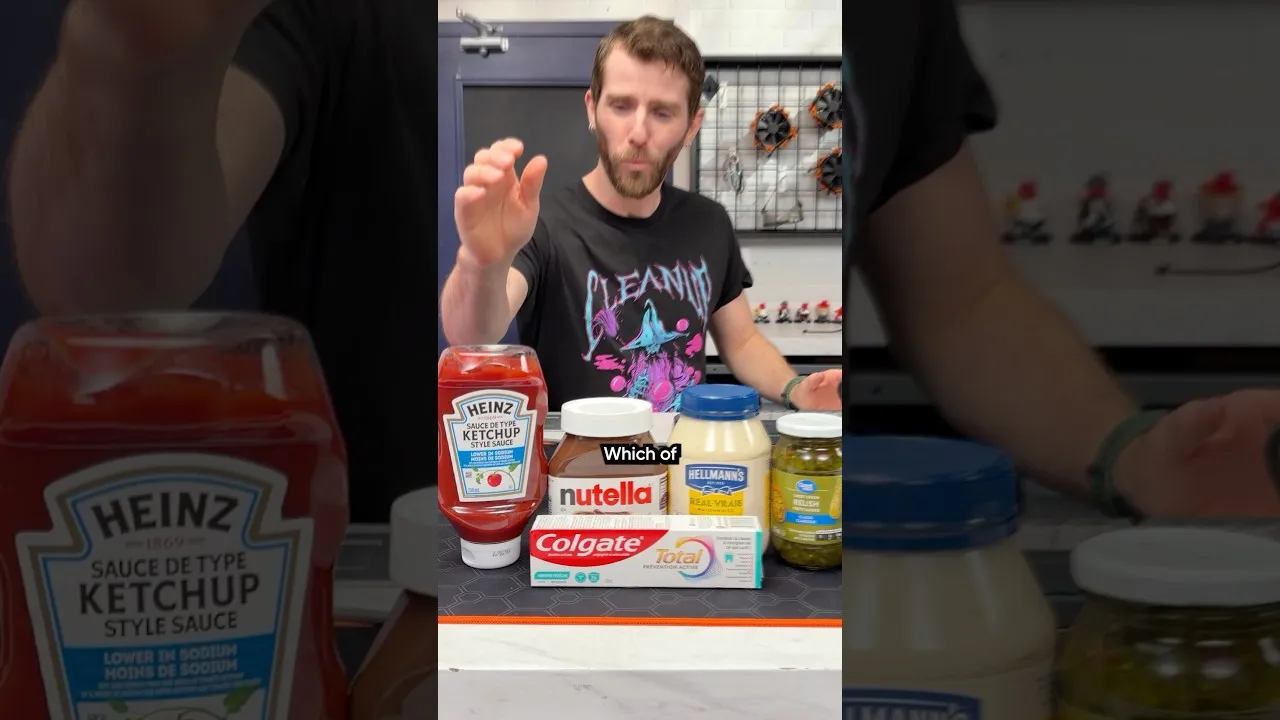
The Unconventional CPU Cooling Challenge
In the ever-evolving world of PC hardware, thermal paste is a crucial, albeit often overlooked, component. Its job is simple yet vital: to fill microscopic gaps between your CPU and its cooler, ensuring efficient heat transfer and preventing your processor from overheating.
But what happens when you’re in a pinch and that essential paste is nowhere to be found? A recent, rather unusual, experiment digs into the surprising, and often disastrous, alternatives.
The Contenders: A Culinary Cooling Catastrophe
Forget your high-performance Arctic MX-4 or Noctua NT-H1. This test pits common household condiments against the demanding task of CPU cooling. The benchmark?
A blistering 92 seconds before thermal throttling occurs with a proper thermal paste. Let’s dive into the culinary chaos:
Ketchup: The Sweet Insulator
First up, ketchup. With a staggering 70% water content, it seems like a terrible candidate from the start. The high sugar content, when heated, is prone to caramelization, effectively turning it into an insulator rather than a conductor of heat.
The results were predictable, and frankly, disappointing for anyone hoping for a sweet solution. The CPU hit its thermal throttle limit in a mere 22 seconds. While not an instant shutdown, it’s a far cry from the benchmark, proving that this common condiment is a poor substitute.
Mayonnaise: The Fatty Failure
Next, mayonnaise. Boasting a higher fat content than ketchup, there was a glimmer of hope that its composition might offer slightly better thermal conductivity. However, the presence of eggs adds another layer of complexity and concern.
Beyond its questionable performance, the potential for a rancid smell emanating from a hot CPU is a significant deterrent. The experiment confirmed our worst fears.
The system shut down in a mere 3 seconds, making it even worse than ketchup. The fats and egg proteins likely became a significant barrier to heat dissipation, leading to rapid overheating.
Relish: The Pickled Peril
Hoping to find something even worse, relish entered the arena. This was a gamble that spectacularly backfired. The expectation was grim, and the reality was even grimmer.
The CPU managed only 1 second before throttling, setting a new, unenviable record for the fastest thermal failure in this unconventional lineup. The combination of ingredients in relish proved to be the absolute worst choice, highlighting how crucial the right chemical composition is for thermal management.
Mint Toothpaste: A Fresh, But Flawed, Approach
Finally, in a move that might seem slightly more plausible due to its paste-like consistency, mint toothpaste was tested. While it offers a fresh scent as a bonus, its thermal performance was still significantly lacking. The CPU managed to hold on for 20 seconds before thermal throttling.
This is better than ketchup and mayonnaise, but still drastically inferior to actual thermal paste. The chemical compounds in toothpaste are not designed for heat dissipation, and while it might offer a temporary, albeit inefficient, solution, it’s far from ideal.
Who Should Care and Why?
This experiment, while entertaining, is a clear reminder of the importance of using the correct components in your PC. For the average user, the takeaway is simple: always use proper thermal paste. The few dollars saved by attempting a DIY solution are not worth the risk of damaging your expensive CPU or motherboard.
Enthusiasts and builders who might find themselves in a desperate, emergency situation should understand that these household items are, at best, a very temporary, high-risk stopgap. The potential for permanent hardware damage far outweighs any perceived benefit.
The Verdict: Stick to the Professionals
While the experiment was a fun and enlightening look at the science of heat transfer (and the culinary arts), the results are clear. None of these common condiments come close to the performance of dedicated thermal paste. Ketchup, mayonnaise, relish, and even toothpaste, all failed spectacularly, leading to rapid thermal throttling and system shutdowns.
The benchmark of 92 seconds set by proper thermal paste remains unchallenged by this edible lineup. The takeaway is unequivocal: when it comes to cooling your CPU, there is no substitute for purpose-built thermal paste. Relying on food items is a recipe for disaster, potentially costing you far more in hardware repairs than any tube of thermal paste ever would.
So, the next time you’re building or upgrading your PC, ensure you have a quality tube of thermal paste on hand. Your CPU will thank you for it by performing optimally and avoiding an untimely, buttery, or saucy demise.
Source: Best Thermal Paste Alternative (YouTube)