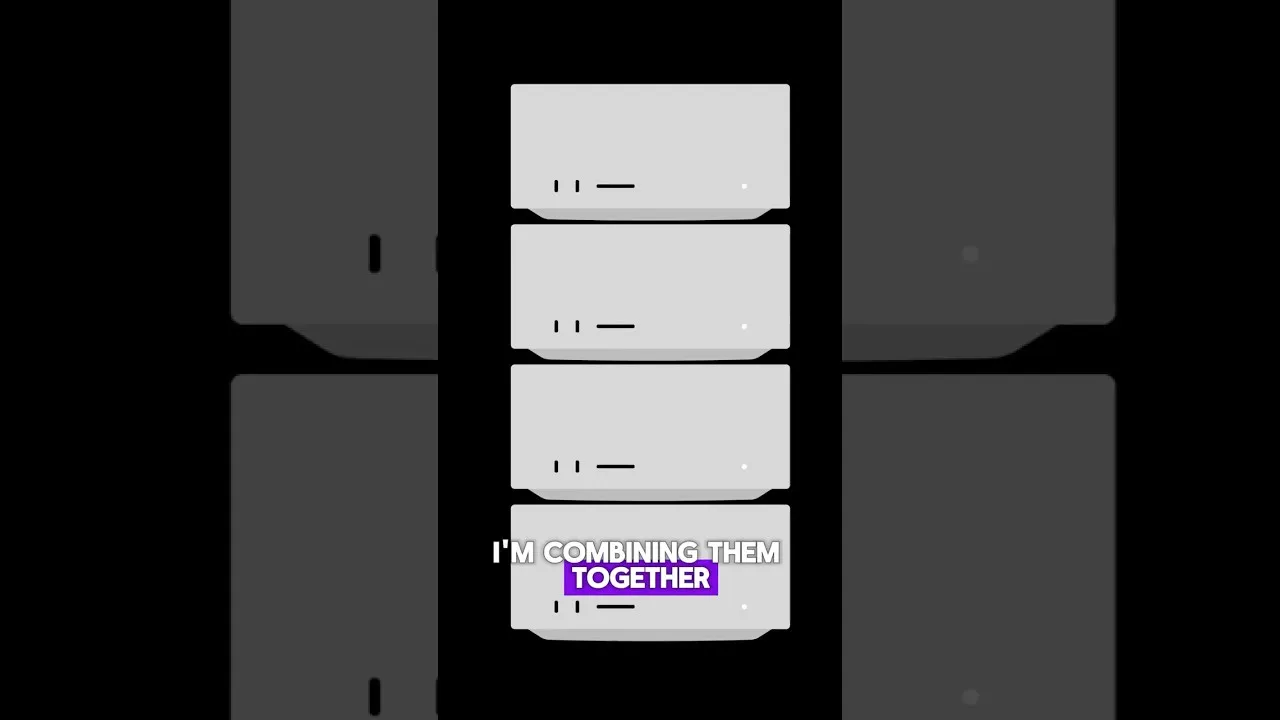
Unlocking AI’s Potential: Four Mac Studios Unite for Supercomputing Power
In a surprising display of distributed computing, a user has successfully combined four Apple Mac Studio machines, equipping each with 512 GB of RAM, to create a formidable AI supercomputer. This setup boasts a staggering combined total of 2 terabytes (TB) of RAM, enabling it to handle even the most demanding AI models, including those with a trillion parameters.
The Rise of Accessible AI Infrastructure
The proliferation of powerful AI models, such as large language models (LLMs) and sophisticated image generation tools, has traditionally required access to specialized, high-performance computing clusters or cloud-based solutions. These resources are often expensive and complex to manage, creating a barrier for individual researchers, developers, and enthusiasts. This innovative approach using consumer-grade hardware challenges that paradigm.
Technical Breakdown: RAM, Parameters, and Performance
The core of this achievement lies in the sheer amount of Random Access Memory (RAM) available. RAM is crucial for AI models because it stores the model’s parameters – essentially the learned knowledge and weights that allow the AI to perform tasks like understanding language or generating images. Larger models, with more parameters, require significantly more RAM to load and operate efficiently.
A trillion-parameter model is at the cutting edge of AI development. For context, many widely used LLMs have hundreds of billions of parameters.
Loading such a massive model into memory typically demands specialized hardware with vast amounts of RAM, often found only in dedicated data centers. By aggregating 2 TB of RAM across four Mac Studios, this setup provides the necessary memory footprint to run these behemoth models locally.
The Mac Studio, known for its powerful Apple Silicon chips (like the M1 Ultra or M2 Ultra), offers a compelling platform for such tasks. These chips integrate the CPU, GPU, and Neural Engine, providing a unified memory architecture that can be highly efficient for parallel processing, a key requirement for AI computations. The ability to equip these machines with substantial RAM further enhances their suitability for intensive workloads.
Demonstrating the Power
The user demonstrated the capability of this makeshift supercomputer by running an AI model, described as capable of handling a trillion parameters. The results were reportedly fast, indicating that the distributed setup was effectively processing the complex AI computations. While specific benchmarks were not detailed in the initial short-form content, the visible speed of operation suggests a significant leap from what a single machine could achieve.
Why This Matters
This development has several significant implications:
- Democratization of AI: By showing that powerful AI models can be run on aggregated consumer hardware, it lowers the barrier to entry for individuals and smaller organizations to experiment with and deploy advanced AI.
- Cost-Effectiveness: While the initial investment in four high-end Mac Studios is substantial, it could potentially be more cost-effective than renting equivalent computing power from cloud providers for continuous, local operation.
- Privacy and Control: Running models locally offers greater control over data privacy and security, as sensitive information does not need to be sent to external servers.
- Innovation in Distributed Computing: This showcases creative ways to leverage existing hardware through software and networking to achieve capabilities previously only accessible through specialized infrastructure.
Availability and Future Potential
The Mac Studio is available for purchase directly from Apple and authorized resellers. Configurations vary, with the maximum RAM capacity being a critical factor for AI workloads.
While the specific software or method used to combine the four Mac Studios into a single computational unit was not fully detailed in the provided excerpt, it likely involves sophisticated distributed computing frameworks that allow multiple machines to act as one. This approach opens doors for further experimentation in creating powerful, accessible AI computation platforms using readily available technology.
Source: 4 Mac Studios = 1 AI Supercomputer (YouTube)