Ethical Hacking Tools: Master Cyber Defense
In the rapidly evolving landscape of cybersecurity, understanding the tools and techniques used by malicious actors is crucial for effective defense. A recent deep dive into open-source ethical hacking tools, primarily featured on Kali Linux, reveals a powerful arsenal available to cybersecurity professionals and aspiring ethical hackers. These tools, when used responsibly and with explicit permission, allow for comprehensive penetration testing, vulnerability assessment, and network analysis, effectively turning defensive strategies into proactive offense.
Demystifying the Hacker Archetypes
The world of computing can be broadly categorized into three groups: users, programmers, and hackers. Users typically interact with software for everyday tasks, often unaware of the security vulnerabilities that can be exploited by malicious actors. Programmers build the software that powers our digital lives but can also be targets if security is not paramount. Ethical hackers, however, operate in a crucial middle ground, leveraging knowledge of hacking techniques to identify and fix weaknesses before they can be exploited by cybercriminals.
The Power of Open-Source Tools
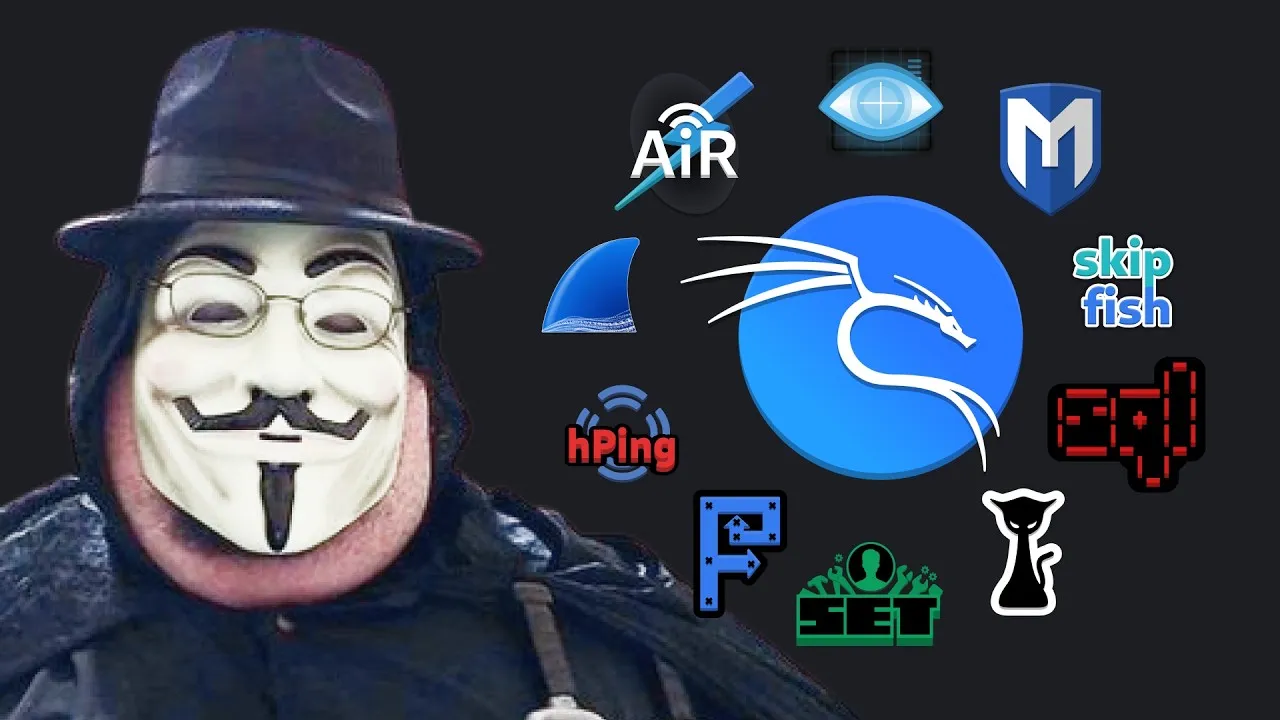
The focus of this exploration is on ten free and open-source tools, many of which are pre-installed on Kali Linux, a Debian-based operating system optimized for digital forensics and penetration testing. These tools empower individuals to understand system vulnerabilities, test network defenses, and secure digital assets. It is imperative to emphasize that these tools are intended for legal and ethical use only. Unauthorized use can lead to severe legal consequences, including imprisonment.
Key Tools for Penetration Testing
- Nmap (Network Mapper): Often described as a digital neighborhood watch, Nmap scans networks to identify active hosts, open ports, and running services. It analyzes responses to packets sent across an IP range, revealing potential entry points for exploitation. Advanced scans can also detect operating systems and trace network paths, aiding in the discovery of misconfigurations.
- Wireshark: This network protocol analyzer allows for deep inspection of network traffic at a granular level. It captures data in real-time, enabling analysts to examine packet payloads and identify suspicious activity, such as unauthorized data transmission or communication with malicious servers.
- Metasploit Framework: Considered a comprehensive penetration testing platform, Metasploit provides a vast collection of exploits and payloads. It allows users to simulate attacks, test vulnerabilities like the infamous Eternal Blue exploit against Windows machines, and gain unauthorized access to systems to understand the potential impact of such breaches. However, relying solely on Metasploit can sometimes bypass valuable learning opportunities in cybersecurity.
- Aircrack-ng: This suite of tools is designed for assessing Wi-Fi network security. It can detect wireless networks, capture data packets, and attempt to crack Wi-Fi Protected Access (WPA/WPA2) keys. The ability to intercept and analyze wireless traffic underscores the importance of using strong encryption (like HTTPS) for sensitive data transmission.
- Hashcat: For password cracking, Hashcat is a powerful utility. It works by taking password hashes (one-way encrypted representations of passwords) and attempting to reverse them using various strategies, including dictionary attacks (using lists of common passwords) and brute-force methods. Understanding that passwords are rarely stored in plain text, but rather hashed and salted, is key to appreciating the complexity of password cracking.
- Skipfish: This automated web application security scanner crawls websites to identify vulnerabilities such as cross-site scripting (XSS) and SQL injection. It generates detailed HTML reports, aiding developers and security teams in pinpointing and rectifying web application flaws. It can also crawl authenticated sections of a website if provided with valid credentials.
- Foremost: A digital forensics tool, Foremost specializes in file carving and data recovery. It can scan disk images, even those that have been quickly formatted, to reconstruct deleted files by identifying file headers and footers. This is invaluable in investigations where data has been intentionally or accidentally erased.
- SQLMap: This automated SQL injection tool detects and exploits SQL injection flaws in web applications. It can identify databases, map their schemas, and extract data. SQL injection attacks can lead to unauthorized access to sensitive information stored in databases.
- hping3: Used for network testing and denial-of-service (DoS) attacks, hping3 can send a high volume of packets to a target IP address, overwhelming its resources and potentially causing it to crash or become unavailable. When coordinated across multiple compromised machines (a botnet), this can escalate into a distributed denial-of-service (DDoS) attack.
- Social-Engineering Toolkit (SET): Developed by TrustedSec, SET facilitates the creation of sophisticated phishing attacks. It offers various vectors, including email, SMS, and website cloning, to trick individuals into revealing sensitive information like login credentials. The tool can automate the process of website replication, making it easier to capture user input.
Why This Matters
The availability of these powerful open-source tools democratizes cybersecurity knowledge. For organizations, it means that penetration testing and vulnerability assessments can be conducted more frequently and thoroughly, significantly enhancing their security posture. For individuals interested in cybersecurity, these tools provide hands-on experience with real-world attack vectors, fostering a deeper understanding of how to protect systems. The ethical application of these tools is paramount, shifting the focus from malicious exploitation to proactive defense and the creation of a more secure digital environment.
Sponsorship and Further Learning
Hostinger was highlighted as a sponsor, providing a platform for users to set up virtual private servers (VPS) ideal for running Kali Linux and practicing with these tools in a controlled environment. Their platform offers flexibility and power, supporting various Linux distributions and container management with tools like Docker. For those seeking to deepen their knowledge, tools like John the Ripper, Nikto, and Burp Suite are also recommended for further exploration in the fields of password cracking, web server scanning, and web application security testing.
Source: 10 open source tools that feel illegal… (YouTube)