Dashcam Showdown: 4K Clarity Beats Budget Blurry
Dashcams are no longer a niche gadget; they’re a near-essential for any driver, offering crucial evidence in accidents. However, the market has been flooded with options that range from disappointingly mediocre to outright terrible, even at higher price points. We dove deep into the latest and greatest to see if the adage ‘you get what you pay for’ truly holds water, and if finally, we can achieve satisfying clarity on the road.
The Budget Battlefield: Under $100
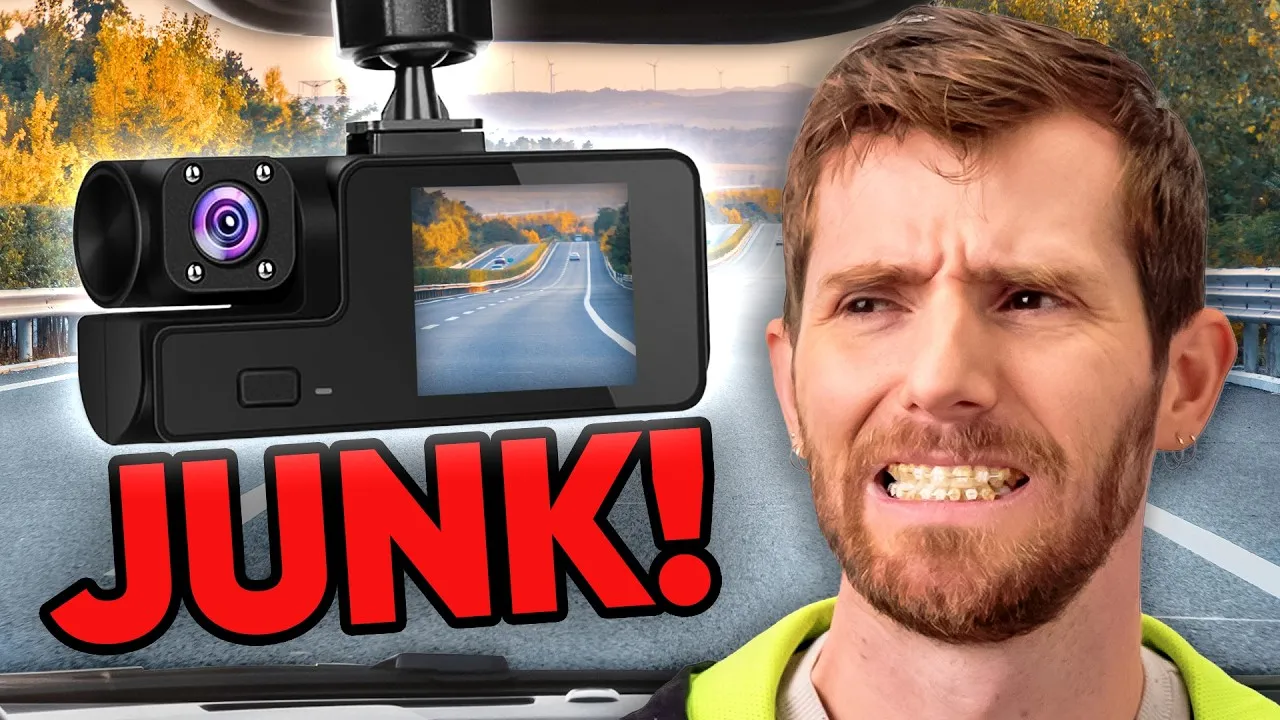
Our initial foray into the sub-$100 category featured three contenders: the Yanvim, Subcon, and a less clearly named competitor. These cameras, priced between $50 and $100 on promotion, are light on features and, frankly, a bit janky. The Yanvim’s packaging included instructions for a different brand, and while the Subcon offered HDR, its low-tier sensor likely meant unimpressive results.
The four-channel option boasted multiple cameras, including flexible ones, and Wi-Fi, but its bulk required a lower mounting position. We also delved into the jargon of HDR and WDR, noting that manufacturers often use these terms loosely.
True HDR, like Sony’s Clear HDR, uses dual gain sensors, while digital overlap HDR uses sequential exposures. WDR, similarly, aims to balance highlights and shadows, but many use less effective digital-only solutions.
Performance in the Trenches
In real-world testing, all three budget cameras struggled to read license plates in motion. The Yanvim offered slightly better overall image quality in daylight, with less overexposed skies. The Subcon produced a pleasing image with vibrant colors.
At twilight, the Yanvim’s higher 30fps capture gave it an edge in legibility for moving vehicles, while the Subcon was unremarkable. Nighttime performance saw the Yanvim again leading due to its frame rate, making street signs more legible. The Subcon was the clear loser here, with blurry footage.
Our verdict for this tier: the Yanvim for motion video, the Eyewee (though more expensive) for parking surveillance and 360° coverage, and the Subcon for its suction cup mount preference. However, none truly impressed.
The $19 Gamble: A False Economy
Hope flickered with the $19 Makequills dash cam, a gamble that promised significant savings. Sadly, it was a complete bust. The cheap plastic mount broke before installation, and the generic packaging, even stating ‘brand’ on it, was a red flag.
Image quality was abysmal in daylight, twilight, and nighttime, rendering text illegible and the overall picture a muddy mess. This test reinforced that there’s a minimum floor for dashcam quality, and $19 is firmly below it.
Stepping Up: The $100-$200 4K Contenders
Moving into the $100-$200 range, we encountered cameras boasting Sony Starvis 2 sensors, a significant upgrade. The Red Tiger F7NP, Rove R24K Dual, and JZON V630 were put to the test. The Red Tiger offered up to 4K 30fps but dropped to 25fps for twilight and night shots.
The Rove R24K, despite its name, featured a 1080p rear camera but included a free 128GB card. The JZON V630 was the only three-channel option and claimed a lifetime warranty.
4K Performance Review
Daylight performance saw the Rove leading with clearer license plates, while the JZON appeared overexposed. The Rove also excelled in twilight, with better detail in dark areas and clear focus on small text. At night, the Red Tiger improved, showing better sharpness, but all three struggled with license plate legibility.
For those prioritizing nighttime performance or a compact unit, the Red Tiger might appeal. The Rove offered well-rounded performance and versatile mounting options. The JZON was a fallback for those needing an extra channel without breaking the bank.
The Sweet Spot: VIOFO A119 Mini 2
The VIOFO A119 Mini 2, priced just $10 more than the previous trio, emerged as a strong contender, earning accolades for its value. Its compact size, 1.5-inch screen, and 2592×1944 resolution offer more than enough for most users, though the 30fps limit at this price point was a slight disappointment. It’s a single-channel camera and doesn’t include an SD card, requiring additional budget considerations.
A119 Mini 2: Clarity and Support
The image quality was a significant leap forward. Daylight shots were free of overexposure, with clear power lines and legible text on vehicles. The unique 4:3 aspect ratio was visually appealing.
Dusk footage maintained excellent clarity, and nighttime video was sharp, with focused signs and a legible, though challenging, license plate on a nearby car. VIOFO’s reputation for post-sale support adds considerable value. This camera is highly recommended for those seeking a quality single-camera solution.
The Premium Play: Thinkware U3000
For those willing to spend significantly more, the Thinkware U3000, at $380, promises advanced features. It utilizes a proprietary power cable and includes advanced driver-assistance systems (ADAS) like lane departure warnings, effectively adding a safety net to older vehicles. Its parking mode uses front and rear radar for motion monitoring.
However, its video quality was a mixed bag. While daylight offered good clarity on vehicle text and surprisingly good color saturation, the sky was overexposed, and power lines were lost.
Twilight shots were clear, but nighttime performance was disappointing, with overexposed signs and blurry license plates. For pure dashcam functionality, its video quality didn’t quite justify the premium price over other options.
The Ultimate All-Rounder: VIOFO A329T
The VIOFO A329T represents the pinnacle of our testing, offering dual front-facing cameras, including a 4K 60fps main camera and a 4x optical zoom telephoto lens. It also supports external SSD storage for reliability. At $600, the price is steep, but the image quality is, frankly, mind-blowing.
A329T: Unparalleled Detail
Daylight footage captured license plates with exceptional clarity, even on distant vehicles. The sky remained well-exposed, and all text on trucks was legible. The telephoto lens was a revelation, allowing clear capture of license plates far beyond the main camera’s reach.
Twilight and nighttime videos continued this trend of excellence, with crisp signs and incredibly clear license plate capture, even in low light. The telephoto lens at night was particularly remarkable, rendering gas station prices and multiple license plates with stunning detail. This is a case where you truly get what you pay for, offering a level of detail unmatched by any other camera tested.
The Verdict: Matching Needs to Price
The ideal dashcam depends entirely on your priorities. For simply proving fault in an accident, an affordable HD camera might suffice. For capturing crucial details like license plates in hit-and-run scenarios, a 4K camera with a high frame rate is essential.
If advanced features like ADAS or cloud storage are paramount, be prepared for a higher investment, potentially compromising on raw video quality. However, for those seeking the ultimate in detail and clarity, the VIOFO A329T, despite its hefty price tag, delivers an unparalleled experience. Ultimately, the choice lies in balancing your budget against the critical need for clear, reliable footage.
Source: Please Stop WASTING Money on CRAPPY Dashcams (YouTube)