AI Achieves Photorealism in Virtual Humans
For decades, digital characters in video games and virtual environments have often fallen short of true realism, resembling plastic dolls with unnatural skin and hair. A groundbreaking new research paper introduces a technique that promises to bridge this gap, creating astonishingly lifelike virtual avatars from real individuals.
The Breakthrough: Gaussian Splatting Meets Advanced Skin Rendering
The core of this advancement lies in two key innovations: Gaussian splatting and a novel approach to rendering skin translucency. Traditional computer graphics often rely on meshes made of flat triangles, which struggle to accurately represent fine details like wispy hair or the subtle translucency of skin.
Gaussian splatting, however, constructs scenes from millions of tiny, elliptical 3D bumps, or Gaussians. These Gaussians can overlap and have varying transparencies, allowing for a much more accurate capture of fuzzy details and complex light interactions.
While Gaussian splatting excels at rendering hair and fine details, achieving realistic skin has historically been a significant challenge. Most game engines treat skin as a simple surface where light reflects immediately. Real human skin, however, is translucent.
Light penetrates the surface, scatters within, and then exits, a phenomenon known as subsurface scattering. Accurately simulating this effect has been computationally intensive.
Previous methods, like spherical harmonics, treated each point on the skin as having multiple tiny mirrors (like a disco ball) to capture light from all angles. This approach led to a cubic complexity in computation, meaning that doubling the quality would require eight times the processing power. The new research introduces a more efficient method called Zonal Harmonics.
Instead of numerous mirrors, this technique uses three laser pointers at each point, each directed at a specific angle. This drastically simplifies the calculations, reducing the complexity from cubic to linear, making real-time or near real-time rendering of realistic skin feasible.
To further enhance realism, the system incorporates a convolutional neural network to handle shadows. This network analyzes the character’s pose to predict where shadows should fall, adding another layer of depth and believability to the virtual representation.
Astonishing Results
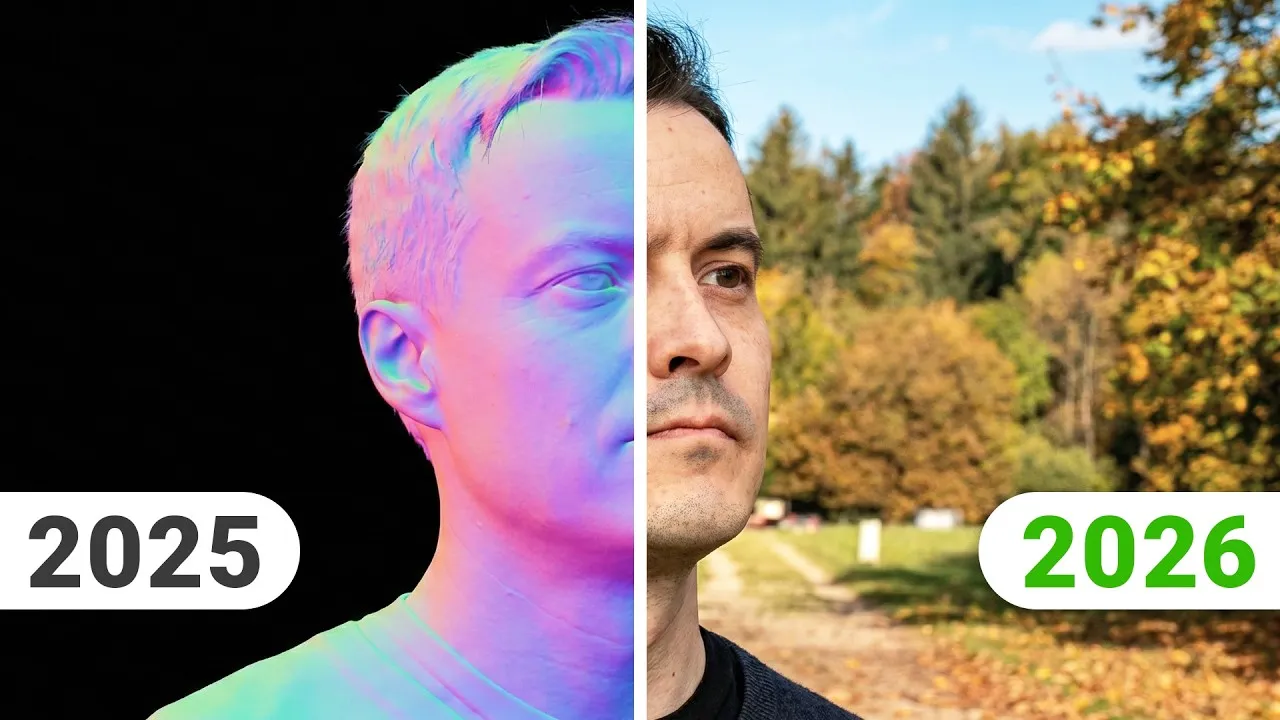
The results presented in the paper are striking. When comparing the generated virtual avatars to the original photographs of individuals, the resemblance is uncanny. The skin tones appear natural, and the hair possesses a level of realism rarely seen in digital media.
The avatars are not static; they can move, and their appearance dynamically adjusts to different lighting conditions, further enhancing their lifelike quality. The paper’s authors note that while not perfect, the output is a significant leap beyond current capabilities, to the point where the brain struggles to distinguish between the virtual avatar and a real person.
The Catch: Data Acquisition
Despite the impressive rendering capabilities, there’s a significant hurdle to overcome: data acquisition. To capture the necessary information for creating these avatars, the researchers utilize a sophisticated setup. This includes a room-sized dome equipped with 500 high-resolution cameras and 1,000 controllable lights.
This advanced capture rig is estimated to cost hundreds of thousands, potentially up to a million dollars. The computational power required to process this data is substantial.
Why This Matters
This breakthrough has profound implications for various industries. In gaming and virtual reality, it could lead to truly immersive experiences where players interact with characters that are indistinguishable from real people.
For the film and animation industry, it offers a pathway to creating digital actors with unprecedented realism, potentially reducing the need for extensive motion capture sessions or allowing for the resurrection of digital likenesses of actors. The technology could also revolutionize virtual try-ons for fashion, personalized digital assistants, and even telepresence, making remote interactions feel far more genuine.
The Future of Digital Avatars
The researchers acknowledge that the current data acquisition method is a significant barrier to widespread adoption. However, they draw a parallel to the evolution of research in the field. The initial papers often focus on proving the possibility of a concept.
Subsequent research then aims to optimize for speed, efficiency, and cost. They predict that with further development, similar quality avatars might eventually be creatable using just a smartphone camera, bringing Hollywood-level digital realism to the palm of your hand.
While the paper does not specify pricing or direct availability for commercial use, it represents a significant step forward in the quest for truly realistic digital humans. The underlying techniques, building upon Gaussian splatting and Zonal Harmonics, are likely to influence future developments in real-time graphics and AI-driven content creation.
Source: This Broke My Brain – These Humans Aren’t Real (YouTube)