AI Orchestrates Robot Kung Fu Masterpieces
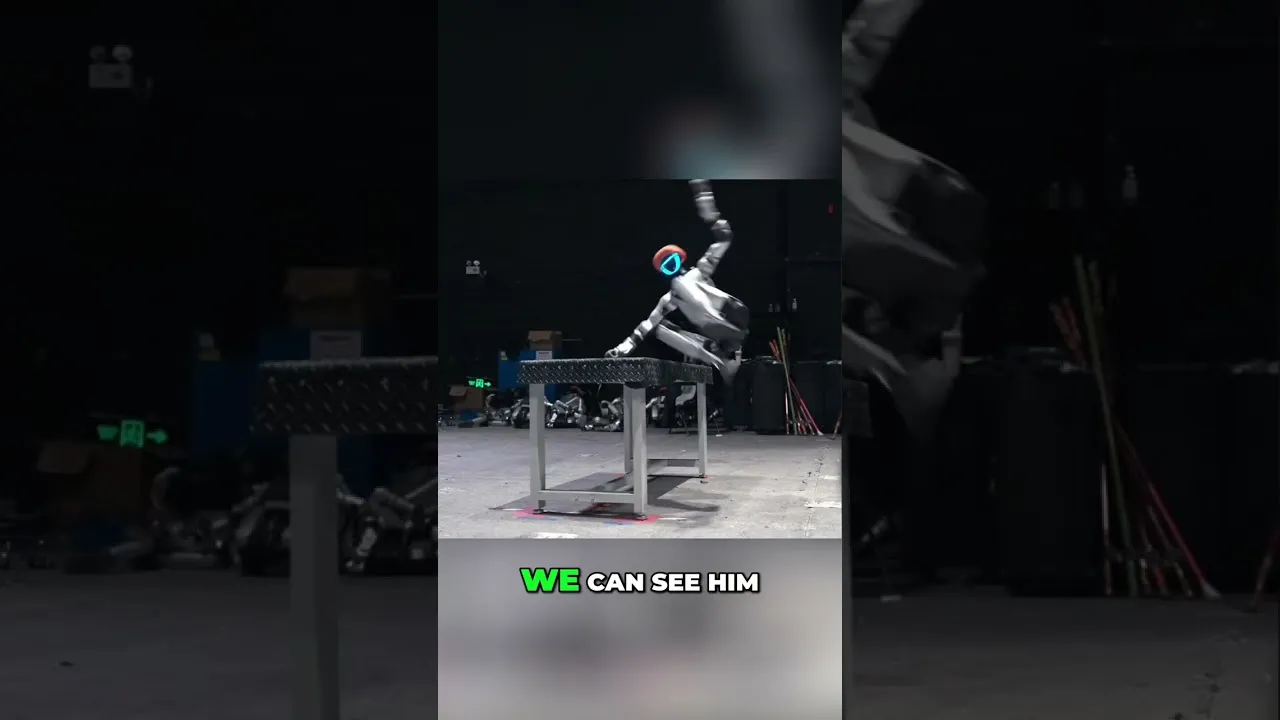
A recent Spring Festival performance by the company Unitary showcased a breathtaking display of robotic prowess, as a team of advanced robots executed a perfectly synchronized Kung Fu routine. The spectacle, while visually stunning, also offers a glimpse into the potential future of robotics, particularly in areas requiring high levels of coordination and precision. The robots demonstrated remarkable agility, performing complex aerial maneuvers including flips off elevated platforms, highlighting significant advancements in robotic locomotion and control systems.
Unison and Precision: The Core of the Performance
What elevates this demonstration beyond mere robotic capability is the seamless synchronization achieved by multiple units. During a particularly impressive segment of the performance, the robots wielded nunchucks, moving in perfect unison.
This level of coordinated action is proof of sophisticated AI algorithms and control architectures that enable real-time communication and precise execution among individual robots. Such synchronized behavior is crucial for applications ranging from complex manufacturing assembly lines to coordinated search and rescue operations, and potentially, advanced military applications.
Understanding the Technology Behind the Moves
The ability of these robots to perform such intricate and coordinated tasks relies on several key AI and robotics technologies:
- Advanced Motion Planning: AI algorithms determine the optimal paths and movements for each robot, avoiding collisions and ensuring smooth execution of complex actions like flips and weapon handling.
- Sensor Fusion: Robots utilize a combination of sensors (e.g., cameras, lidar, inertial measurement units) to perceive their environment and their own state. AI fuses this data to create a comprehensive understanding for navigation and interaction.
- Multi-Agent Coordination: Sophisticated AI systems manage the interaction and synchronization between multiple robots. This involves real-time communication, distributed decision-making, and adaptive control to maintain the group’s coherence and perform synchronized actions.
- Reinforcement Learning: It is likely that AI models were trained using reinforcement learning techniques, where robots learn optimal behaviors through trial and error in simulated or real-world environments, receiving rewards for successful actions.
While the transcript doesn’t dig into the specifics of the AI models or their parameters, the observed performance suggests the use of large-scale models capable of processing complex environmental data and generating precise motor commands. The benchmark for such a performance is not a traditional AI benchmark like accuracy on image recognition, but rather the fluidity, synchronization, and successful execution of dynamic physical tasks in a coordinated group setting.
Comparison to Previous Capabilities
Previous generations of robots, while capable of impressive feats individually, often struggled with dynamic, real-time coordination in complex environments. Early attempts at multi-robot systems were typically programmed for very specific, repetitive tasks in controlled settings.
The Unitary robots, however, demonstrate an ability to adapt, react, and perform fluid, dynamic routines that appear almost choreographed by a human director, but are instead driven by intelligent AI coordination. The inclusion of props like nunchucks further complicates the task, requiring not just movement but also precise manipulation and interaction with objects in a synchronized manner.
Why This Matters
The implications of this advancement are far-reaching:
- Industrial Automation: Highly synchronized robots can revolutionize manufacturing, enabling more complex assembly processes and collaborative work on production lines.
- Logistics and Warehousing: Coordinated robotic fleets can optimize warehouse operations, moving goods and managing inventory with unprecedented efficiency.
- Entertainment and Performance: As demonstrated, robots can create new forms of entertainment, pushing the boundaries of creative expression through synchronized performances.
- Search and Rescue: Teams of coordinated robots could navigate hazardous environments together, mapping disaster zones and assisting human responders more effectively.
- Defense and Security: The potential for synchronized robotic units in defense applications is significant, though it also raises ethical considerations about autonomous warfare.
The performance by Unitary is more than just a captivating show; it’s a significant step forward in the field of collaborative robotics and artificial intelligence. It showcases a future where machines can work together with human-like precision and coordination, opening up a new era of possibilities across numerous sectors.
Source: Robots Perform Perfectly Synced Kung Fu (YouTube)