Anthropic’s Claude Bridges the Gap Between Code and Design
In a significant leap for creative workflows, Anthropic, the artificial intelligence company behind the Claude large language model, has unveiled a groundbreaking integration with design tool Figma. This new capability allows users to convert production code directly into editable Figma designs, streamlining the process for designers and developers alike. While Anthropic also announced an entirely new model this week, this innovative collaboration with Figma has captured significant attention for its immediate practical applications.
From Live Code to Editable Designs
The demonstration showcases a remarkable workflow: a user can provide a live website or a code snippet, and Claude, powered by its advanced understanding of both code and design principles, can translate it into a functional Figma file. The demo illustrates this by taking a ‘pantry page’ from a live development server and rendering it as an editable design within Figma. This means that what was once a static representation of code can now be manipulated by designers in a familiar environment.
Collaborative Design and Iteration
Once the design is imported into Figma, the real power of collaboration comes into play. Designers can work together within Figma, adding notes and iterating on the layout and aesthetics.
The demo shows a redesign process where the pantry page is transformed into multiple rows, highlighting the ease with which visual adjustments can be made. This collaborative aspect is crucial for modern product development, where rapid iteration and clear communication between teams are paramount.
The Round-Trip Capability: Design Back to Code
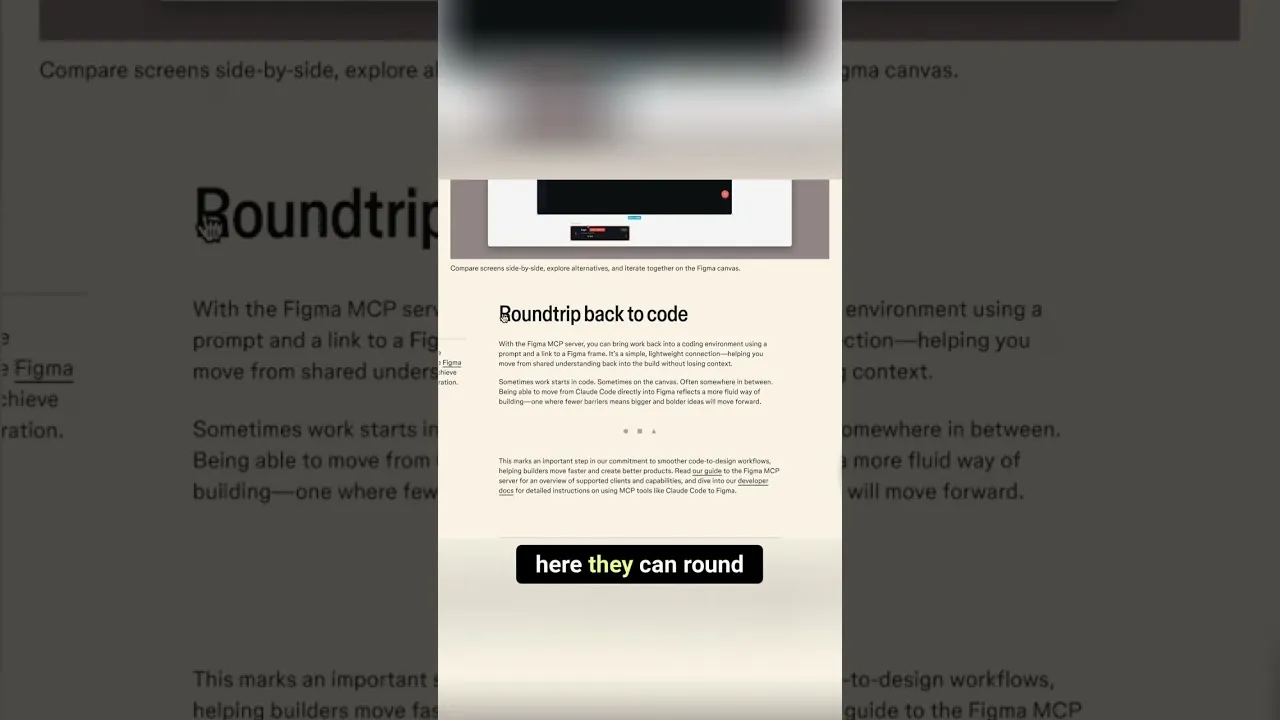
Perhaps the most exciting, albeit undemonstrated in the initial video, aspect of this integration is the ’round-trip’ functionality. While the demo focused on code-to-Figma, Anthropic indicates that the process can be reversed. Using the Figma API and Claude’s code generation capabilities, users can take their refined Figma designs and convert them back into production-ready code.
This implies that after designers have finalized their vision in Figma, they can prompt Claude to update the codebase accordingly, ensuring that the final product accurately reflects the intended design. This closed-loop system promises to reduce friction and potential errors that often arise when translating design mockups into functional software.
Why This Matters
This integration addresses a long-standing challenge in the software development lifecycle: the disconnect between design and engineering teams. Traditionally, the process of translating a design mockup into functional code can be time-consuming and prone to misinterpretation. This new tool from Anthropic and Figma has the potential to:
- Accelerate Development Cycles: By automating the conversion of designs to code and vice versa, teams can significantly reduce the time spent on manual implementation and revisions.
- Improve Design-Code Consistency: Ensuring that the final product precisely matches the design specifications becomes much easier, leading to a better user experience.
- Enhance Collaboration: Designers and developers can work more cohesively, with a shared understanding of the project’s visual and functional requirements.
- Democratize Design: Potentially, individuals with less coding expertise could leverage this tool to translate their ideas into functional prototypes or even finished products.
Availability and Future Implications
The specifics regarding the availability of this Claude-Figma integration, including any associated pricing or specific model versions required, were not detailed in the initial announcement. However, the implications are far-reaching.
This advancement signals a future where AI models are not just tools for generating text or images, but integral components of complex creative and development workflows. As AI continues to evolve, we can expect more such integrations that blur the lines between different professional disciplines, ultimately leading to more efficient and innovative product creation.
Source: The Coolest Claude Update This Week (YouTube)