AI Agents Now Mimic Human Voice with New Framework
The ability to distinguish between human-written and AI-generated text is rapidly diminishing, and the implications for communication are profound. When AI-generated content is easily identifiable, it often fails to resonate, leading readers to disengage. To combat this, a new framework is emerging, enabling AI agents to write with the distinct voice, tonality, and nuances of an individual, making their output virtually indistinguishable from human writing.
This breakthrough is particularly relevant for creators, businesses, and individuals looking to leverage AI tools without sacrificing their personal brand or communication style. The core of this advancement lies in a structured prompting methodology, often referred to as the IE framework: Instructions, Output Format, and Examples. This approach allows for the creation of specialized AI agents capable of handling specific tasks while maintaining a consistent, personalized voice.
Specialized Agents for Diverse Needs
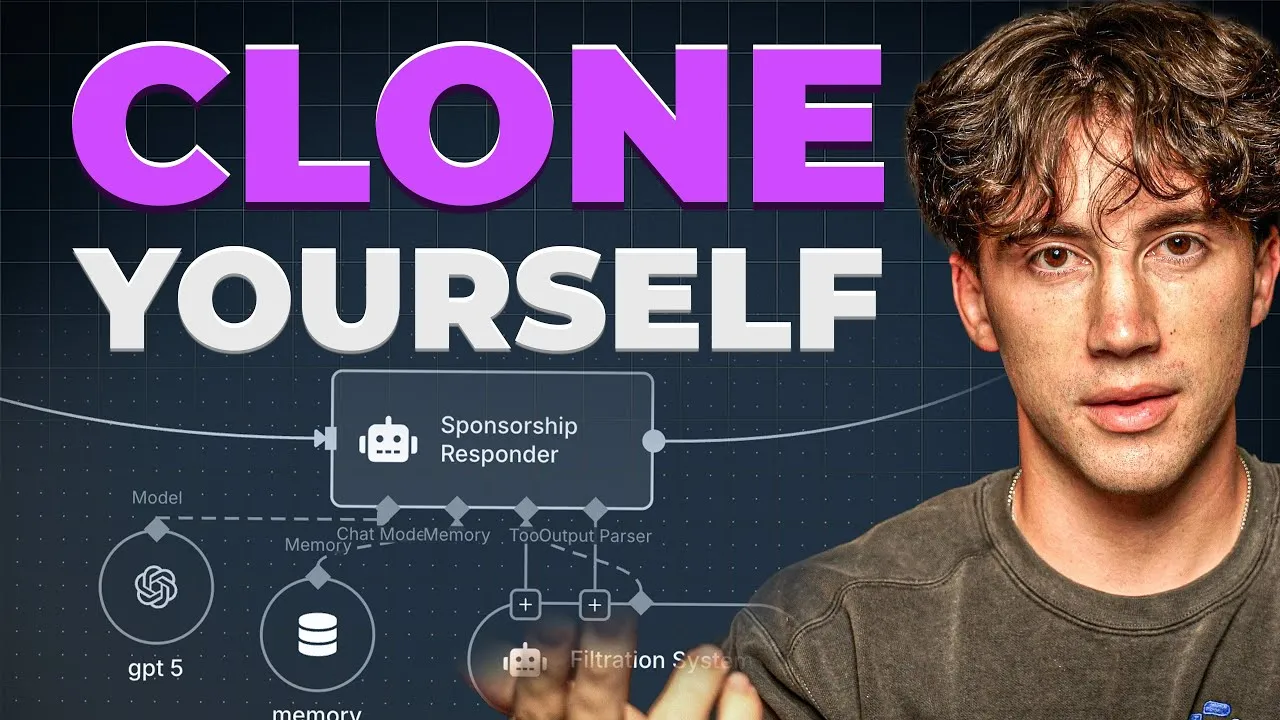
The flexibility of this framework is demonstrated through various applications. For instance, a sponsorship responder agent can be trained to handle inbound sponsorship inquiries.
This agent is equipped with crucial company data, metrics, and partnership criteria, enabling it to respond to potential sponsors in the creator’s authentic voice, incorporating all necessary business considerations. This not only streamlines communication but also ensures that every interaction reflects the creator’s established brand identity.
Another powerful application is an FAQ agent designed to assist community members or channel subscribers. By accessing a knowledge base of frequently asked questions and pre-approved answers, this agent can respond to queries in a natural, human-like manner. This alleviates the burden on the creator while providing timely and accurate information to the audience, all delivered in the creator’s signature style.
The IE Framework: Instructions, Output Format, Examples
The success of these personalized AI agents hinges on the meticulous construction of their system messages, guided by the IE framework:
1. Instructions: Defining the AI’s Role and Knowledge
- Role: Assigning a specific role to the AI is the first critical step. This places the AI in the shoes of the desired persona, whether it’s the user themselves or a defined character. For example, an agent can be instructed to act as a specific YouTuber, tasked with answering questions by recommending relevant video content.
- Guidelines: Clear guidelines dictate what the AI should and should not do. This includes defining acceptable behavior, communication standards, and specific constraints, such as avoiding certain phrases or maintaining a particular level of formality.
- Knowledge Base: This section acts as the AI’s memory, providing it with relevant information. For a personalized agent, this includes details about the individual’s work, company, goals, daily routines, and specific communication habits. This might involve noting preferences for punctuation, capitalization, abbreviations (e.g., ‘RN’ for ‘right now’, ‘LMK’ for ‘let me know’), and crucially, avoiding common AI tells like ‘m-dashes’.
- Content Integration: For agents designed to share information, like recommending YouTube videos, the knowledge base can include detailed information about specific content, such as video titles, summaries, and direct links. Advanced implementations could even involve providing full transcripts for the AI to reference.
2. Output Format: Structuring the AI’s Responses
To ensure consistency and facilitate integration with other systems, AI responses are often structured using a specific format, commonly JSON. This involves defining a template that the AI must adhere to for every output.
For instance, an agent might be instructed to always respond within a JSON object containing a key like ‘output’ followed by the generated text. This requirement is crucial for programmatic use and predictable results.
3. Examples: Training the AI with Real-World Interactions
This is arguably the most vital component. By providing concrete examples of user input and corresponding desired outputs, the AI learns the specific nuances of the desired communication style.
This involves using real-life interactions, such as comments from social media or emails, and crafting responses exactly as the individual would. Providing 5-10 such examples is generally recommended to ensure the AI effectively captures the desired tone, vocabulary, and sentence structure, avoiding overly formal or grammatically perfect responses that often signal AI generation.
Guardrails: Preventing AI Hallucinations and Maintaining Authenticity
Beyond the core IE framework, ‘guardrails’ are essential for refining the AI’s behavior. These are additional instructions designed to prevent the AI from deviating from its intended purpose or persona. Key guardrails include:
- Strictly avoiding AI tells like m-dashes.
- Never using language or phrases inconsistent with the defined persona.
- Avoiding overly wordy or excessively serious tones.
- Ensuring responses remain within the defined scope and do not attempt to fabricate information.
- Prioritizing the use of provided knowledge resources (e.g., specific videos) over generating new explanations.
By placing these guardrails at the end of the system instructions, they are given heightened importance during the AI’s response generation process.
Implementation and Availability
Platforms like NADN facilitate the creation of these sophisticated AI agents. Users can build workflows by integrating chat triggers, AI agents, and various chat models (e.g., GPT-4, GPT-3.5 Turbo via providers like OpenAI or OpenRouter). The process involves defining the system message using the IE framework and configuring output parsers to enforce the structured output format.
While specific pricing details for custom agent development on such platforms can vary, the underlying technology is becoming increasingly accessible. The ability to create these personalized agents democratizes advanced AI capabilities, allowing individuals and small businesses to implement sophisticated communication tools without requiring deep technical expertise.
Why This Matters
The ability for AI agents to write indistinguishably from humans has far-reaching implications:
- Enhanced Engagement: Content that feels personal and authentic is more likely to capture and hold audience attention.
- Brand Consistency: Businesses and creators can maintain a unified brand voice across all digital interactions, strengthening their identity.
- Efficient Automation: Repetitive communication tasks, such as responding to common inquiries or initial customer service interactions, can be automated without sacrificing the human touch.
- Personalized Experiences: AI can deliver tailored responses and recommendations that feel genuinely helpful and tailored to the individual user.
- Combating AI Fatigue: As AI-generated content proliferates, discerning authentic human communication becomes crucial. This technology helps ensure that AI is a tool to augment human interaction, rather than replace it with generic output.
As this technology matures, the line between human and AI communication will continue to blur, making tools and frameworks that prioritize authenticity and personalization increasingly valuable.
Source: Make AI Agents Write EXACTLY Like You! (Full Guide) (YouTube)