Google Launches Nano Banana 2, Redefining AI Image Generation
Google has officially released Nano Banana 2, a groundbreaking AI image generation model that promises to move beyond simple aesthetic creation by demonstrating a sophisticated understanding of the real world. This new model is not just another tool for generating visually appealing images; it’s designed to interpret and represent complex concepts and factual information, setting a new benchmark for AI in visual content creation.
Beyond Pixels: An AI with World Knowledge
What distinguishes Nano Banana 2 from many of its predecessors is its inherent knowledge base. Developers can test this capability by providing prompts that require the AI to draw upon real-world understanding.
For instance, asking Nano Banana 2 to generate an image depicting a specific scientific concept or a historical event would reveal its ability to synthesize information and translate it into a coherent visual representation. This suggests a deeper level of comprehension than models that primarily rely on pattern recognition from vast datasets without necessarily grasping the underlying meaning.
Mastering Text and Infographics
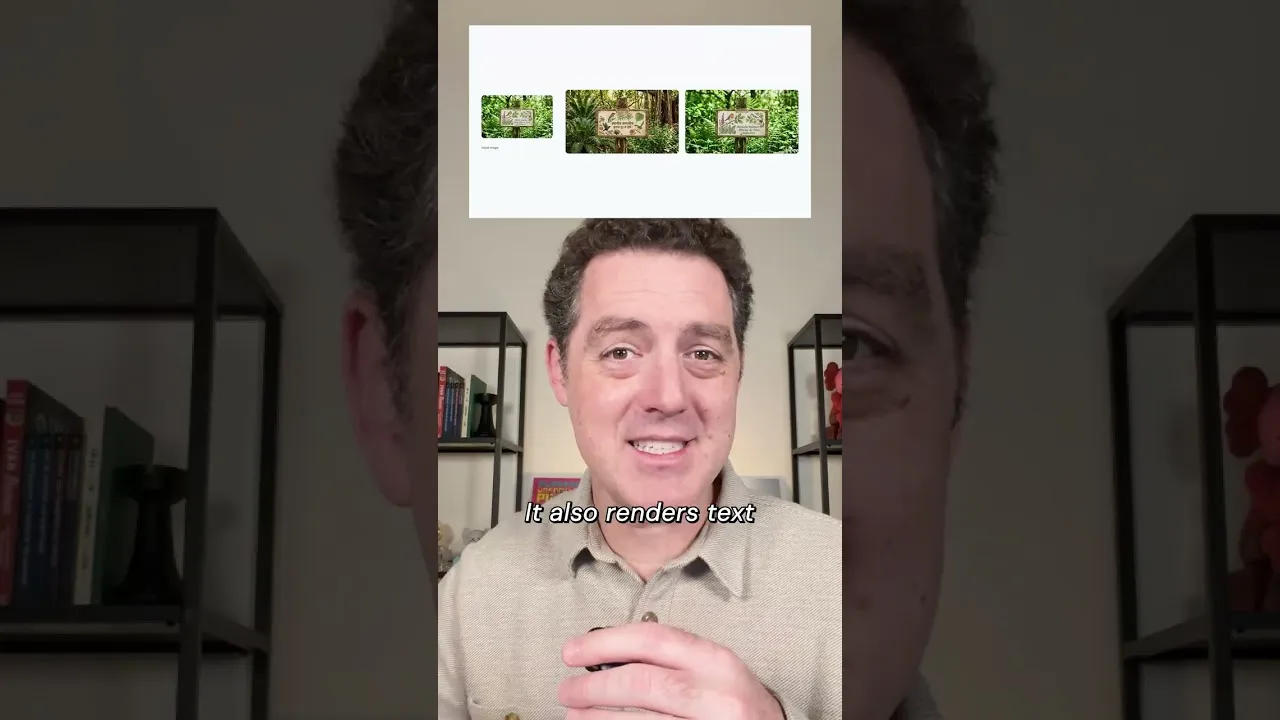
A significant leap forward showcased by Nano Banana 2 is its remarkable proficiency in rendering text and infographics. Traditional image generation models often struggle with accurately placing and formatting text within images, frequently resulting in garbled or nonsensical characters.
Nano Banana 2, however, appears to have overcome this hurdle, capable of producing clear, legible text and well-structured infographics. Examples shared demonstrate its ability to create professional-looking visuals, such as a flat lay infographic about weather patterns, where each element is rendered with striking realism, and a detailed triptych infographic illustrating cloud types, presented in a clean, comic-book-like style.
High-Resolution Output and Accessibility
The model also supports the generation of images up to 4K resolution, catering to professional design and high-definition display needs. This high-resolution capability ensures that the generated visuals maintain clarity and detail, making them suitable for a wide range of applications, from web design to print media.
Google has emphasized that Nano Banana 2 is broadly accessible, inviting the public to explore its capabilities and provide feedback. This open approach suggests a commitment to rapid iteration and improvement based on user interaction.
Artistic Versatility
Beyond its technical prowess, Nano Banana 2 exhibits impressive versatility across various art styles. Users can experiment with different artistic aesthetics, from photorealism to stylized illustrations, indicating that the model can adapt its output to meet diverse creative requirements. This flexibility makes it a valuable tool for artists, designers, and content creators looking to explore new visual directions or quickly prototype ideas.
Why This Matters
The implications of Nano Banana 2 are far-reaching. For businesses, it could streamline the creation of marketing materials, product visualizations, and internal documentation. The ability to generate accurate infographics and incorporate text efficiently can save significant time and resources, reducing reliance on specialized graphic designers for certain tasks.
Educators might find it invaluable for creating engaging visual aids for complex subjects. Artists and hobbyists gain a powerful new tool for bringing their ideas to life, capable of producing high-quality, contextually aware imagery. The model’s understanding of the world could also pave the way for more sophisticated AI applications in fields like scientific visualization, data analysis, and even virtual reality content creation.
Availability and Next Steps
Nano Banana 2 is currently available for public testing and use. Google has not yet released specific pricing details, suggesting that initial access might be free or offered under a trial basis as the company gathers more user data and feedback.
Interested users are encouraged to visit Google’s AI platform or associated developer portals to explore the model and experiment with its capabilities. The company is actively seeking input to refine the model further, hinting at future updates and enhanced features based on real-world performance and user suggestions.
Source: Nano Banana 2 🍌 (YouTube)