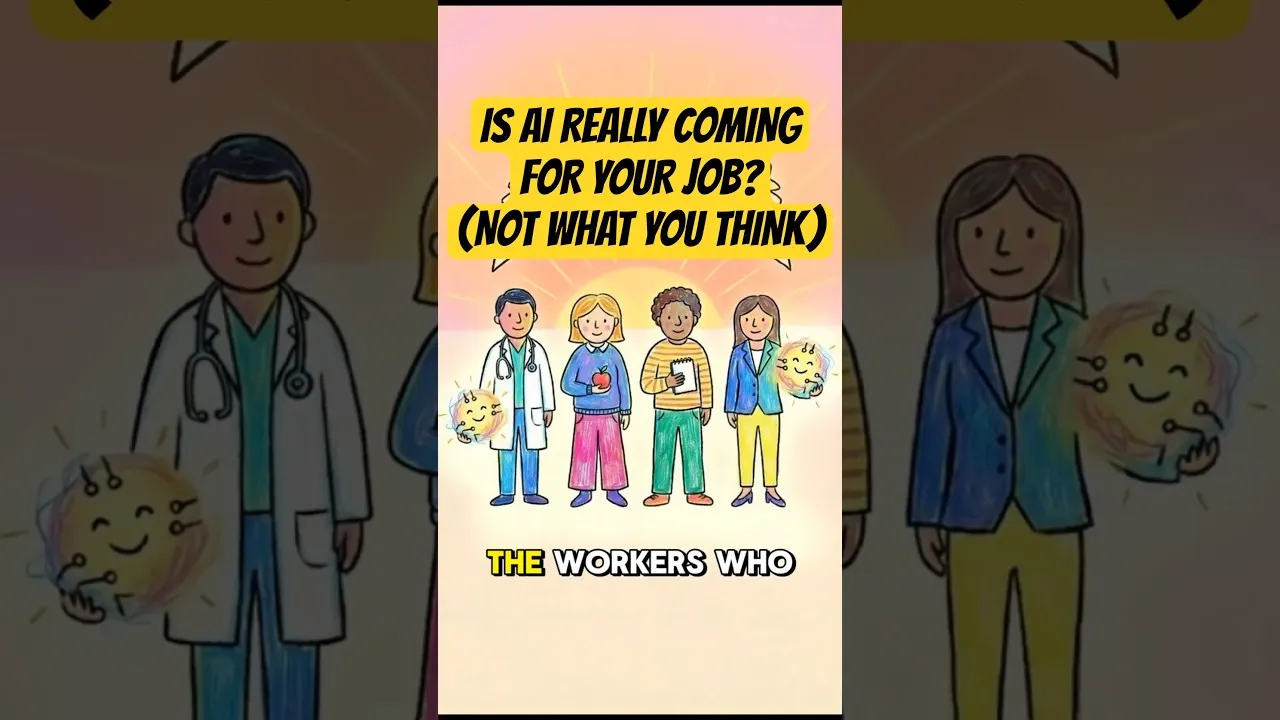
AI Revolutionizes Work: Augmentation, Not Replacement
The narrative surrounding Artificial Intelligence and its impact on the job market has long been dominated by a fear of mass unemployment. However, a closer examination reveals a more nuanced reality: AI is not poised to replace entire job roles, but rather to augment human capabilities by automating specific tasks. This shift is fundamentally redefining the nature of work, emphasizing the evolution of skills over the elimination of professions.
The Task Automation Imperative
Fundamentally, AI’s current trajectory in the workplace is focused on automating repetitive, time-consuming tasks. These are often the elements of a job that drain productivity and detract from more complex, strategic, or human-centric responsibilities. Instead of rendering human workers obsolete, AI is freeing them up to concentrate on higher-value activities that require critical thinking, creativity, and emotional intelligence.
Transforming Key Professions Through AI Integration
The implications of this task-based augmentation are far-reaching, impacting a variety of professions:
- Healthcare: While AI will not replace doctors, it is becoming an invaluable tool in diagnostics. AI algorithms can analyze medical scans with remarkable speed and accuracy, acting as a powerful second opinion to double-check diagnoses and identify subtle anomalies that might be missed by the human eye. This allows physicians to focus more on patient interaction, complex treatment planning, and surgical procedures.
- Education: Teachers remain central to the learning process, but AI can significantly enhance their preparation and delivery. AI tools can assist in generating lesson plans, creating customized learning materials, and even providing insights into student performance patterns. This empowers educators to dedicate more time to direct student engagement, personalized instruction, and fostering critical thinking skills.
- Therapy and Mental Health: The empathetic and interpersonal nature of therapy is inherently human. However, AI can support therapists by processing session transcripts to identify early warning signs of distress, track patient progress, or even suggest relevant therapeutic approaches. This augmentation allows therapists to be more efficient and potentially more effective in their interventions, without compromising the essential human connection.
The Rise of the AI-Augmented Professional
The jobs themselves are not disappearing; rather, they are evolving and, in many cases, being elevated. The workers who will thrive in the coming years will not be those who can somehow avoid AI, but those who proactively learn to leverage it.
This requires a shift in mindset from fearing AI to embracing it as a collaborative partner. The focus will be on developing skills that complement AI’s capabilities, such as strategic decision-making, complex problem-solving, creativity, and interpersonal communication.
Why This Matters
The distinction between AI replacing jobs and AI augmenting tasks is crucial for several reasons:
- Economic Stability: By focusing on augmentation, AI is less likely to cause widespread job displacement and more likely to foster increased productivity and economic growth. This allows for a smoother transition in the labor market.
- Skill Development: It highlights the importance of continuous learning and upskilling. Individuals and organizations need to invest in training programs that equip workers with the skills to effectively use AI tools.
- Enhanced Human Potential: AI can take over mundane tasks, allowing humans to focus on the aspects of their work that are most fulfilling and impactful. This can lead to greater job satisfaction and innovation.
- Democratization of Expertise: AI tools can make sophisticated capabilities more accessible, potentially leveling the playing field for smaller businesses or individuals who previously lacked the resources for specialized expertise.
The Path Forward: Embracing AI Collaboration
The future of work is not a dystopian vision of human obsolescence, but a collaborative ecosystem where humans and AI work in tandem. The key to navigating this transition lies in adaptability and a commitment to lifelong learning. As AI continues to advance, the most valuable asset for any professional will be their ability to integrate these powerful tools into their workflow, enhancing their own performance and contributing to a more efficient and innovative future.
Source: Is AI Really Coming For Your Job? (Not What You Think) (YouTube)