New Specialization Demystifies Advanced Generative AI
A new online specialization is set to make the complex world of Generative Adversarial Networks (GANs) accessible to a wider audience. GANs, a powerful class of deep learning algorithms, are capable of generating incredibly realistic synthetic data, particularly images. This new program promises to teach learners how to build and apply these cutting-edge GANs, opening doors to creative and practical applications in media, entertainment, and beyond.
Understanding the Art of AI Creation
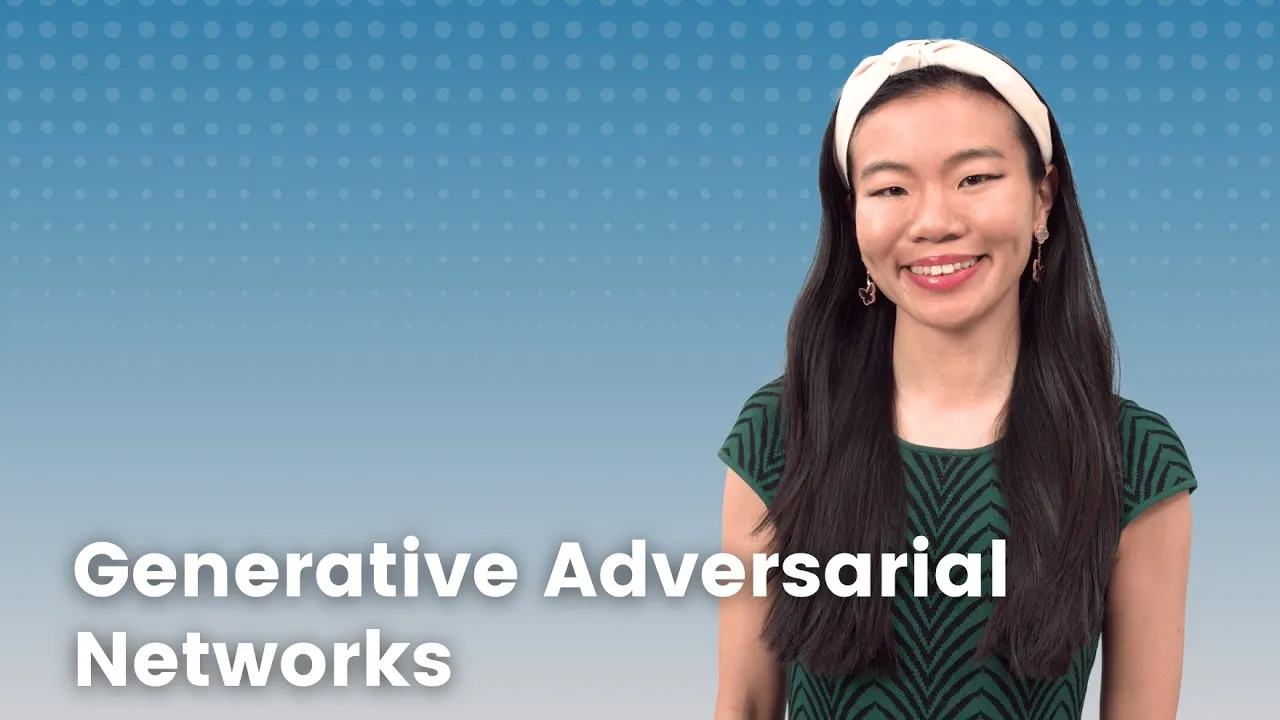
Fundamentally, a GAN involves two competing neural networks: a ‘generator’ and a ‘discriminator’. The instructor, Sharon Joe, uses a compelling analogy to explain this dynamic: an art forger and an art inspector. The forger (the generator) attempts to create realistic artworks, while the inspector (the discriminator) tries to distinguish between genuine pieces and the forger’s fakes.
Through this adversarial process, the generator continuously improves its ability to create convincing outputs, while the discriminator gets better at spotting fakes. This collaboration, though competitive, is what drives the creation of highly realistic synthetic media.
“One of the really fun things about working with GANs is I’ve seen a lot of GAN researchers take a lot of pride in their creation,” Joe notes. “As someone working on GANs that you created is your artwork.” The specialization aims to instill this sense of pride and ownership in learners as they build their own AI models.
Real-World Applications of GANs
The potential applications for GANs are vast and transformative. Learners will explore how to:
- Generate images of people who have never existed.
- Age or de-age individuals in images or videos.
- Enhance low-resolution video to high-resolution quality.
- Synthesize additional data for training machine learning models, particularly useful when dealing with limited datasets, such as classifying scratched objects or medical X-ray images.
These capabilities have profound implications for the media and entertainment industries, offering new tools for content creation, visual effects, and data augmentation.
What You’ll Learn: A Structured Approach
The specialization is structured into four key courses, designed to build expertise progressively:
- Course 1: Basic GAN Implementation – Learners will build their first GAN in the initial week, grasping fundamental concepts.
- Course 2: Enhancing GANs with CNNs – The program will introduce Convolutional Neural Networks (CNNs) to build more powerful GAN architectures.
- Course 3: Stable GAN Training – Focus will be placed on techniques to ensure GANs train stably and reliably.
- Course 4: Controllable Generation – The final course digs into directing the GAN’s output, allowing users to specify what kind of content to generate (e.g., a Golden Retriever) and control specific attributes (e.g., making a generated face look younger or older).
Prerequisites for Success
To get the most out of this specialization, a foundational understanding of neural networks, including Convolutional Neural Networks (CNNs), is recommended. Proficiency in Python programming and experience with deep learning frameworks like TensorFlow, Keras, or PyTorch are also beneficial.
The program acknowledges that some learners might be rusty on these topics and includes review sessions in the early weeks. For those who have completed DeepLearning.AI’s foundational Deep Learning Specialization, this GANs program is presented as an ideal next step into advanced AI algorithms.
Why This Matters
Generative Adversarial Networks represent a significant leap in artificial intelligence, moving beyond analysis to creation. The ability of AI to generate novel, realistic content has far-reaching implications. For creatives, GANs offer powerful new tools to augment their work, explore new artistic styles, and overcome technical limitations.
In fields like medicine, the capacity to synthesize training data can accelerate research and improve diagnostic accuracy. As AI continues to evolve, understanding and utilizing generative models like GANs will become increasingly crucial for professionals across various industries. This specialization aims to equip individuals with the knowledge and practical skills to harness this transformative technology.
Source: Generative Adversarial Networks (GANs) Specialization (YouTube)