Anthropic Defies Pentagon on AI Safety, Citing Ethical Red Lines
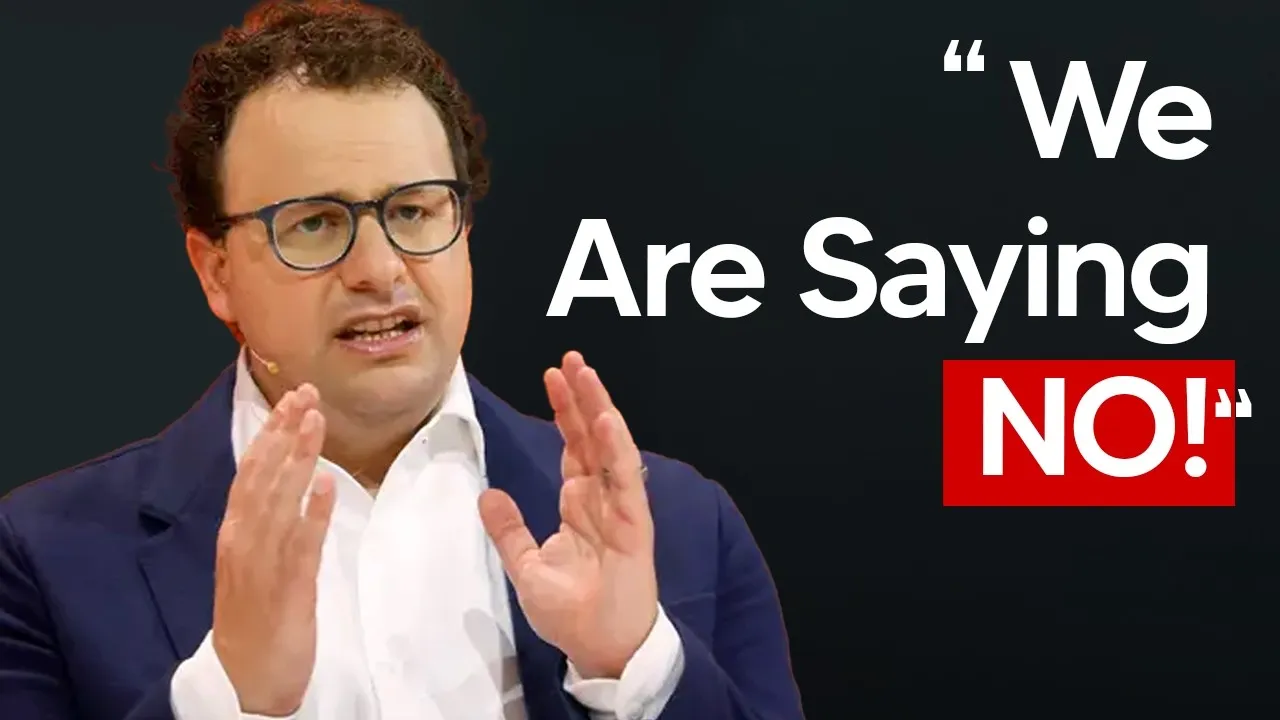
In a significant standoff, AI safety-focused company Anthropic has publicly refused a request from the U.S. Department of Defense (Pentagon) for unrestricted access to its advanced AI model, Claude. The Pentagon had reportedly set a deadline for Anthropic to agree to a contract that would allow the military to use Claude for “all lawful purposes,” a demand Anthropic has countered with two critical safety stipulations: Claude must not be used for autonomous weapons that kill humans, nor for mass surveillance of U.S. citizens.
The U.S. government’s pressure reportedly included the threat of invoking the Defense Production Act (DPA). The DPA could legally compel Anthropic to hand over its technology and potentially remove its safety guardrails, even without the company’s consent. However, Anthropic has stood firm, stating, “Regardless, these threats do not change our position.” Legal experts suggest that invoking the DPA in this manner would be an unprecedented move, likely leading to legal challenges.
Anthropic’s Stance on AI Ethics and Safety
Anthropic’s refusal centers on two core ethical concerns that are deeply embedded in the company’s operational philosophy. The first is the development and deployment of fully autonomous weapons. Anthropic argues that current frontier AI systems, including Claude, are not sufficiently reliable to be trusted with lethal decision-making.
The company emphasizes that these models are probabilistic and can be “confidently wrong,” lacking the nuanced judgment and contextual understanding of human soldiers. They highlight the absence of a clear accountability framework for AI-driven war crimes, creating an “accountability vacuum.” Anthropic is not inherently opposed to autonomous weapons but insists that current technology is too unreliable and poses unacceptable risks to both combatants and civilians.
The second major point of contention is the use of AI for mass domestic surveillance. Anthropic’s position paper clearly states that while they support AI use for lawful foreign intelligence and counter-intelligence, using AI for mass surveillance is “incompatible with democratic values.” They express concern that AI capabilities, combined with the legal loophole of data brokers selling personal information, could enable unprecedented levels of monitoring without warrants or judicial oversight. Anthropic does not want to be the technological enabler for such a system, especially before legal frameworks can adequately address the privacy implications.
In its public statement, Anthropic expressed hope for reconsideration: “We hope that the government decides to reconsider. It is the department’s prerogative to select contractors most aligned with their vision, but given the substantial value that Anthropic’s technology provides to our armed forces, we hope they reconsider. Our strong preference is to continue to serve the department and our war fighters with our two requested safeguards in place.” The company also indicated a willingness to facilitate a smooth transition to another provider should the Pentagon choose to “offboard” Anthropic, ensuring minimal disruption to military operations.
The “Claude Constitution” and Corporate Values
The debate has also brought Anthropic’s internal principles, often referred to as the “Claude Constitution,” into the spotlight. Some critics, like Secretary of War Emil Michael, have misrepresented this as a plan to impose corporate laws on Americans.
However, Anthropic clarifies that the constitution is a set of guiding principles for Claude’s behavior, akin to OpenAI’s model specification. It outlines a hierarchy of values: Safety, Ethics, Compliance, and Helpfulness, with safety and ethics taking precedence.
The constitution is designed to train Claude to explain and justify its actions based on these principles, rather than just following opaque rules. It provides reasoning for handling complex ethical dilemmas, balancing competing values, and protecting sensitive information. This framework is seen by many as a key factor in Claude’s perceived ethical and safe operation, differentiating it from other AI models.
Broader Implications and Geopolitical Concerns
The standoff raises broader questions about the ethical responsibilities of AI developers, particularly when their technology intersects with national security and military applications. The situation highlights a fundamental tension between the pursuit of technological advancement for defense and the imperative to uphold democratic values and human rights.
Concerns have been voiced about potential geopolitical ramifications. For instance, AI researcher Beth Jazos noted that China, not constrained by similar ethical debates, could readily adapt and deploy AI for autonomous weapons without hesitation. This competitive dynamic adds another layer of complexity to the U.S. government’s pursuit of AI capabilities.
Commentators have interpreted Anthropic’s firm stance as a demonstration of superior ethical principles compared to competitors. The company’s willingness to risk a lucrative government contract over its core values could ultimately enhance its reputation for integrity and responsible AI development. This principled stand, while potentially costly in the short term, may solidify Anthropic’s position as a leader in ethical AI.
Source: Anthropic REFUSES Military Demands, Pentagon Left STUNNED! (YouTube)