OpenAI’s Bold Leap into Consumer Hardware
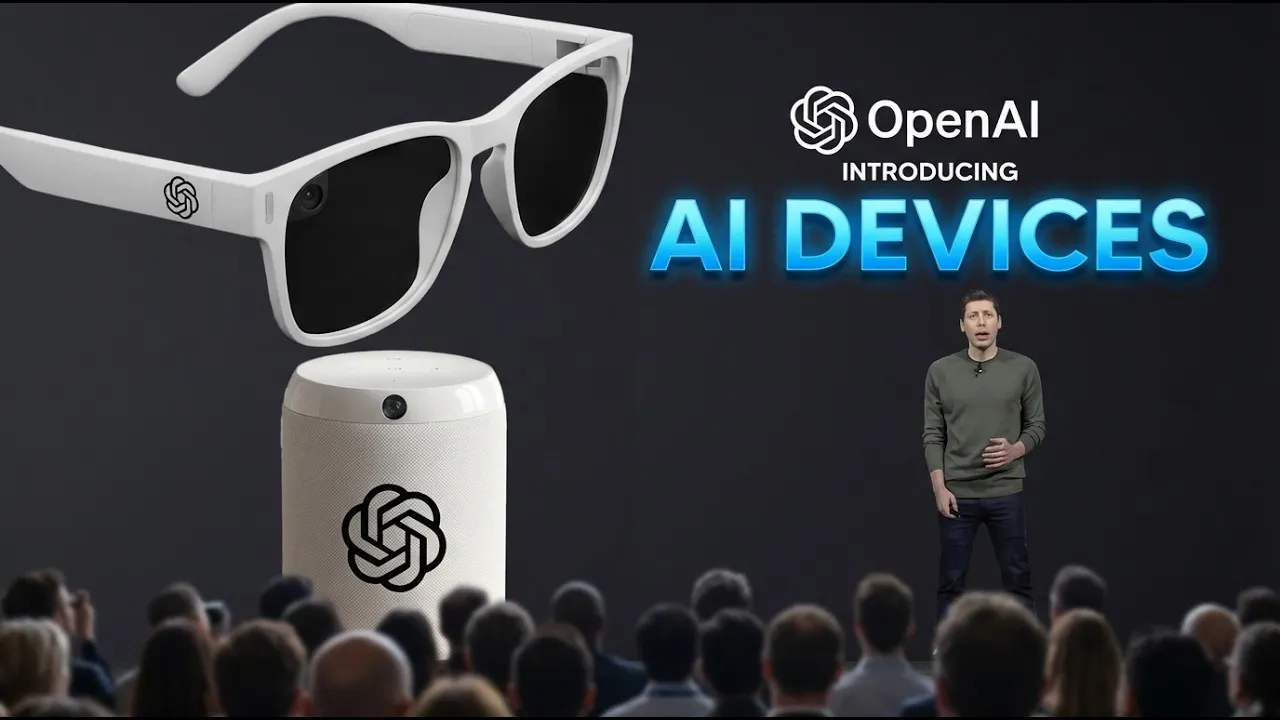
OpenAI, the artificial intelligence powerhouse, is reportedly developing a suite of AI-powered consumer devices, signaling a significant strategic expansion beyond its foundational large language models. According to sources familiar with the company’s plans, OpenAI has dedicated over 200 employees to this ambitious hardware initiative, aiming to integrate AI more seamlessly into daily life. The product line is expected to include a smart speaker, with potential for smart glasses and a smart lamp.
The Smart Speaker: A Glimpse into OpenAI’s Vision
The first device slated for release is a smart speaker, anticipated to launch around February 2027, with a potential video demonstration and pre-order availability by mid-2024. Sources suggest a price point between $200 and $300.
A key feature of this speaker will be an integrated camera, designed to capture information about the user’s surroundings and conversations. This capability could enable functionalities like facial recognition for purchases, similar to Apple Pay.
However, this move into hardware is fraught with challenges. The AI hardware market is currently fragmented, and OpenAI’s success hinges on navigating complex consumer sentiments and technological hurdles. The company faces the daunting task of not only competing with established tech giants but also overcoming public skepticism surrounding AI and data privacy.
Navigating Privacy Concerns and Consumer Skepticism
A major hurdle for OpenAI will be addressing user privacy. A device designed to constantly ingest and analyze intimate data from its surroundings raises significant privacy concerns. Consumers are increasingly wary of AI’s potential for surveillance, a sentiment recently highlighted by a controversial Ring (Amazon’s home security subsidiary) Super Bowl ad.
The ad, which showcased a feature allowing neighborhood-wide camera feeds to search for a lost dog, was met with criticism, with some labeling it ‘Orwellian’ and prompting some users to disconnect their devices. This backlash highlights the delicate balance OpenAI must strike when marketing a device that inherently collects vast amounts of personal data.
The Technical and Economic Tightrope
Beyond social concerns, technical and economic factors present significant challenges. The smart speaker’s constant awareness and processing of its environment, including facial recognition and contextual understanding, demand substantial computational power.
This contrasts sharply with typical AI interactions like querying ChatGPT, which are discrete events. OpenAI must find a way to cover the immense cost of this continuous computation.
The proposed price range of $200-$300, coupled with the potential for a mandatory subscription service or performance throttling, could alienate consumers. Unlike Amazon, which can subsidize its Echo devices through its broader e-commerce ecosystem, OpenAI lacks a similar revenue flywheel. The company must make its hardware accessible and valuable without compromising its brand or financial viability.
The issue of AI ‘hallucinations’—where AI generates incorrect or nonsensical information—remains a significant problem. For a device intended to be a reliable home assistant, such inaccuracies could lead to severe user frustration and damage OpenAI’s reputation.
The experiences of Amazon’s Alexa, which has faced criticism for slow response times and basic functional failures, serve as a cautionary tale. If OpenAI’s speaker underperforms, it could face intense public scrutiny and negative reviews from tech influencers, mirroring the challenges faced by devices like the Humane AI Pin.
The Future of AI: Smart Glasses and a Crowded Market
Looking further ahead, OpenAI is reportedly planning smart glasses, with a potential release in 2028. This aligns with a growing market for AI-integrated eyewear, exemplified by Meta’s Ray-Ban Stories. However, the smart glasses market in 2028 is expected to be intensely competitive.
By then, Meta will likely have advanced its offerings, while Apple is anticipated to launch its own AR glasses, leveraging its strong ecosystem and brand loyalty. Google, Samsung, and various Chinese manufacturers are also expected to vie for market share with their own XR devices.
OpenAI’s success with glasses will depend heavily on its ability to differentiate through superior AI capabilities rather than just hardware specifications. The form factor must be aesthetically pleasing and socially acceptable, potentially learning from Meta’s approach of integrating AI subtly into stylish eyewear. Without an established eyewear brand or a pre-existing device ecosystem like Apple’s, OpenAI faces an uphill battle to capture significant market share.
Why This Matters: OpenAI’s Path to Profitability
This hardware push is critical for OpenAI’s long-term financial sustainability. The company is reportedly burning through billions of dollars annually, and investors are keenly watching for a clear path to profitability and a justification for its sky-high valuation. While subscription revenue from services like ChatGPT is growing, hardware sales could provide a substantial new revenue stream.
Even with optimistic sales projections, the profit margins on consumer electronics are often slim. For a company with no prior hardware manufacturing experience, achieving profitability will be a significant challenge. A poorly received first product, like the smart speaker, could not only result in financial losses but also create a lasting negative PR narrative, jeopardizing future hardware investments, much like the initial launch of Google Glass impacted the company’s subsequent efforts.
Ultimately, OpenAI’s success in the hardware arena hinges on delivering genuinely groundbreaking products that offer tangible value to consumers, address privacy concerns effectively, and overcome the technical and economic hurdles inherent in the competitive consumer electronics market. The smart speaker, in particular, must be a resounding success to build momentum and confidence for future ambitious projects like smart glasses.
Source: OpenAI'S New AI Devices Explained – AI Glasses, Speakers & More (YouTube)