Google Unveils Lyria 3 AI Music Generator, But Competitors Push Boundaries Further
The artificial intelligence landscape for music generation is heating up, with Google recently launching its latest AI music model, Lyria 3. Integrated into the Gemini app and web interface, Lyria 3 aims to offer advanced music creation capabilities. However, while Lyria 3 presents an interesting step forward, particularly with its built-in watermarking for AI detection and multilingual support, it’s the rapidly evolving capabilities of competitors like Suno AI that are truly capturing the industry’s attention, especially with the preview of Suno V3.
Lyria 3: Google’s Latest AI Music Endeavor
Lyria 3, Google’s newest AI music model, has been released with a focus on accessibility and safety. The model can generate up to 30 seconds of music, a duration that, while useful for short clips or jingles, limits its application for more extensive musical projects.
A notable feature of Lyria 3 is its implementation of undetectable watermarking, a crucial safety measure designed to identify music created by Google’s AI systems. The model also emphasizes broader language support, though many existing AI music generators have already incorporated this functionality.
During its demonstration, Lyria 3 showcased its versatility across various genres, from 90s rap and Latin pop to folk ballads and even chiptune-inspired metal. Prompts like “90s rap” and “Latin pop” yielded polished, albeit brief, musical pieces.
The model demonstrated an ability to follow lyrical prompts, even generating lyrics itself for specific themes, such as an “Early 2000s cartoon intro for Breaking Bad.” While the output is often catchy and professional-sounding, the model is described as being heavily safety-locked, preventing requests for specific artists or their distinctive sounds. This cautious approach, while prioritizing ethical use, means Lyria 3 is positioned more for “gimmicky use cases” rather than deep artistic exploration.
Gemini 3.1 Pro: A Leap in General AI Intelligence
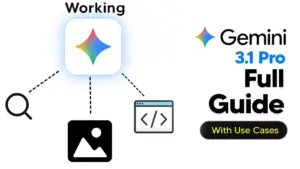
Coinciding with the Lyria 3 announcement, Google also launched Gemini 3.1 Pro, a significant upgrade to its flagship multimodal AI model. This new iteration promises enhanced overall intelligence and improved performance, addressing previous criticisms of the model being “lazy.” Benchmarks indicate substantial improvements, and Gemini 3.1 Pro demonstrates an impressive ability to generate complex vector graphics, such as intricate SVGs. For instance, its creation of an Xbox controller entirely through code, and its detailed 3D voxel renderings of Pokémon, significantly outperform its predecessor, Gemini 3 Pro, which produced more rudimentary visuals.
Suno V3 Preview: Unrestricted Creativity and Artist Emulation
While Lyria 3 offers a glimpse into Google’s AI music future, the public preview of Suno V3, an upcoming iteration from Suno AI, is generating considerable excitement for its unrestricted creative potential. Unlike Lyria 3’s limitations, Suno V3 appears to allow for a much broader range of musical styles and, most controversially, the emulation of specific artists’ vocal styles. This capability was vividly demonstrated with a track featuring the voice of the late Juice WRLD, which was remarkably accurate in its replication of his signature sound and delivery.
Suno V3 utilizes a potent tag system, allowing users to directly input artist names, and the AI can then generate music in that artist’s style. This includes replicating vocal timbre, lyrical patterns, and musical arrangements.
The preview also showcased impressive emulation of artists like Queen, Eminem, The Notorious B.I.G., Taylor Swift, Tame Impala, and Michael Jackson, often with uncanny accuracy. For example, a generated track in the style of Michael Jackson about saving betta fish from Petco, or a Limp Bizkit-esque nu-metal song from the perspective of a roommate eating those fish, highlight the model’s creative and sometimes darkly humorous capabilities.
However, the ability to emulate famous artists raises significant legal and ethical questions regarding copyright infringement and the unauthorized use of an artist’s likeness. Suno AI’s terms of service place the onus on the user to avoid copyright infringement when using the generated content commercially. Despite these concerns, the technical achievement of Suno V3 in capturing the nuances of diverse musical styles and vocal performances is undeniable.
Comparing the Models: Depth vs. Breadth and Restriction
The comparison between Lyria 3 and Suno V3 highlights a key divergence in current AI music generation strategies. Lyria 3, while polished and featuring important safety measures like watermarking, is presented as a more contained and safety-focused tool, suitable for quick, short-form content. Its 30-second limit and restrictions on artist emulation position it as a more controlled offering.
In contrast, Suno V3, even in its preview stage, offers a more expansive and less restricted creative playground. Its strength lies in its ability to generate longer tracks, explore a wider array of complex genres (though some, like epic orchestral rock, may still be challenging), and, most significantly, emulate specific artists with remarkable fidelity. This unrestricted nature, while artistically liberating, brings with it a host of ethical and legal considerations.
The technical prowess of Suno V3 is evident in its ability to capture the specific sonic textures and vocal characteristics of artists like Juice WRLD, Eminem, and Taylor Swift. While the generated music might not possess the full depth of human artistry, its ability to achieve a high degree of accuracy on demand is proof of the rapid advancements in AI audio synthesis. The model’s capacity to blend genres and adapt to unusual prompts, such as a country ballad about a cowboy herding jellyfish or progressive electronic music about coin collecting, further underscores its creative flexibility.
Why This Matters: The Future of Music Creation
The advancements showcased by Lyria 3 and, more dramatically, Suno V3, signal a profound shift in music creation. For independent artists, content creators, and hobbyists, these tools democratize music production, lowering the barrier to entry significantly. Aspiring musicians can experiment with different styles, generate backing tracks, or even create full songs without needing extensive musical training or expensive equipment.
However, the ability of AI to emulate the voices and styles of existing artists presents a complex challenge to the music industry. It raises questions about artist compensation, intellectual property, and the very definition of originality. While AI-generated music can be a powerful tool for creativity, its potential to dilute the market with imitations or even replace human artists in certain contexts requires careful consideration and robust ethical guidelines.
Google’s Lyria 3, with its focus on safety and controlled generation, represents a cautious but valuable contribution to the field. Suno V3, on the other hand, pushes the envelope of what’s technically possible, forcing a broader conversation about the future of AI in creative industries. As these technologies continue to evolve, their impact on how music is created, consumed, and valued will undoubtedly be transformative.
Source: Google Dropped Lyria 3 AI Music but Sunauto v3 STOLE the show! (YouTube)