AI Brain: Ditch Chatbots for Your Own Intelligent Agent
The landscape of artificial intelligence is rapidly evolving beyond the traditional chatbot interfaces. For critical tasks, many are moving towards more integrated, personalized AI agents that operate directly on their systems, offering enhanced memory, customization, and a deeper level of interaction. This shift marks the dawn of ‘agentic AI,’ where users can build custom AI companions tailored to their specific needs.
The Rise of Agentic AI
The concept of AI agents living on your operating system, capable of persistent memory and direct collaboration, is no longer a futuristic fantasy. These agents can be customized to align with an individual’s workflow, transforming how we interact with AI for everything from research to creative endeavors. This new era promises an accessible form of personalized AI for everyone.
Building the AI Brain: Project Meridian
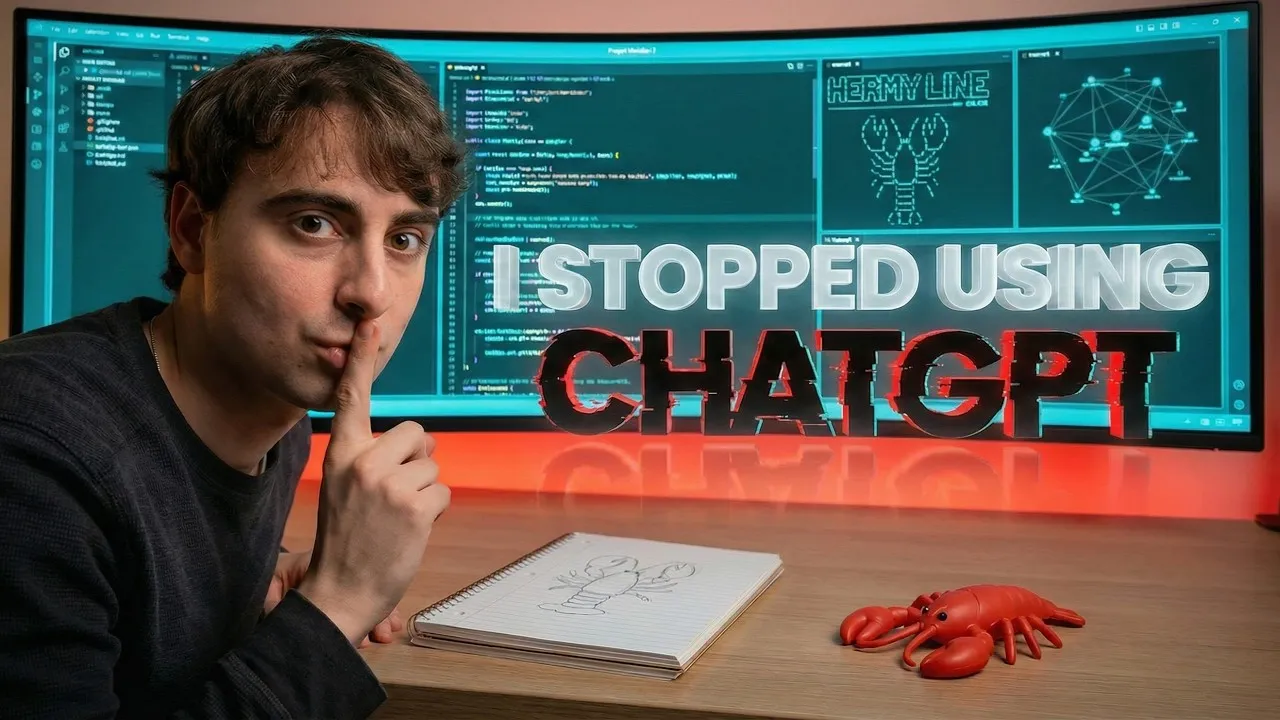
Frustrated with the limitations of standard AI interfaces, one developer embarked on a mission to create a more sophisticated AI agent. This journey involved building and iterating on several prototypes before arriving at what is now called ‘Project Meridian,’ or more colloquially, the ‘AI Brain’.
Early Prototypes: OpenClaw and New Agent
The initial attempts involved using frameworks like OpenClaw. While setting up the base OpenClaw was straightforward, integrating a custom front-end proved challenging.
The first agent, nicknamed ‘Hermy,’ faced issues with newer versions of OpenClaw and failed to connect its custom interface to the backend. Despite these setbacks, the process yielded valuable insights and features that would later be incorporated into the final project.
The next iteration, ‘New Agent,’ showed more promise. Based on OpenClaw, it featured a more customized user interface and the ability to connect to the backend. This agent could initiate different sessions and interact with models like Claude Opus 4.6.
However, bugs and errors continued to plague the development, requiring extensive debugging. A key learning from this phase was the effectiveness of running ‘audits’ – using multiple AI models to review and refine plans and code. Models like Claude 4.6 Opus, Gemini Deep Research, and OpenAI Agent proved particularly useful in this auditing process.
The Epiphany: Simplicity and Core Functionality
A crucial realization during this development was that much of the desired customization for AI agents didn’t require complex graphical interfaces. Instead, the focus shifted to the core data and configuration files that define an agent’s behavior. This led to the development of the ‘AI Brain’ concept, a system built around simple folders and Markdown (.md) files.
Introducing Project Meridian: The AI Brain
Project Meridian, codenamed by Claude Opus 4.6, is designed as an ‘operating system for AI agents.’ It’s a lightweight system comprising only folders and .md files, making it easily editable and transferable. By dropping the ‘Brain’ folder into any compatible AI agent framework (such as OpenClaw, Google’s Anti-Gravity, or Meta’s Manis AI), the agent is transformed into a customized, context-aware entity with persistent memory and adjustable parameters.
Key Features of the AI Brain:
- Customizable Parameters: Sliders and gauges allow users to tweak aspects like humor, creativity, directness, morality, and technicality on the fly.
- Persistent Memory: The system includes protocols for memory retrieval and persistence, storing interactions and data in an ‘All Memories’ folder. Memories can be organized and consolidated.
- Live HUD Dashboard: A real-time dashboard provides visibility into the AI’s current state, task focus, and operational parameters, fostering confidence and control.
- Modular File Structure: The ‘Brain’ is organized into folders for specifications, cognitive parameters, tools, user identity, and memory management.
- Multiple Personalities: Users can switch between predefined profiles like ‘Base,’ ‘Research Analyst,’ ‘Creative Director,’ and ‘Technical Co-pilot,’ or create custom ones.
Core Components:
- Master Spec File (masterSpec.md): This is the central file that initializes the agent, directing it to use its memory and features. It acts as the primary operating system for the agent.
- Gauges Folder: Contains the live HUD specification and schema mapping.
- Cognitive Parameters: Files like ‘soul.md’ store adjustable sliders for various behavioral traits.
- Identity and User Files: Allow customization of both the agent’s identity and the user’s profile for better contextual understanding.
- Memory Protocol: Manages how the agent retrieves and stores memories, with dedicated files for protocol and persistence.
Integration and Usage
The AI Brain is designed for easy integration. Users can simply download the project from GitHub and drop the ‘Brain’ folder into their AI agent’s workspace. While compatible with several frameworks, Google’s Anti-Gravity is highlighted as a particularly user-friendly and effective platform for deploying the AI Brain, especially when paired with models like Gemini 3 Pro, Claude 4.5, or 4.6.
A critical aspect of usage is linking the agent to the masterSpec.md file during each interaction. This ensures the agent utilizes its full capabilities, including memory recall and parameter adjustments.
The system emphasizes stability and reliability by enforcing adherence to the Meridian spec before processing user requests. This includes capability handshakes to verify file system access, web browsing, and tool usage.
Example Workflow: Bioengineer Rowan
In a demonstration, the AI Brain was integrated into Anti-Gravity for a simulated bioengineer named Rowan. After loading the ‘Brain’ and providing initial context, the agent dynamically created a new personality, ‘Archivist,’ tailored to the bioengineer role.
It adjusted its cognitive sliders (e.g., increasing creativity and directness) and began indexing data. Despite a minor error terminating the session, the memory persistence function worked, logging interactions as .md files, showcasing the system’s ability to learn and adapt.
Why This Matters
The AI Brain project represents a significant step towards truly personalized and effective AI agents. By abstracting agent customization into simple, editable files, it democratizes the creation of sophisticated AI tools. This approach:
- Enhances Productivity: Allows users to build AI sidekicks that deeply understand their context and assist with complex tasks.
- Increases Control: Provides granular control over AI behavior through adjustable parameters and a transparent operational dashboard.
- Promotes Accessibility: Simplifies the setup and customization of advanced AI agents, making them usable by a wider audience.
- Ensures Persistence: Offers robust memory management, allowing AI to build upon past interactions and knowledge.
This shift away from rigid chat interfaces towards flexible, integrated agent systems is likely to define the next generation of AI interaction, making AI a more seamless and powerful partner in our daily lives and work.
Availability
The AI Brain project, including its file structure and specifications, has been committed to GitHub, making it freely available for download and use by the public.
Source: I was sick of AI that didn't listen so I built this AI BRAIN (YouTube)