New Car Affordability Crisis Looms as True Ownership Costs Exceed Sticker Prices
The dream of car ownership in 2026 is becoming increasingly complex, with consumers facing a stark reality: the advertised price of a vehicle is a mere fraction of the total financial commitment. New analysis reveals that the true cost of owning a car, whether purchased or leased, significantly outpaces initial figures, forcing buyers to look beyond monthly payments and sticker prices to understand their long-term financial exposure.
The Astonishing True Cost of Car Ownership
The average new car payment in America has surged past $750 per month, equating to an annual outlay of $9,000, and this figure excludes crucial expenses like insurance, maintenance, and fuel. While interest rates have seen a slight moderation from their 2024 peaks, vehicle prices remain stubbornly high. For instance, a Toyota RAV4 Woodland Edition, priced at $39,900, is positioned $10,000 below the projected average new car price of $50,000 for 2026, highlighting the inflationary pressures on the automotive market.
Analyzing the Buy vs. Lease Equation
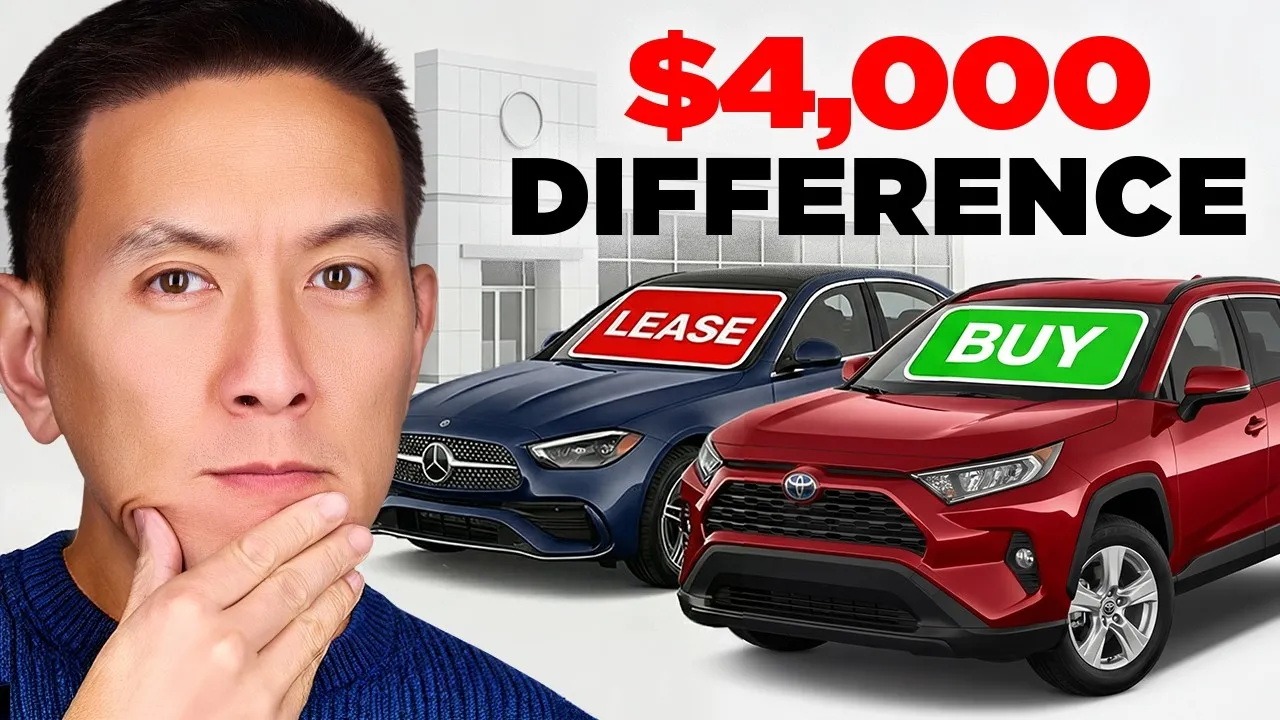
To illustrate the financial divergence, a detailed comparison of buying versus leasing a Toyota RAV4 Woodland Edition over a six-year period provides critical insights. The analysis assumes a prime credit score with a 6.51% APR, a 20% down payment ($7,980), and a 72-month loan term.
Buying Scenario: The Long-Term Investment
Under the buying scenario, the monthly loan payment amounts to $537, totaling $38,664 over six years. A significant portion of this, $6,744, is attributed to interest charges. Beyond the loan, the analysis incorporates additional ownership costs:
- Insurance: Estimated at $8,640 over six years.
- Fuel: Projected at $11,880 ($165/month) over the same period.
- Maintenance: Calculated at $7,272 over 72 months.
The RAV4 demonstrates strong residual value, retaining 68% of its worth after six years, translating to a resale value of approximately $27,143. When all expenses are aggregated and the resale value is subtracted, the total cost of ownership for the RAV4 over six years stands at $47,033. This equates to an annual cost of $7,839, meaning consumers pay roughly $7,133 over the sticker price for the privilege of owning the vehicle outright for this duration.
However, the scenario shifts dramatically if the vehicle’s residual value plummets to 47%, a more common depreciation rate. In such a case, the total cost of ownership escalates to over $55,500, a staggering 40% increase above the initial sticker price.
Leasing Scenario: The Cost of Convenience
Leasing, essentially a long-term rental, typically offers lower monthly payments and less upfront cash. The core principle of leasing involves paying for the vehicle’s depreciation over a set term, plus financing charges and taxes. To facilitate a direct comparison, the analysis models two consecutive three-year leases, covering a total of six years.
- Down Payment (per lease): $3,750, totaling $7,500 over six years.
- Monthly Payments: $450 per month, amounting to $32,400 over 72 months.
- Insurance and Fuel: Assumed to be the same as the buying scenario ($8,640 and $11,880, respectively).
- Maintenance: Estimated at $0, as it is often included or covered under lease agreements.
The cumulative cost for this six-year leasing arrangement reaches $60,420, or $10,070 per year. A critical distinction in leasing is the absence of a resale value, as the vehicle is returned to the dealership. This makes the total annual cost of leasing $2,231 higher than buying, resulting in an overall difference of $13,386 over six years in favor of purchasing.
Navigating the Nuances: When Lease Numbers Change
While the initial six-year comparison favors buying, three key scenarios can alter the financial calculus:
- Shorter Ownership Periods (3 Years): When considering a three-year ownership horizon, leasing becomes more competitive, particularly for vehicles with lower residual values. For the RAV4, buying over three years costs $24,765 ($8,255/year), while leasing totals $30,210 ($10,070/year). Buying still saves $5,445, but the gap narrows significantly. If the RAV4’s residual value dropped to 60% after three years, leasing would become the cheaper option by approximately $2,900. However, buyers retain an asset (the car) after three years of purchasing, whereas leasing yields nothing tangible.
- High Mileage Drivers: Standard leases typically cap annual mileage at 10,000-12,000 miles, with substantial overage fees (15-25 cents per mile). Driving 18,000 miles annually, for example, could incur an additional $4,500 in fees per lease, totaling $9,000 over six years. This penalty makes leasing prohibitively expensive for high-mileage drivers.
- Interest Rate Fluctuations: Lower interest rates favor financing. A drop from 6.51% to 4.5% on a loan could save approximately $2,160 over six years. Conversely, an increase to 8.5% would raise monthly payments, adding $2,448 to the total loan cost over the same period. While buying may still be preferable due to asset ownership, higher rates make the math less favorable compared to leasing.
Beyond the Numbers: Personal Values and Strategic Ownership
The decision between buying and leasing is not solely financial. Some consumers prioritize the allure of new technology, reduced maintenance worries, and warranty coverage associated with leasing every three years. This approach can be financially justified in specific circumstances:
- Business Use: Lease payments can often be written off as business expenses, offering tax advantages that may offset higher costs.
- Image and Branding: For professionals in sales, real estate, or consulting, a new car every few years can be a strategic investment in projecting success and maintaining a professional image.
- Personal Preference: For those who value novelty, enjoy frequent car upgrades, or prioritize peace of mind over long-term cost savings, leasing can align with their lifestyle values.
The author advocates for a pragmatic approach to car ownership. The ideal scenario is purchasing a vehicle outright with cash.
If financing is necessary, the strategy involves selecting a reliable, high-resale-value car, securing the shortest affordable loan term, and retaining the vehicle for an extended period (10-12 years) to drastically reduce the cost per year. Upon paying off the loan, redirecting those former car payments into investments can accelerate wealth accumulation.
Market Impact and Investor Takeaways
The escalating true cost of car ownership underscores a broader trend of reduced affordability in major consumer durables. This impacts household budgets, potentially dampening consumer spending in other sectors. For investors, the automotive industry faces a complex environment:
- Automakers and Dealerships: Companies relying on high-volume sales of new vehicles may see pressure on margins as consumers become more cost-conscious or delay purchases. The increasing emphasis on total cost of ownership could favor brands known for reliability and strong residual values.
- Aftermarket Services: As cars are kept longer, the demand for maintenance, repair, and parts suppliers could see a sustained increase.
- Financial Services: Lenders providing auto loans and leasing companies face evolving risk profiles based on interest rate sensitivity and vehicle depreciation trends.
Consumers must adopt a rigorous approach to calculating the total cost of ownership, factoring in all associated expenses and considering their personal usage patterns and long-term financial goals. The era of simply looking at the sticker price or monthly payment is over; a comprehensive financial analysis is now essential for making informed decisions in the automotive market.
Source: Buying vs Leasing a Car: The New Reality in 2026 (YouTube)