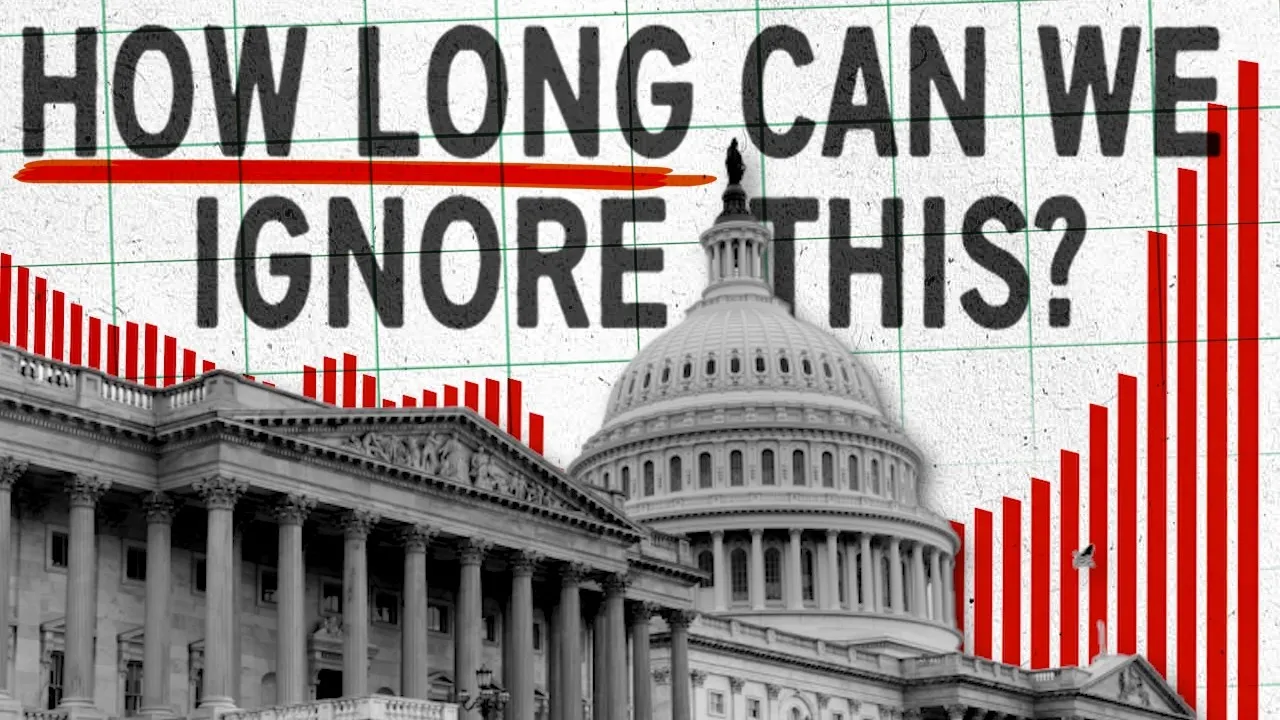
US Debt Nears $40 Trillion: Why No Crisis Yet?
For decades, the specter of a federal debt crisis has loomed, a narrative amplified by the stark visuals of the national debt clock and recurrent government shutdowns. Yet, despite the United States approaching a staggering $40 trillion in debt, a debt-to-GDP ratio of approximately 130%, and a significant acceleration in borrowing—with nearly half of outstanding debt accumulated in the last six years—a full-blown crisis has been averted. This paradox raises a critical question: why hasn’t this ballooning debt translated into immediate economic turmoil, and when might that change?
The Debt Conundrum: Numbers and Perceptions
The scale of US federal debt is immense. Having surpassed $38 trillion and now nearing the $40 trillion mark, the figures are a cause for concern among fiscal watchdogs.
A significant, and often overlooked, consequence is the rising cost of servicing this debt. Interest payments alone now consume approximately 20% of the federal budget, a substantial portion that diverts funds from other critical areas.
Politicians frequently engage in partisan debates over fiscal responsibility, often shifting their stances depending on their party’s position in power. Historically, both Republicans and Democrats have contributed to debt increases.
For instance, under President Trump, the debt limit was raised three times with bipartisan support, and the debt doubled during his term. This cyclical pattern highlights the political complexities involved in addressing the national debt.
Understanding the Mechanics: The Treasury General Account
A common misconception is that the national debt has continuously climbed since the last budget surplus in 2002. However, the reality is more nuanced. The debt ceiling, a self-imposed limit on government borrowing, plays a key role.
When this ceiling is suspended or raised, the government can issue new debt. When it’s in effect, the government often relies on funds held in the Treasury General Account (TGA), essentially the federal government’s checking account held at the Federal Reserve.
The TGA holds tax receipts and other federal revenues and is used to pay for government expenses, including debt repayments. As of recent reports, the TGA held over $900 billion, a near-record level outside of pandemic-related spending.
During periods of debt ceiling constraints, this account can be drawn down significantly. For example, after a debt ceiling suspension ended, the TGA balance fell from over $800 billion to less than $300 billion in six months.
The debt ceiling itself has been a recurring point of political contention. In recent years, standoffs over raising the debt limit have brought the U.S. Perilously close to default. These events, occurring in 2011, 2013, and 2023, involved intense political brinkmanship.
In the 2023 standoff, the Treasury’s TGA balance dwindled to less than $40 billion, with an estimated 48 hours of spending capacity remaining before potential default. These episodes, while not leading to a full-blown crisis, have had tangible consequences, including a credit rating downgrade by Fitch from AAA to AA+ following the 2023 event, signaling that U.S. Federal borrowing was no longer considered entirely risk-free.
Why No Crisis Yet? The Role of the U.S. Dollar and Economic Resilience
Despite these near misses, several factors have prevented an immediate debt crisis. The U.S. Dollar’s status as the world’s primary reserve currency provides a unique advantage.
The U.S. Can, in theory, always print more money to meet its obligations, making a sovereign default highly improbable. The global financial system is built around U.S. Treasuries as a benchmark asset, creating immense demand.
However, this reliance on the dollar and Treasuries is not without risks. The primary concern for lenders is not outright default, but rather the erosion of the value of their investment due to inflation or a decline in the dollar’s global standing.
If U.S. Treasuries can no longer be reliably used as a stable, liquid asset, it could destabilize global financial plumbing. Similarly, a decline in the U.S.’s economic dominance could reduce demand for the dollar.
The Growing Cost of Servicing Debt
The increasing cost of debt servicing is a significant concern. As more debt is rolled over at higher interest rates, the total amount dedicated to interest payments has nearly tripled in the last five years alone.
While the U.S. Has managed similar debt-to-GDP ratios for interest payments in the past (like in the 1980s with much higher rates), the sheer volume of current debt means even modest interest rate increases have a profound impact. A 1% rise in interest rates can now cost more than 1% of GDP in repayments.
Potential Paths Forward: Growth, Inflation, or Austerity?
There are six theoretical options for addressing the national debt:
- Grow the economy out of it: This is a politically popular option, as it suggests achieving fiscal stability through economic expansion rather than austerity. If economic growth outpaces debt accumulation, the debt-to-GDP ratio can decrease. While the U.S. Debt-to-GDP ratio has shrunk from a pandemic high of 132% to around 121%, this improvement is partly a result of post-pandemic recovery and does not negate the long-term upward trend. The current interest payment burden (around 4% of GDP) requires a sustained annual growth rate of at least that much, which is challenging to achieve consistently.
- Inflate the debt away: By increasing inflation, the real value of existing debt, especially fixed-rate debt, would decrease. However, this strategy carries significant risks. It could be perceived as a form of default by lenders, leading them to demand higher interest rates on future borrowing. It could also undermine the U.S. Dollar’s reserve currency status and exacerbate cost-of-living issues for citizens.
- Raise taxes: While seemingly straightforward, increasing taxes faces political hurdles and diminishing returns. Historical data shows that total federal receipts as a percentage of GDP have remained remarkably consistent since World War II, even with significant shifts in tax burdens from higher earners to middle-income individuals. This suggests that tax increases alone may not be sufficient to close the growing spending gap.
- Cut spending: Reducing government expenditure is politically difficult, especially since a large portion of spending is on non-discretionary items like pensions and healthcare, or debt interest. Cuts to discretionary areas like defense are also complex, particularly in the current geopolitical climate and given the role of military spending in job creation.
- Turn into Japan: This refers to a scenario of prolonged low growth, low inflation, and low interest rates, which can help manage high debt levels but is generally undesirable for asset owners seeking growth.
- Continue to kick the can down the road: This has been the de facto strategy, relying on a combination of economic growth and continued borrowing, while deferring difficult decisions.
Market Impact and Investor Considerations
The current situation presents a delicate balance. The U.S. Has so far avoided a debt crisis due to its unique global financial position and the dollar’s reserve status. However, the increasing cost of debt servicing, the risk of inflation eroding debt value, and the political volatility surrounding the debt ceiling are growing concerns.
For investors, the implications are complex. While outright default remains unlikely, the potential for increased borrowing costs, higher interest payments diverting funds from productive investments, and the erosion of the dollar’s value pose risks. The downgrade of the U.S. Credit rating is a warning sign.
As the U.S. Debt continues to grow and interest rates remain elevated, lenders will likely demand higher yields to compensate for perceived risks. This could lead to higher borrowing costs across the economy, impacting everything from mortgages to corporate bonds.
The long-term outlook depends on whether the U.S. Can implement sustainable fiscal reforms. Without significant policy changes, the trajectory suggests a continued reliance on borrowing, with increasing pressure from debt servicing costs and potential vulnerabilities in the global financial system. The options available—economic growth, fiscal discipline, or navigating the complex interplay of inflation and interest rates—will shape the future of U.S. Fiscal health and its impact on global markets.
Source: Why Haven't We Had A Debt Crisis… Yet? (YouTube)