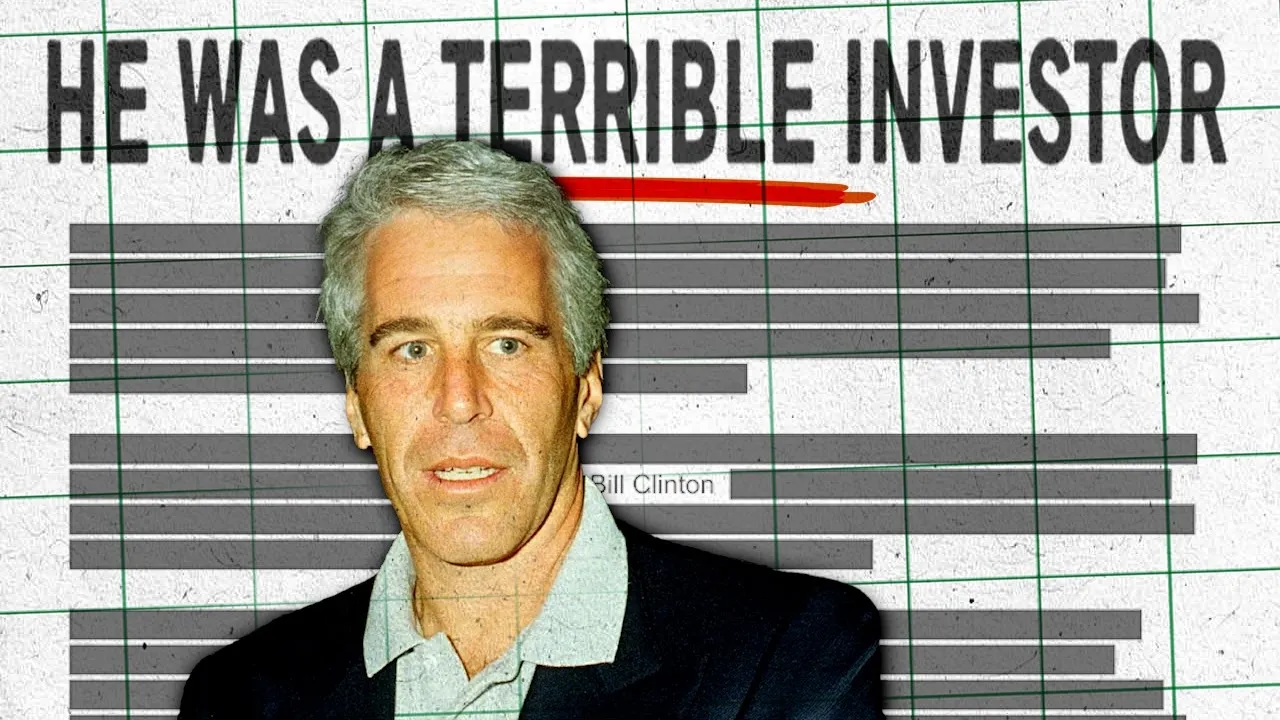
Epstein’s $577 Million Fortune Remains Enigmatic
In the nearly six years since his death, the source of Jeffrey Epstein’s estimated $577 million fortune continues to elude clear explanation. While his last will and testament, signed just two days before his death, detailed this substantial sum, the mechanisms by which he amassed such wealth remain shrouded in mystery, prompting ongoing investigations and public scrutiny.
An Unconventional Financial Career Path
Publicly, Epstein was described as a financier who made his fortune by “moving other people’s money around in creative ways.” However, the transcript reveals a career path marked by a distinct lack of traditional qualifications and a pattern of “failing upwards.” Despite not holding credentials such as a tax lawyer, CPA, Series 7 license, or CFA, Epstein reportedly charged exorbitant fees for services like tax advice and wealth management. He also commanded significant sums as a consultant, all without a college degree.
His early career began in the financial industry after being dismissed as a high school math teacher in 1976. He landed a junior role at Bear Stearns, reportedly starting as a “coffee getter” for a floor trader.
By 1980, he had risen to the position of limited partner at the firm. This rapid ascent, from a junior assistant to a partner in just four years, is considered highly unusual, especially for individuals entering the finance industry today, which is far more competitive and credential-focused.
During his tenure at Bear Stearns in the 1980s, Epstein earned a notable $200,000 annually. While this sum alone, with prudent investment, could have contributed significantly to his wealth, his departure from the firm was abrupt and occurred just a year later.
Reasons cited for his exit include lending money to a friend for stock purchases (outside industry guidelines), an alleged affair with an office secretary, and facing charges from the SEC for violating Regulation D, which pertains to circumventing public investment registration requirements. The firm itself was also under investigation for insider trading, a case in which Epstein later testified.
Questionable Ventures and Alleged Schemes
After leaving Bear Stearns, Epstein launched his own firm, International Asset Group (IAG), reportedly acting as a high-end debt collector and recovering embezzled funds for clients. One notable client was Adnan Khashoggi, a figure linked to the Iran-Contra affair. During this period, Florida Attorney General Alexander Acosta reportedly stated that Epstein “belonged to intelligence and to leave it alone,” and was “above his pay grade,” adding another layer of intrigue to his operations.
Epstein later worked as a senior consultant for Towers Financial Corporation, a collection agency. While reportedly earning $25,000 per month (approximately $70,000 in today’s dollars), this income alone was insufficient to explain his eventual net worth.
Towers Financial Corporation was later revealed to be operating a massive Ponzi scheme, which imploded in 1993, costing investors an estimated $450 million. Despite his senior role and self-proclaimed status as a protégé of the firm’s leader, Epstein was never charged in connection with this fraud.
The Unexplained Wealth and Fee Structure
The transcript highlights that even with a string of questionable professional dealings, Epstein was not yet close to his ultimate wealth level. His firm, J.
Epstein and Company, later rebranded as Financial Trust Company, focused on managing assets for ultra-high-net-worth clients, specifically those with billions in net worth. The primary revenue streams appear to have been substantial fees paid by a select few wealthy individuals.
Two of his most significant known clients were Les Wexner, co-founder of Bath & Body Works, and Leon Black, co-founder of Apollo Global Management. Over 15 years, Wexner reportedly paid Epstein $200 million in fees for tax, estate, and asset management advice. This amount, averaging nearly $20 million annually, is considered exceptionally high, especially given Epstein’s lack of credentials.
The relationship was unusually close, with Wexner reportedly owning Epstein’s New York residence for over a decade while Epstein lived there. Allegations suggest Epstein leveraged this relationship to present himself as a talent scout for Victoria’s Secret, a claim that drew scrutiny to the company’s culture, leading to a $90 million settlement with shareholders.
Leon Black allegedly paid at least $158 million to Epstein for financial services between 2012 and 2017, according to Senate Finance Committee investigations. This averages over $30 million per year.
While sophisticated financiers often use external advisors for personal finances, the magnitude of these payments raised questions, potentially suggesting veiled payments for quid-pro-quo services beyond finance, or the use of Epstein as a conduit to tax havens. Epstein’s firm, operating out of the U.S. Virgin Islands, benefited from economic development tax incentives, resulting in an effective tax rate as low as 4% on these fees.
Beyond Wexner and Black, Epstein’s firm reportedly received an additional $118 million in traceable fees from other individuals and entities, including members of the Johnson & Johnson family and the hedge fund Highbridge Capital. In total, his firm is estimated to have brought in over $488 million in fees.
Discrepancies and Unaccounted Variables
Despite these substantial fee revenues, the source of Epstein’s full net worth remains a puzzle. The transcript points out that only about half of his wealth, as detailed in his will, was in cash-flow generating assets.
This figure does not account for significant losses from failed investments, such as his stake in Liquid Funding, an offshore hedge fund that engaged in complex financial instruments like repurchase agreements and mortgage-backed securities. This firm, in which Bear Stearns held a 40% stake in its holding company, had approximately $900 million in assets but imploded due to leveraged derivatives and failing mortgage-backed securities, mirroring the eventual collapse of Bear Stearns itself in 2008.
Epstein’s lifestyle was undoubtedly expensive, with substantial expenditures on private jet travel, property taxes, real estate upkeep, and legal fees, which alone could amount to millions annually. The transcript notes he engaged over 75 lawyers during his life, including prominent figures like Alan Dershowitz. When these considerable expenses are factored in, the traceable revenue streams alone might not fully explain his accumulated wealth.
Lingering Questions and Offshore Networks
The Justice Department is reportedly reviewing approximately 5.2 million documents related to the case, though many are heavily redacted. The complex web of jurisdictions, shell corporations, and strict banking secrecy laws employed by Epstein makes tracing his finances exceptionally difficult. His operations in offshore financial centers like the U.S. Virgin Islands and involvement with entities like the offshore hedge fund Liquid Funding, registered in Bermuda and owned by a Delaware holding company, further obscure the money trail.
Senate Finance Committee reports indicate over $1.9 billion in direct transactions flowed through Epstein’s company accounts at major Western banks, exceeding the documented fees and even linking to sanctioned Russian banks. This suggests a level of financial activity and client base that remains largely undisclosed.
The ongoing release of documents and investigations into Epstein’s financial dealings highlight the pervasive nature of opaque offshore business practices. While some of these practices may be used for tax avoidance, the lack of oversight in such systems raises concerns about their potential for illicit activities. The full extent of Epstein’s personal finances and the true sources of his wealth may never be definitively known due to the deliberate complexity and secrecy surrounding his operations.
Market Impact
The case of Jeffrey Epstein highlights significant vulnerabilities and risks within the global financial system, particularly concerning offshore finance, shell corporations, and the role of high-net-worth individuals and their advisors. The involvement of major financial institutions like Bear Stearns and the extensive fees paid by prominent figures like Les Wexner and Leon Black raise questions about due diligence and regulatory oversight. The reliance on complex financial engineering, as seen with Liquid Funding and mortgage-backed securities, also is a clear reminder of the systemic risks that can emerge from opaque financial markets, as evidenced by the 2008 financial crisis.
What Investors Should Know
For investors, the Epstein case is a cautionary tale about the importance of transparency and verifiable credentials in financial dealings. It highlights the need for rigorous due diligence when engaging financial advisors or investing in complex structures, especially those involving offshore entities or unconventional business models. The case also draws attention to the potential for financial services to be used as a cover for illicit activities, emphasizing the importance of understanding the underlying business operations and regulatory compliance of any financial institution or advisor.
Source: We (Still) Don't Know How Epstein Got So Rich… (YouTube)