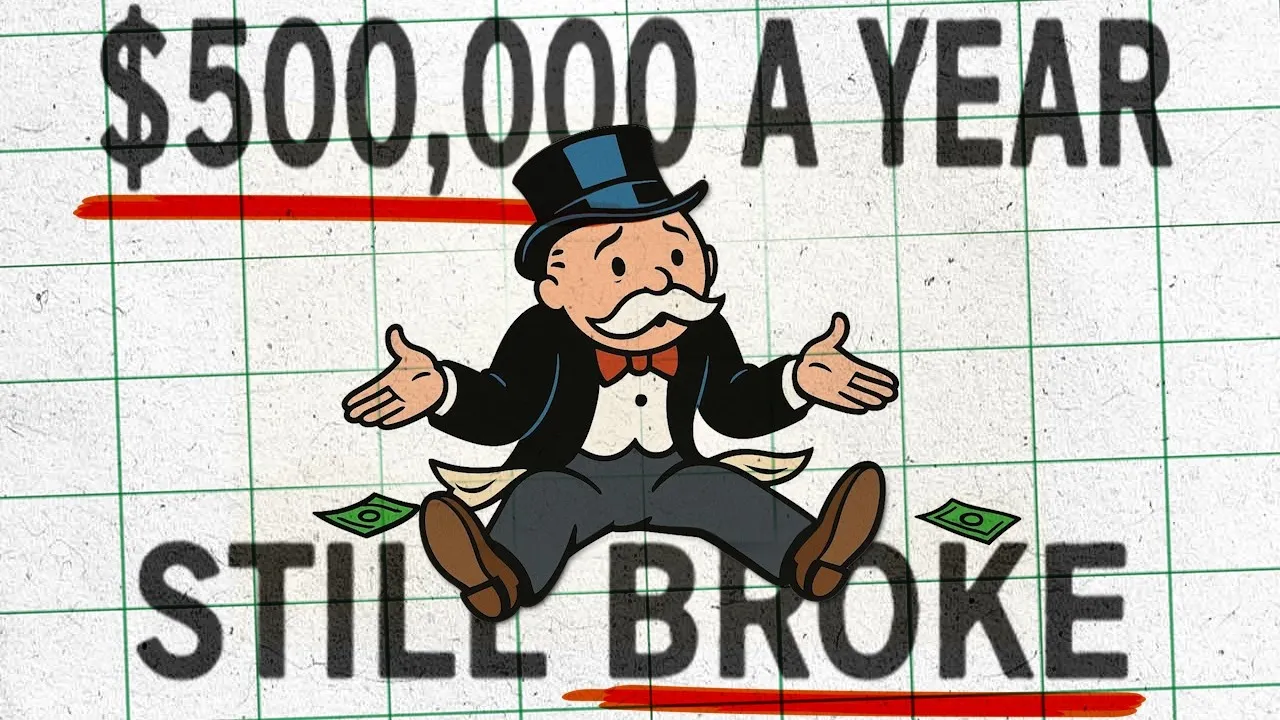
Top 1% Face Financial Strain Amidst Rising Costs and Shifting Economy
A recent report by Goldman Sachs has illuminated a surprising financial reality: 40% of individuals earning over $500,000 annually are living paycheck to paycheck. This figure, coupled with the finding that less than a third of this high-income group consistently contribute to long-term financial goals like debt reduction or retirement savings, suggests a significant shift in economic conditions compared to a decade ago.
While sympathy for the financial struggles of the affluent may be limited, this data reveals a broader economic trend. Historically, stories of sudden financial ruin were rare exceptions, typically involving athletes, celebrities, or lottery winners who mismanaged sudden windfalls.
In the past, a substantial income was often seen as a buffer, allowing individuals to overcome financial missteps and continue accumulating wealth. However, the current data indicates that financial hardship among top earners has transitioned from a cautionary tale to a more widespread phenomenon.
The Paradox of High Income, Low Savings
Several factors contribute to this paradoxical situation. One significant element is the increasing cost of living, particularly in major urban centers.
For instance, housing costs in cities like New York, San Francisco, or Seattle can easily consume a large portion of a high income. A family home within commuting distance of these areas can cost seven figures, and after accounting for a substantial mortgage and high taxes (income, property, and state), the disposable income can be significantly reduced.
Beyond the sheer cost of maintaining a high-status lifestyle, a key driver appears to be the psychological impact of extreme wealth inequality. While the median income earner might interact primarily with peers of similar financial standing, individuals within the top 1% often find themselves in social and professional circles with vastly greater wealth.
This phenomenon, termed “socioeconomic fractality,” means that even within the top income brackets, there are significant disparities. An analyst earning $500,000 a year might work alongside a partner earning $10 million, creating a constant sense of relative financial inadequacy.
“The extreme concentration of wealth at the very top of the distribution has become more pronounced over recent years… What this has changed though is how expensive it is to be a rich person.”
This constant exposure to greater wealth can fuel a desire to “keep up,” leading to increased spending on luxury goods, services, and experiences. The market has responded to this demand by creating an explosion of high-end products and services tailored specifically for the ultra-wealthy. From hypercars costing millions to exclusive social clubs and private jet services, the options for conspicuous consumption have multiplied, making it more challenging for even high earners to maintain their desired lifestyle without straining their finances.
The Role of Financial Literacy and Industry Practices
Another critical factor is the gap in financial literacy, even among professionals in high-paying fields. Studies, including those examining medical doctors, have found a surprising lack of fundamental financial education. These individuals, often motivated by career prestige rather than financial acumen, may be more susceptible to accumulating significant debt early in their careers, such as large mortgages and car loans, especially given their access to credit and comfort with debt from student loans.
This lack of financial discipline, combined with the pressure to maintain appearances within their elite circles, can lead to a cycle of living beyond their means. While they may not face the same immediate consequences as lower-income individuals living paycheck to paycheck, the long-term implications can be significant if savings and investment goals are neglected.
Market Impact and Investor Considerations
The trend of high earners struggling financially has several implications for the broader economy and investment landscape:
- Consumer Spending Shifts: While high-income earners may be straining their budgets, the demand for luxury goods and services continues to be a significant market driver. Companies catering to this segment are likely to remain resilient.
- Increased Debt Levels: The propensity for high earners to take on debt could contribute to overall consumer debt levels, potentially impacting credit markets.
- Focus on Wealth Accumulation: For those who manage their finances effectively, the current economic climate might present opportunities. The persistent gap between income and expenses for many could incentivize a stronger focus on long-term wealth-building strategies, such as investing in assets that appreciate over time.
- Economic Inequality Dynamics: The widening gap within the top 1% highlights the complex nature of wealth and income inequality. This can have broader social and political ramifications, influencing policy debates around taxation and economic opportunity.
Despite the challenges, many high-income earners still possess advantages that can lead to long-term financial security. Assets acquired, such as real estate in prime locations, are likely to appreciate significantly over time. Benefits like employer-funded retirement accounts and stock options can provide substantial wealth accumulation, even if current cash flow is tight.
Ultimately, the Goldman Sachs report is a clear reminder that high income alone does not guarantee financial well-being. The interplay of rising costs, social pressures, and financial literacy plays a key role in the financial health of even the wealthiest segment of the population.
Source: How The 1% Are Bankrupting Themselves at Record Rates (YouTube)