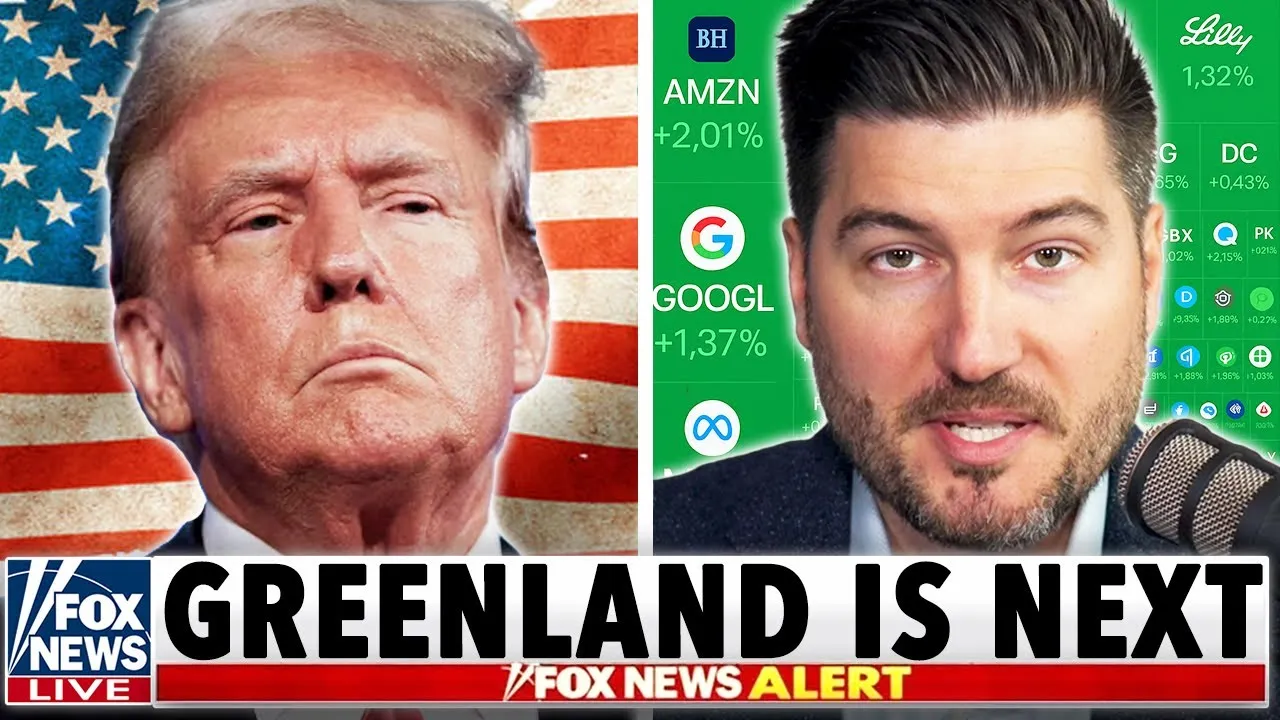
Trump’s Greenland Gambit Triggers Tariffs, Jolts Global Markets
In a move that has sent ripples through international markets and diplomatic circles, President Donald Trump’s assertive pursuit of Greenland has led to the imposition of significant tariffs on eight European countries. These tariffs, initially set at 10%, are slated to escalate to 25% by June 1st, remaining in place until a “complete and total purchase” of Greenland is negotiated, according to the President’s statements.
Geopolitical Ambitions and Economic Levers
The President’s rhetoric, particularly during his appearances at Davos, has been direct. “After the war, we gave Greenland back to Denmark. How stupid were we to do that, but we did it,” Trump stated, questioning the historical decision and implying a current desire to reassert U.S. Influence over the strategically vital Arctic island.
He further emphasized Greenland’s importance, tweeting, “Greenland is imperative for national and world security. There can be no going back on that. Everyone agrees.”
This push is framed by some analysts as a strategic play for geopolitical positioning, potentially enhancing U.S. Defense capabilities against adversaries like Russia and China. However, the potential economic implications are equally substantial, particularly concerning Greenland’s vast untapped mineral resources and Venezuela’s significant oil reserves, which have been brought into the conversation regarding future U.S. Control.
Territorial Expansion and Historical Context
The sheer scale of the proposed acquisition is historically unprecedented. Acquiring Greenland alone would add approximately 836,000 square miles to U.S. Control, a territory comparable in size to the Louisiana Purchase of 1803, which dramatically expanded the United States westward.
The discussion also encompassed Venezuela, which holds an additional 340,000 square miles. While the notion of Venezuela becoming U.S. Territory is described as sensationalist, the inclusion highlights a broader ambition for expanded control.
This potential expansion dwarfs historical annexations, such as the Texas annexation. The President’s accompanying social media posts, including an image depicting a U.S. Flag over Greenland, Canada, and Venezuela, have underscored this ambitious vision, creating significant market and political stir.
Resource Wealth: A Multi-Trillion Dollar Proposition
The economic rationale behind such an acquisition is rooted in the immense natural resources of both Greenland and Venezuela. Venezuela boasts proven crude oil reserves exceeding 300 billion barrels, among the largest globally, although extraction challenges are significant. The total estimated natural resource value, including oil, minerals, and gas, is often cited in the trillions of dollars.
Greenland, in particular, is a treasure trove of mineral wealth. Analysts estimate its untapped resources, including rare earth metals, iron ore, graphite, zinc, copper, and gold, could be worth as much as $5 trillion. Combined, the potential control over natural resources in both regions could approach $20 trillion, representing more than half of the current U.S. Annual Gross Domestic Product (GDP).
Market Reactions and Trade War Escalation
The imposition of tariffs on key European allies, directly linked to the Greenland negotiations, has not been taken lightly. European leaders, including the President of the European Commission and various heads of state, have publicly rejected the strategy. Some EU officials have indicated a willingness to deploy trade defense mechanisms in response, raising concerns about a potential full-blown trade war between the U.S. And the European Union.
This situation echoes past trade disputes, such as the 2025 U.S.-EU trade agreement discussions, which involved bilateral trade valued at $1.2 to $2 trillion. The current actions risk destabilizing this vital economic relationship.
Equity markets have shown volatility in response, though some recovery was noted at the time of reporting. Commodities and digital assets have also reacted to the escalating geopolitical and trade tensions.
Amidst this uncertainty, gold prices have seen a notable surge, with some analysts pointing to central banks increasing their holdings as a hedge against potential currency devaluation and a fracturing global economic order. The price of gold reached approximately $4,824 per ounce, reflecting a significant upward trend.
What Investors Should Know
The U.S. Administration’s aggressive stance on acquiring Greenland, coupled with the imposition of tariffs on European allies, presents a complex scenario for investors. The potential economic upside from controlling vast natural resources is substantial, but it is counterbalanced by significant geopolitical and economic risks.
- Trade War Risk: The tariffs imposed on European nations could escalate into a broader trade conflict, impacting global supply chains, corporate earnings, and overall economic growth.
- Geopolitical Instability: The pursuit of territorial expansion, even through negotiation, introduces geopolitical uncertainty that can affect international relations and market stability.
- Resource Valuation: While the estimated value of resources in Greenland and Venezuela is enormous, the actual economic viability and extraction costs remain critical factors.
- Market Volatility: Investors should anticipate continued market volatility across equities, commodities, and currencies as these geopolitical developments unfold. Assets traditionally seen as safe havens, like gold, may continue to attract attention.
- Long-Term Implications: The long-term impact hinges on whether a deal is reached, the terms of such an agreement, and the subsequent reactions from global powers. The U.S.’s approach to trade and international relations could be significantly reshaped.
While the likelihood of a complete U.S. Acquisition of Greenland and Venezuela is uncertain, the current strategy has undeniably altered the geopolitical and economic landscape, prompting careful observation from market participants worldwide.
Source: Trump's Greenland Move Changes Everything (Here's Why) (YouTube)