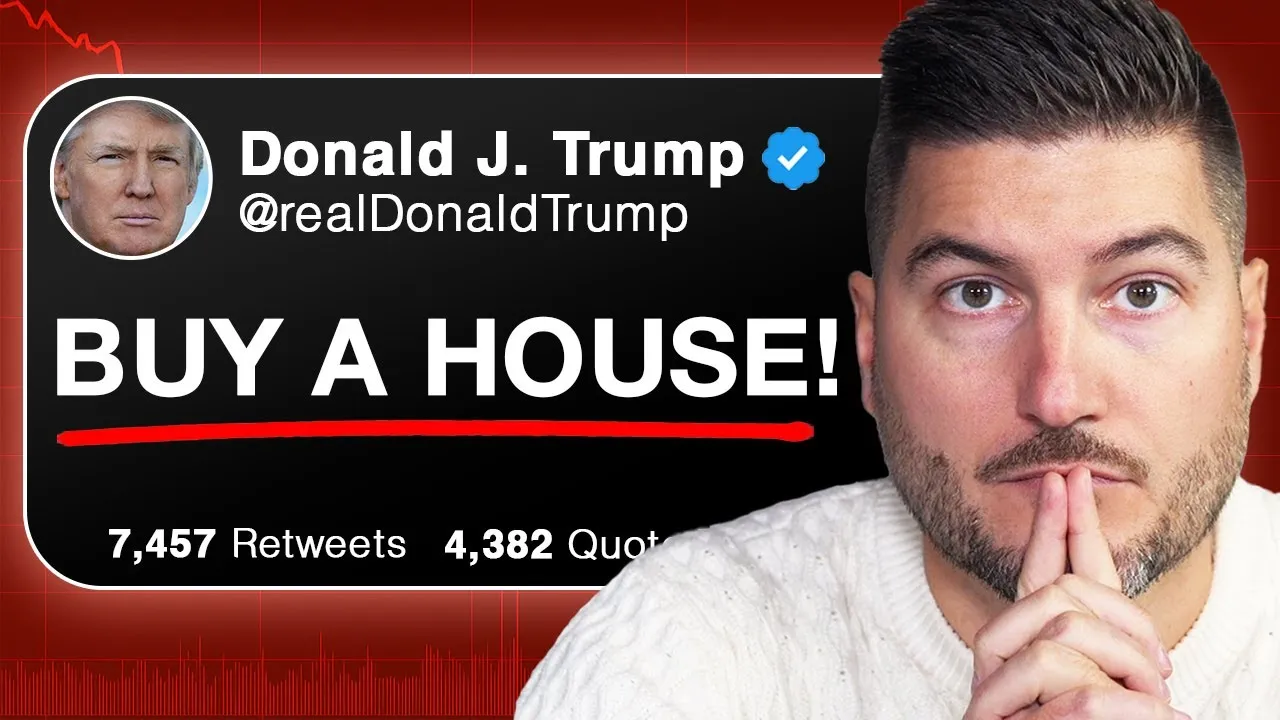
Trump’s 50-Year Mortgage Proposal Sparks Fierce Debate
A recent proposal by former President Donald Trump to introduce 50-year fixed-rate mortgages has ignited a firestorm of discussion across the financial landscape. While proponents suggest it could offer much-needed affordability, critics warn of a dangerous escalation of long-term debt and a potential distortion of the housing market. This analysis digs into the numerical realities of such a product, exploring its implications for borrowers and the broader economy.
The Mechanics of Extended Loan Terms
Fundamentally, the proposition is to extend the repayment period of a home loan from the traditional 30 years to 50 years. The primary appeal lies in reducing monthly payments. Using a hypothetical loan amount of $400,000 with a 6% interest rate, a 30-year fixed mortgage would result in a monthly payment of approximately $2,398.
In contrast, a 50-year mortgage under the same terms would lower this payment to roughly $2,105, offering a monthly saving of about $293. This reduction, while seemingly modest, could be significant for buyers struggling with affordability.
Amortization Schedules: The Hidden Cost
The stark difference becomes apparent when examining the amortization schedules of these loans. An amortization schedule details how loan payments are allocated between principal and interest over time.
In a traditional 30-year mortgage, a larger portion of early payments goes towards interest, but the principal is significantly reduced over the loan’s life. For instance, in the first year of the 30-year loan example, approximately 17.2% of the total payments ($4,961 out of $28,778) went towards the principal.
However, the 50-year mortgage presents a dramatically different picture. In the first year, only about 5% of the total payments ($1,315 out of $25,267) were applied to the principal.
This means that for a considerable duration, the borrower is essentially paying almost entirely towards interest, with very little impact on the actual loan balance. Over the full 50-year term, the total interest paid on the 50-year loan would balloon to approximately $863,000, compared to roughly $463,000 for the 30-year loan, making the total repayment over $1.26 million versus $863,000 for the same initial $400,000 loan.
“The majority is going to go towards the light blue part which is interest and a minority is going to go towards the principal the actual amount that you owe.”
The Investment Angle: Discipline vs. Default
The core argument for the 50-year mortgage often hinges on the idea that borrowers could invest the monthly savings. If an individual consistently invested the $293 difference each month over 50 years, assuming a conservative 8% annual rate of return, the investment could grow to approximately $2.1 million. After accounting for inflation (estimated at 3% annually), the real return could be around $430,000.
However, this scenario relies on a significant assumption: unwavering financial discipline. The reality for many borrowers is that these savings are often consumed by other expenses or lifestyle upgrades, rather than long-term investments. The temptation to spend the difference on immediate wants rather than future financial security is a substantial hurdle.
Market Impact and Investor Considerations
What Investors Should Know
- Extended Debt Burden: A 50-year mortgage significantly increases the total interest paid over the life of the loan, potentially doubling the cost of a home compared to a 30-year term.
- Slow Principal Reduction: Early payments on a 50-year mortgage are heavily weighted towards interest, meaning borrowers build equity much more slowly.
- Inflation Hedge Argument: Proponents argue that in an inflationary environment, paying back a fixed loan amount with devalued future currency can be advantageous. However, this relies on sustained income growth to keep pace with inflation.
- Discipline is Key: The financial benefit of a 50-year mortgage is contingent on the borrower’s ability to consistently invest the monthly savings. Without this discipline, the longer term simply means more debt.
- Housing Price Inflation: Making housing more accessible through lower monthly payments could potentially drive up demand and, consequently, housing prices, further exacerbating affordability issues in the long run.
- Risk for Lenders: Longer loan terms generally increase the risk for lenders due to prolonged exposure to interest rate fluctuations and borrower default risk over a half-century. This could necessitate higher interest rates, negating some of the affordability benefits.
Broader Economic and Societal Questions
Beyond the immediate financial calculations, the proposal raises deeper questions about the nature of debt, the American Dream, and the long-term economic trajectory of the nation. Critics express concerns that such a product could further entrench a debt-laden society, where homeownership becomes a perpetual financial obligation rather than a path to wealth accumulation. The issue of property taxes, which continue indefinitely even after a mortgage is paid off, further complicates the notion of true ownership.
The discussion also touches upon the increasing difficulty for younger generations, like Gen Z, to achieve financial stability and homeownership, leading to debates about economic inequality and the sustainability of the current economic model. The potential for such extended mortgages to inflate housing prices, coupled with persistent property taxes, leads some to question if true homeownership is becoming an elusive ideal, pushing individuals towards a perpetual state of renting, either from a bank or the government.
While the 50-year mortgage proposal might offer a temporary reprieve in monthly payments for some, the long-term financial implications, including substantially higher total interest costs and slower equity building, warrant careful consideration. The debate highlights a fundamental tension between short-term affordability and long-term financial health in an increasingly complex economic environment.
Source: Trump's 50 Year Mortgage Just Broke The Housing Market (YouTube)