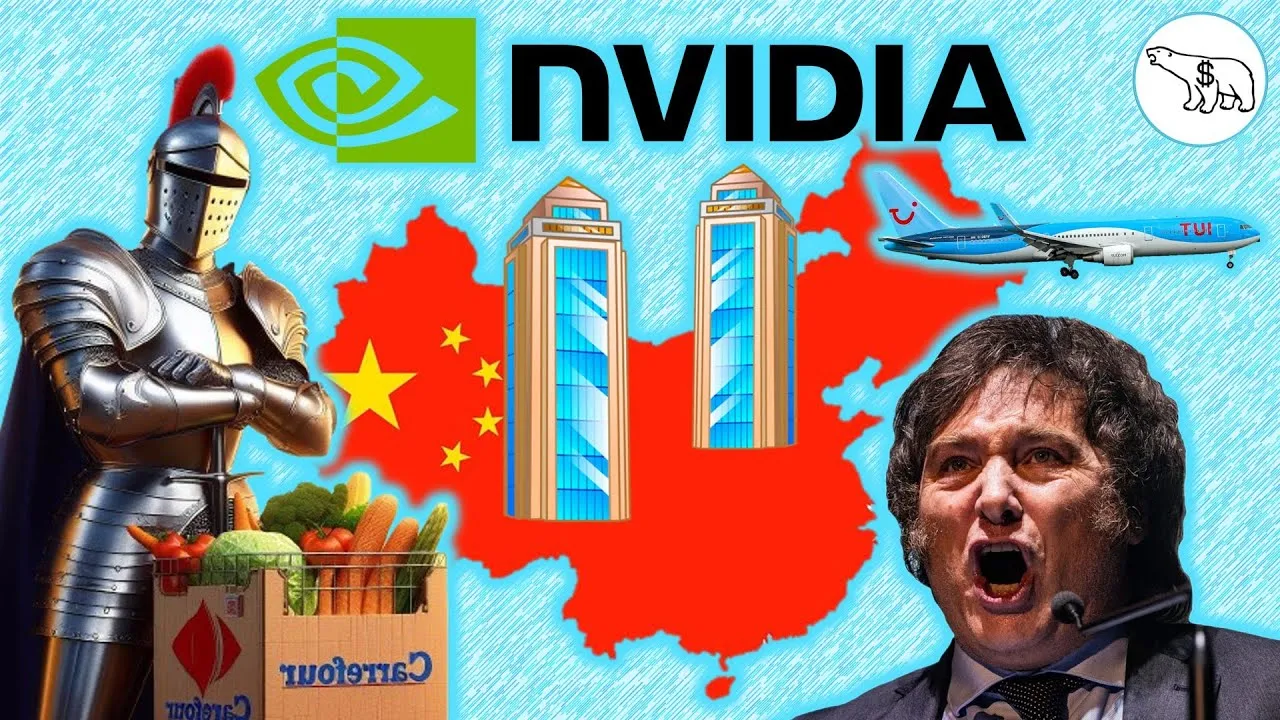
China’s Market Woes Deepen as Shanghai Composite Hits 5-Year Low
February 2024 brought significant market turbulence, with China’s stock market experiencing a sharp downturn. The Shanghai Composite index plunged to a five-year low on February 5th, marking a more than 20% decline since early 2022. This stands in stark contrast to Western markets, which have been trading at all-time highs.
The persistent real estate crisis, exemplified by the downfall of Evergrande, continues to cast a long shadow over the Chinese economy. Decades of rapid urbanization and overbuilding, coupled with stricter regulatory credit limits on developers, have led to a housing bubble that has now spread to the broader economy and stock market, creating a significant challenge for Chinese leadership.
In response, Chinese authorities are implementing measures that lean towards state control rather than free-market principles. Reports indicate increased censorship of public market communications and directives urging officials to promote optimistic economic narratives. Regulations on short selling have been tightened, with institutional investors restricted from selling more shares than they buy during the first and last 30 minutes of each trading day.
This approach, characterized as more ‘Mao Zedong’ than ‘Adam Smith,’ aims to stabilize the market, though critics argue it fails to address the underlying economic issues. The country also recorded a deflation of 0.8% in January, the most rapid fall in consumer prices in approximately 15 years, echoing trends seen during the global financial crisis. While this deflationary pressure might offer a slight deflationary effect globally, it highlights the significant economic headwinds China is facing.
Nvidia’s AI Dominance Fuels Record-Breaking Quarter
On the other side of the global economic spectrum, artificial intelligence darling Nvidia delivered a stellar performance in its fourth-quarter results, announced on February 21st. The semiconductor giant reported a staggering 265% increase in revenue, accompanied by robust margin development. CEO Jensen Huang described Nvidia’s AI supercomputers as the ‘AI generation factories of this Industrial Revolution,’ drawing parallels to the AC power generation plants of the last century.
Despite a high Price-to-Earnings (PE) ratio of around 60 based on trailing twelve months’ earnings, the market’s reaction was overwhelmingly positive. A simplified calculation, multiplying Q4 earnings by four, suggests a forward PE ratio of approximately 38, still demanding strong future performance but reflecting optimism for the company’s growth trajectory. Analysts covering Nvidia project its PE ratio to decrease to around 30 for the next fiscal year.
Nvidia’s market capitalization has surged past those of Google and Amazon, with only Microsoft and Apple now ranking higher. The company’s operational leverage is particularly impressive; a 25% increase in operating expenses led to a 265% surge in sales in the last quarter, largely facilitated by its partnership with Taiwan Semiconductor Manufacturing Company (TSMC).
The rapid ascent of Nvidia and the broader AI sector has sparked discussions about the potential for an economic bubble. While some investors see this as an opportunity to capitalize on rapid growth, others express caution, highlighting the high valuations and the speculative nature of the AI market.
Argentina’s ‘Shock Therapy’ Fuels Inflation, But Plans Continue
In Argentina, President Javier Milei’s ‘shock therapy’ economic reforms continued to unfold in January, with inflation reaching a staggering 254.4%, an increase from 211% in December. While this figure is alarming, it was anticipated as part of Milei’s plan to address deep-seated economic issues stemming from the previous administration’s policies, including currency devaluation and the removal of price controls. The rapid inflation is a direct consequence of the peso’s devaluation and the dismantling of artificial price supports.
Milei’s administration is aiming to steer Argentina away from hyperinflation, defined as monthly inflation exceeding 50%. The current high inflation, coupled with 40% of the population living below the poverty line, indicates the difficult path ahead.
The analogy of Argentina as an ‘addict’ to fiscal deficits, undergoing painful rehabilitation, was used to describe the situation. The hope is that by enduring this difficult period, Argentina can regain the trust of foreign investors and begin a process of rebuilding and recovery, similar to an individual recovering from addiction.
Tourism Sector Shows Resilience Amidst Economic Headwinds
Despite soaring inflation and concerns about consumer spending, the tourism industry demonstrated remarkable resilience in February. Europe’s largest tour operator, TUI, reported sales figures returning to pre-pandemic levels.
Similarly, Expedia has seen its sales reach all-time highs, with its market valuation approaching previous peaks. This resilience challenges the notion of a severely weakened consumer, prompting questions about whether tourism has fundamentally changed or if current spending patterns are influenced by factors like ‘revenge travel’ post-lockdowns or a shift in consumer priorities.
However, investors are cautioned against being lured by low valuations in cyclical industries. Historically, companies like TUI have experienced significant downturns during economic contractions, losing approximately 40% of their sales between 2007 and 2009. The current strength in tourism raises the question of whether this sector is becoming less cyclical or if it is simply experiencing a temporary boom before a potential market correction.
Carrefour Clashes with PepsiCo Over Price Hikes
A notable dispute emerged in the retail sector as French supermarket giant Carrefour removed PepsiCo products, including Lay’s, Lipton, and 7 Up, from its shelves in France, Italy, Spain, and Belgium, citing ‘unacceptable price increases.’ Carrefour accused PepsiCo of implementing excessive price hikes, while PepsiCo attributed the increases to rising operational costs. This confrontation highlights the ongoing tension between retailers and major consumer goods manufacturers concerning pricing strategies amidst inflationary pressures.
Carrefour has positioned itself as a consumer advocate, previously calling out ‘shrinkflation’ (reducing product size while maintaining price) with warning signs in its stores. While this stance garners positive publicity, it also is a strategic move for the retailer.
PepsiCo, in its fourth-quarter report on February 9th, projected a 4% organic revenue increase for 2024, in line with its 10-year average, though concerns about declining volumes were noted. The dispute, while currently localized to Carrefour’s operations and representing a small fraction of PepsiCo’s global revenue, signals a potential shift in pricing power, suggesting that even major brands may face pushback from retailers and consumers when price increases are perceived as excessive.
Market Impact
The events of February 2024 underscore a bifurcated global economic landscape. China’s significant market downturn and deflationary pressures contrast sharply with the robust performance of AI-driven companies like Nvidia and the surprising resilience of the tourism sector. Argentina’s aggressive fiscal reforms present a high-risk, high-reward scenario for investors.
The conflict between Carrefour and PepsiCo highlights the ongoing battle against inflation and its impact on consumer goods pricing and availability. Investors must navigate these diverse economic currents, considering both growth opportunities in sectors like AI and the potential risks associated with geopolitical factors, regulatory interventions, and inflationary pressures in various global markets.
What Investors Should Know
- China’s Economic Challenges: The ongoing real estate crisis and deflationary trends in China warrant close monitoring. Government intervention may stabilize markets in the short term, but long-term economic health depends on addressing structural issues.
- Nvidia and AI Growth: While Nvidia’s growth is exceptional, its high valuation suggests significant future performance is already priced in. Investors should assess the sustainability of AI-driven growth and potential sector-wide corrections.
- Argentina’s Reform Path: Milei’s reforms are a bold experiment with potentially high rewards if successful, but the immediate consequence is increased economic hardship. This remains a speculative investment environment.
- Tourism Sector Resilience: The strength in tourism suggests shifting consumer priorities or a less severe economic downturn than anticipated. However, its cyclical nature warrants caution regarding long-term outlooks.
- Consumer Goods Inflation: The Carrefour-PepsiCo dispute illustrates the pressure on pricing power in the consumer staples sector. Retailers and consumers are pushing back against significant price hikes, potentially impacting corporate revenue and volume growth.
Source: Top 5 Stock Market News of February 2024 (YouTube)