Navigating Market Trends: The Power of Core-Satellite Investing
In today’s dynamic financial landscape, investors are constantly bombarded with information about emerging trends, from cryptocurrencies to innovative tech stocks. However, seasoned financial content creator Austin Hankwitz, in a recent discussion, emphasized a disciplined approach that balances broad market exposure with calculated risk-taking. Hankwitz, who hosts the Rich Habits podcast, advocates for a strategy that prioritizes foundational, low-cost index funds while allowing for a smaller allocation to more speculative assets.
The Foundation: Index Funds and ETFs
Hankwitz, a finance and economics graduate who transitioned from mergers and acquisitions in healthcare to full-time content creation, highlights the enduring strength of passive investing. He advocates for dedicating the majority of an investment portfolio, typically 65% to 85%, to well-established index funds and Exchange Traded Funds (ETFs).
These vehicles, often referred to as the ‘boring’ but essential components of a portfolio, offer broad diversification across major market indexes like the S&P 500 or the Nasdaq. Their historical performance, often characterized as ‘up and to the right over a long period of time,’ provides a reliable engine for wealth accumulation.
The Satellite: Strategic Allocation to Higher-Risk Assets
The remaining 15% to 35% of the portfolio, according to the core-satellite strategy, can be allocated to assets that align with an investor’s specific interests or risk tolerance. This could include international stocks, precious metals like gold and silver, or even a small allocation to cryptocurrencies like Bitcoin.
Hankwitz stresses that these ‘satellite’ investments should be approached with a clear understanding of their inherent volatility. He uses the analogy of ‘vacation money, not grocery money,’ suggesting that these funds should be considered discretionary and not essential for daily living or long-term security.
“If you do want to have a little bit of nibble, call it low single digits in some cryptocurrency, some Bitcoin, like rock and roll, man. That’s fine. Because the cool thing about it is if you experience that 40% 70%, heck, it can go to zero.
If you’ve got 95% of your net worth over here and 5% of it goes to zero, well, congrats. You still have 95% of your net worth, right?”
Learning from Mistakes: The ARK Invest Example
Hankwitz openly shared his personal experience with the ARK Innovation ETF (ARKK), managed by Cathie Wood. He admitted to investing in the fund during its meteoric rise in the lead-up to February 2021, only to witness a significant downturn.
This, he notes, is a crucial learning opportunity, reinforcing the idea that such investments fall into the high-risk, satellite portion of a portfolio. The key takeaway is not to be discouraged by such outcomes, but to view them as lessons learned within a diversified framework, especially when the capital at risk is a small percentage of the overall net worth.
The ‘Hobby’ vs. ‘Core’ Debate
The discussion also touched upon whether investing in individual stocks or niche sectors should be treated as a hobby versus a core investment strategy. Hankwitz suggests that for investors who are deeply engaged with a company’s product or service – such as being a frequent Amazon shopper or Costco member – owning a small equity stake can be a natural and understandable extension. This approach can demystify stock ownership for those intimidated by complex market analysis, allowing them to become ‘equity owners’ in companies they already patronize.
However, he strongly advises against feeling pressured to engage in these higher-risk activities, especially for novice investors. The primary focus for retirement accounts, he asserts, should always be a ‘set it and forget it’ approach with broad market index funds.
Discerning News from Noise
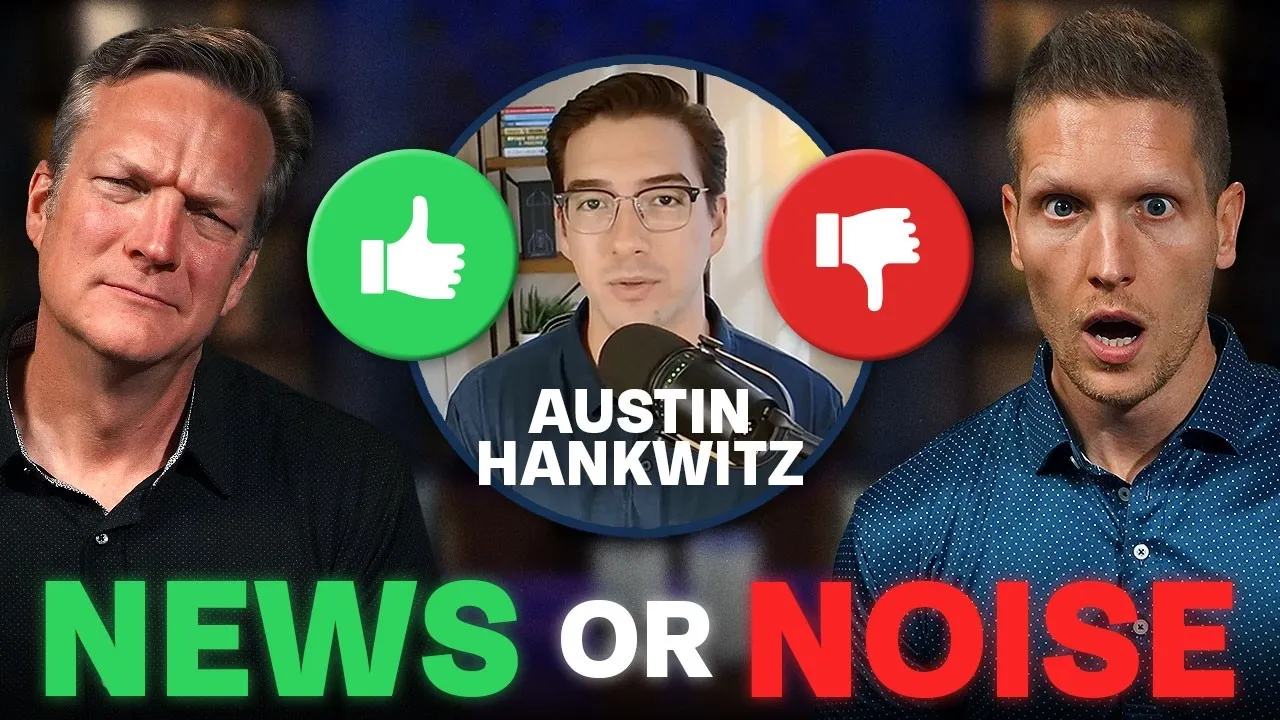
A significant portion of the conversation revolved around distinguishing actionable financial news from mere market noise. Hankwitz and his co-hosts played a game called ‘News or Noise,’ evaluating recent headlines to determine their relevance for individual investors. Headlines about specific tech stock crashes or a company’s chip sourcing decisions were largely dismissed as noise, as they offered no direct action for most investors and were primarily designed to attract clicks.
Conversely, major market movements like the Dow Jones or S&P 500 nearing record highs were considered news, as they reflected broader economic trends that could influence investment strategy. Headlines concerning layoffs, while potentially alarming, were framed as news that should prompt personal financial assessment, such as reviewing emergency funds and career resilience, rather than immediate investment action.
Market Cycles and Emotional Investing
The conversation highlighted the emotional nature of investing, likening the stock market’s swings to a pendulum that oscillates between excessive optimism and deep despair. Hankwitz cautioned against getting caught in this emotional cycle, emphasizing that while market sentiment can be erratic, the long-term trend for major indexes has historically been upward.
This perspective is crucial for investors to maintain discipline, especially when faced with sensational headlines or short-term market volatility. The core-satellite strategy, by anchoring a portfolio in stable index funds, provides a buffer against the emotional impulses that can lead to poor investment decisions.
What Investors Should Know
- Prioritize Core Holdings: The vast majority of your portfolio should be invested in low-cost, diversified index funds and ETFs for long-term growth.
- Strategic Satellite Bets: Allocate a smaller portion (15-35%) to higher-risk, interest-driven assets, understanding their volatility and potential for loss.
- Understand Risk Tolerance: Never invest money you cannot afford to lose in speculative assets. Treat these as ‘vacation money,’ not ‘grocery money.’
- Learn from Experience: Use investment mistakes, like those with high-growth, volatile funds, as learning opportunities within your satellite allocation.
- Filter Headlines: Differentiate between noise (clickbait, specific stock rumors) and news (broad market trends, economic indicators) that might warrant attention.
- Control Emotions: Avoid making investment decisions based on market hype or fear. Stick to your long-term strategy.
By adopting a core-satellite approach and maintaining a disciplined, long-term perspective, investors can navigate market trends effectively, balancing the pursuit of growth with prudent risk management.
Source: Don’t Fall For These Market Trends with @AustinHankwitz (YouTube)