Protect Your Shoulders: Master the Overhead Press
The overhead press is a fundamental exercise for building strong, functional shoulders. However, performing it incorrectly can lead to pain and injury, potentially jeopardizing your shoulder health for the long haul. A physical therapist and strength coach with a professional sports background emphasizes a critical adjustment to your pressing technique to ensure shoulder longevity.
Understanding Shoulder Biomechanics During Pressing
To effectively and safely raise your arm overhead, your shoulder joint relies on a complex interplay of movements. Crucially, the scapula (shoulder blade) must be able to rotate freely on the rib cage. This coordinated motion allows the arm to achieve its full overhead range of motion without undue stress on the joint.
The Pitfall of Seated Presses
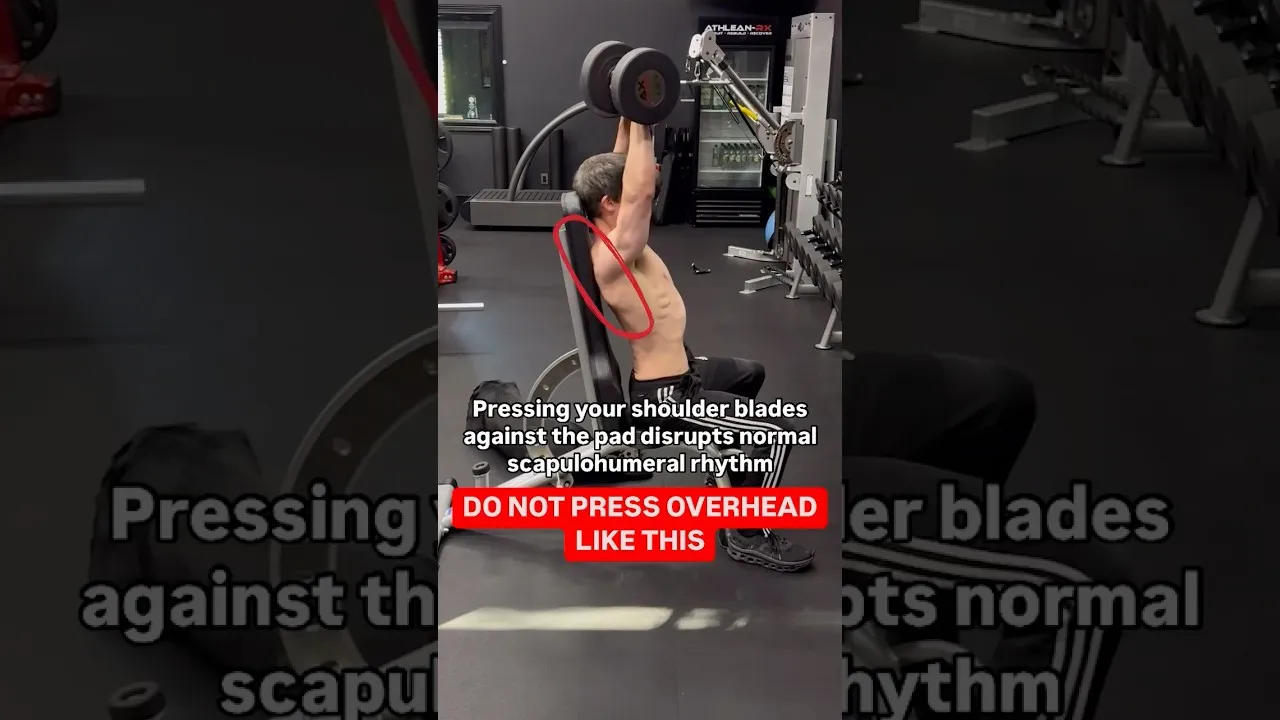
Many individuals perform seated overhead presses, often leaning back into the bench or pad. While this might feel like it provides more stability, it can disrupt the natural sequence of shoulder mechanics.
When you press your torso back into the pad, you tend to delay the upward rotation of the scapula. This interruption in timing and movement sequence can force the shoulder joint into suboptimal positions, increasing the risk of impingement and other injuries.
The Solution: Enhance Scapular Movement
To avoid this common mistake and protect your shoulders, focus on allowing your scapula to move freely. If you are performing a seated press, ensure there is a slight distance between your body and the pad. This small adjustment can help promote better scapular upward rotation.
The Superior Alternative: Standing Overhead Press
For optimal shoulder health and a more athletic approach to training, the physical therapist strongly recommends performing overhead presses in a standing position. The standing overhead press, often referred to as the OHP, naturally encourages better core engagement and allows for a more integrated movement pattern.
When standing, your body is less likely to compensate by pressing the torso back, facilitating the natural and crucial movement of the scapula. This exercise not only builds shoulder strength but also enhances overall stability and athletic performance.
Why Standing is Better for Your Shoulders
The standing overhead press engages more of your body’s stabilizing muscles, including your core and legs, leading to a more comprehensive strength-building exercise. This full-body integration helps to distribute the load more effectively and promotes better overall biomechanics. By training like an athlete, you prioritize functional movement patterns that translate to everyday life and athletic endeavors, ultimately safeguarding your shoulder joints for years to come.
Expert Background
This advice comes from Jeff Cavaliere MSPT, CSCS, who served as the head physical therapist and assistant strength coach for the New York Mets. With a Master of Science in Physical Therapy and a Bachelor’s degree in Physioneurobiology from the University of Connecticut, and certification as a Strength and Conditioning Specialist by the NSCA, Cavaliere brings extensive expertise in sports rehabilitation and performance enhancement.
Who Should Pay Attention?
This information is particularly relevant for individuals who engage in strength training, especially those who perform overhead pressing movements. It is beneficial for athletes, fitness enthusiasts, and anyone looking to improve shoulder strength and function while minimizing the risk of injury. People experiencing or seeking to prevent shoulder pain, impingement, or rotator cuff issues should pay close attention to these technique modifications.
Key Health Takeaways
- Prioritize proper scapular movement during overhead presses for shoulder health.
- Avoid pressing your torso back into a bench during seated presses, as this can hinder natural shoulder mechanics.
- Ensure a slight gap between your body and the pad if performing seated presses to allow for better scapular rotation.
- Opt for standing overhead presses to promote better core engagement, full-body integration, and natural shoulder movement.
- Train like an athlete by focusing on functional movements that protect your joints for the long term.
Disclaimer
This article is for informational purposes only and does not constitute medical advice. Always consult with a qualified healthcare professional or physical therapist before beginning any new exercise program or making changes to your current routine. They can assess your individual needs and provide personalized guidance.
Source: Stop Shoulder Pressing Like This! (YouTube)