Find Inner Peace: Yoga for Stress Relief
In our fast-paced world, finding moments of calm and connection with ourselves can feel like a luxury. This gentle yoga practice, guided by an experienced instructor, offers an accessible pathway to reduce stress, enhance self-awareness, and cultivate a sense of balance. By integrating simple yet profound techniques, this session invites you to listen to your body and respond to its needs, fostering a deeper connection with your inner self.
The Power of Listening to Your Body
The core of this practice is the invitation to simply listen. The instructor emphasizes that this is your personal journey, an opportunity to tune into your body’s sensations, thoughts, and emotions without judgment. This mindful attention is the first step towards responding to your needs in a way that brings more balance to your life.
The practice begins with a full-body scan, moving awareness from the feet to the crown of the head, encouraging you to notice any sensations present. This act of mindful observation is a powerful tool for grounding and self-awareness.
Breathing for Balance and Clarity
Breathwork, or pranayama, is central to this yoga session. You’ll be guided through various breathing techniques designed to calm the nervous system and enhance focus. Initially, a few deep breaths with audible exhales help to release tension.
The practice then shifts to nasal breathing, encouraging you to notice the subtle differences in airflow between your nostrils. This observation is not about finding a problem but about gentle awareness. If one nostril feels more dominant, a simple technique of lightly covering it can help to even out the breath, promoting a sense of equilibrium.
The instructor explains that this focus on breath can reveal insights, whether physical, emotional, or spiritual. By simply paying attention to the rhythm and quality of your breath, you can begin to understand what your body and mind need in that moment. This practice is particularly beneficial for individuals experiencing stress, anxiety, or a general feeling of being overwhelmed.
Gentle Movement for Body and Mind
The physical postures, or asanas, in this session are designed to be accessible and nourishing. Moving from a comfortable seated position, the practice progresses to tabletop (all fours) for gentle spinal movements like cat-cow variations. These movements, synchronized with the breath, help to release tension in the back and promote spinal mobility.
Further sequences include:
- Side Body Stretches: Moving the torso to the side while in tabletop or child’s pose to create space and release tension along the ribs and hips.
- Foot Fascia Stretch: Curling the toes under and sending the hips back to gently stretch the connective tissue in the feet, often overlooked but crucial for overall comfort and mobility.
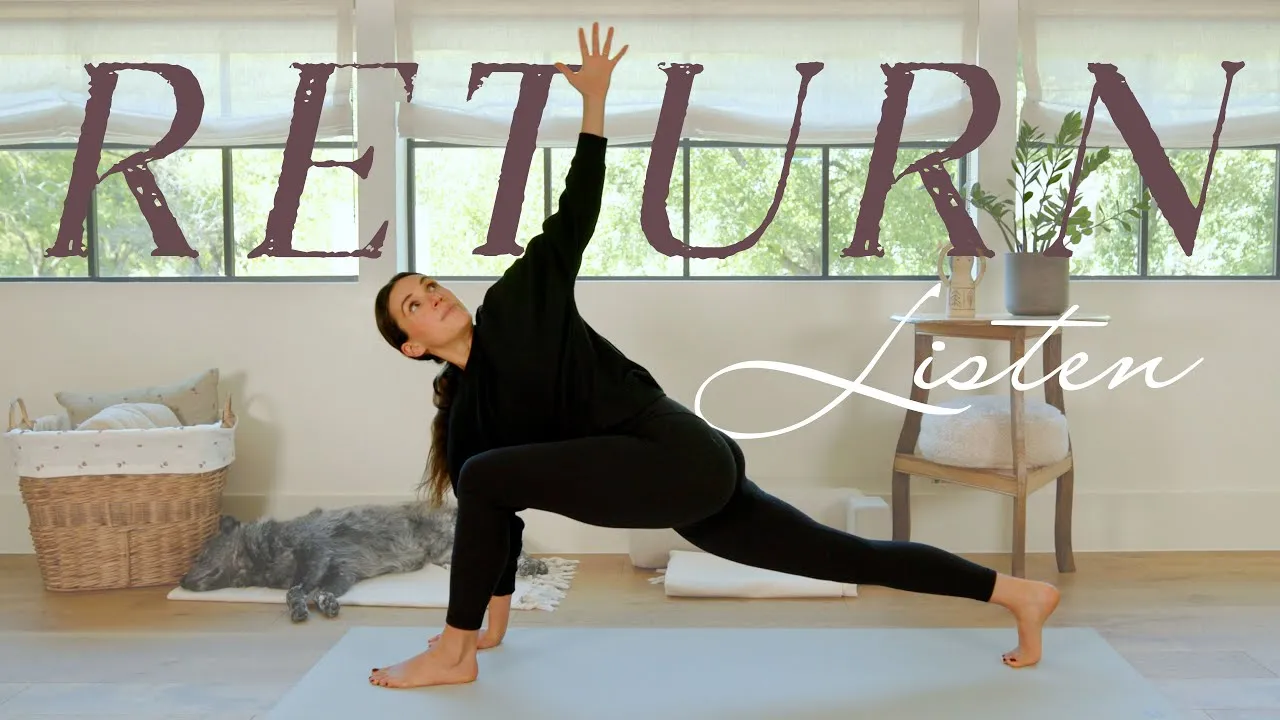
- Low Lunge and Twists: Stepping one foot forward into a low lunge, followed by gentle twists. This sequence opens the hips and chest, improves digestion, and can be modified by keeping the back knee on the ground for more support. The instructor offers options for deepening the twist by lifting the back knee, encouraging practitioners to listen to their bodies.
- Plank and Cobra: Brief transitions through plank and gentle cobra pose to build core strength and open the chest.
The emphasis throughout is on moving slowly and mindfully, allowing the breath to guide the movement. This approach helps to prevent injury and deepen the connection between mind and body.
Restorative Poses for Deeper Relaxation
The latter part of the practice shifts towards more restorative poses, utilizing props like blocks or blankets for support. These poses are designed to allow the body to relax deeply while still receiving the benefits of gentle stretching and mindful awareness.
- Seated Forward Fold: A gentle forward fold with bent knees allows for introspection and release of tension in the hamstrings and lower back.
- Knee-to-Chest and Twists: Lying on the back, hugging the knees into the chest, and then gently dropping the knees to one side for a spinal twist promotes relaxation and aids digestion.
- Bridge Pose (Setu Bandhasana): This pose can be practiced with or without a block under the sacrum, offering a gentle inversion to energize the body and open the chest.
- Reclined Cobbler’s Pose (Supta Baddha Konasana): With the soles of the feet together and knees open, this pose gently opens the hips and groin, promoting relaxation.
- Ear Massage: A unique self-massage technique focusing on the ears and behind the ears, believed to help release tension and promote relaxation.
- Savasana (Corpse Pose): The practice concludes with Savasana, a period of deep rest where the body is allowed to fully relax and integrate the benefits of the practice. The instructor encourages allowing the mind to be at ease and the heart to soften.
Who Can Benefit?
This yoga session is suitable for most individuals, including beginners, as it emphasizes modifications and listening to one’s own body. It is particularly beneficial for those dealing with:
- Everyday stress and anxiety
- Feeling overwhelmed or disconnected
- Tightness in the back, hips, or shoulders
- A desire to cultivate greater self-awareness and mindfulness
- Those looking for a gentle way to move their body and calm their mind
Key Health Takeaways
- Prioritize Listening: Regularly tune into your body’s signals to understand your needs and promote well-being.
- Harness Your Breath: Utilize conscious breathing techniques to calm the nervous system, reduce stress, and improve focus.
- Mindful Movement: Engage in gentle yoga postures, synchronizing breath with movement to release tension and build body awareness.
- Embrace Rest: Incorporate restorative poses and periods of stillness to allow for deep relaxation and integration.
- Self-Compassion: Approach your practice with kindness and without judgment, recognizing that showing up for yourself is the most important step.
Disclaimer
This article is based on a yoga instruction video and is intended for informational purposes only. It does not constitute medical advice. Always consult with your doctor or a qualified healthcare provider before beginning any new exercise program, especially if you have any pre-existing health conditions.
Source: Return – 3 – Listen (YouTube)