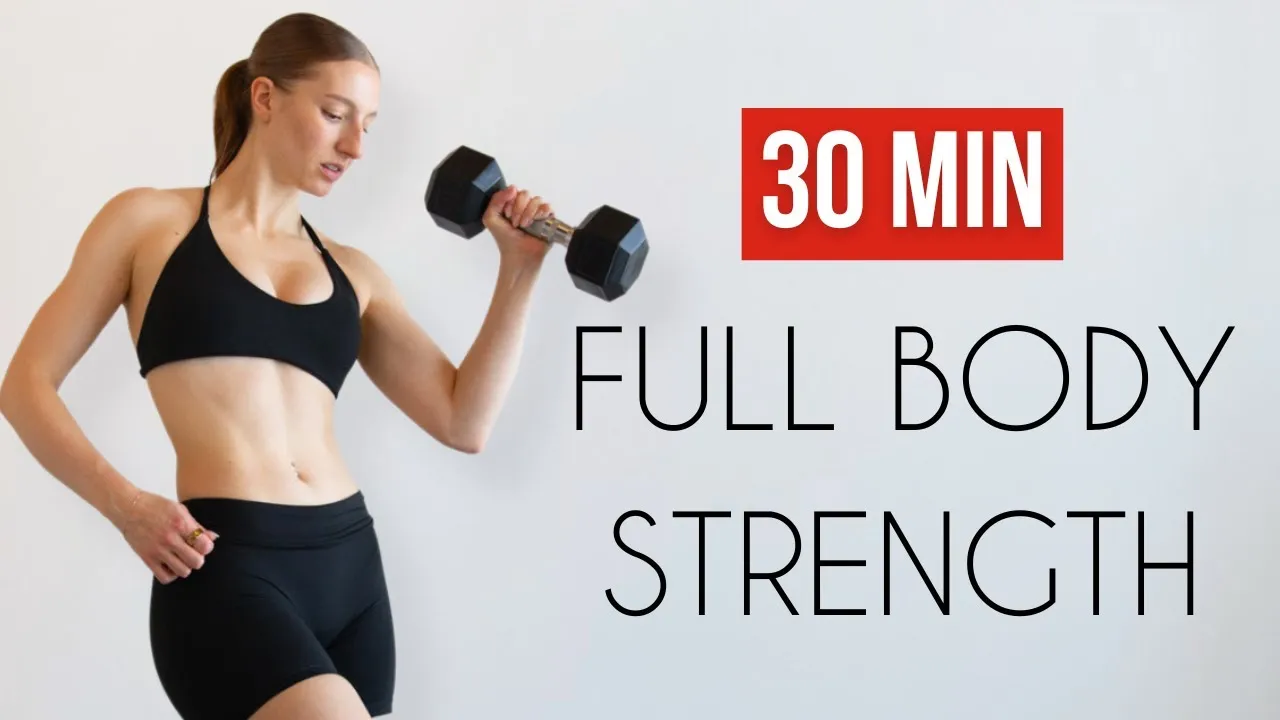
Build Full Body Strength in 30 Minutes with Dumbbells
Achieving a comprehensive strength workout doesn’t require hours in the gym or a complex setup. A new 30-minute routine, demonstrated by fitness instructor MadFit, offers an effective way to engage your entire body using just dumbbells. This workout focuses on building strength through supersets, combining two exercises performed back-to-back with minimal rest, and repeating each pair three times before moving on.
Workout Structure and Key Exercises
The routine is designed for efficiency, utilizing supersets to maximize muscle engagement and caloric expenditure within the 30-minute timeframe. Participants can choose dumbbells based on their current strength level, with the instructor demonstrating using a mix of heavier and lighter weights to show versatility. The workout progresses through different muscle groups, starting with lower body and gradually incorporating upper body and core work.
Lower Body Focus: Squats and Deadlifts
The workout kicks off with a focus on the lower body, beginning with sumo squats and deadlifts. For the sumo squat, the emphasis is on a wide stance with toes pointed outward, holding a dumbbell (or two) in front.
The movement involves hinging at the hips and maintaining a flat back, pressing through the feet as if pushing away a platform. This targets the glutes, quadriceps, and hamstrings.
Following the sumo squat is the deadlift, performed with either a single heavy dumbbell held in front or two dumbbells in a traditional stance. The key cue here is hinging at the hips, maintaining a straight back, and squeezing the glutes at the top of the movement. The instructor stresses the importance of proper form, suggesting a focus on pressing through the big toe to ensure engagement in the correct muscles and avoiding excessive backward weight distribution.
These two exercises form the first superset, repeated three times with short rest periods (approximately 20 seconds between exercises and after each set) to build endurance and strength in the posterior chain and quads.
Integrating Upper Body: Lunges, Curls, and Presses
The next phase of the workout begins to integrate upper body movements with lower body exercises. This includes a reverse lunge combined with a knee drive and an overhead shoulder press. Performed on alternating sides, this exercise challenges balance, core stability, and coordination.
The dumbbell is held in the opposite hand to the working leg, requiring a controlled descent into the lunge while maintaining an upright torso. As the participant steps back into the lunge, they perform a hammer curl, and as they drive the knee up, they execute a shoulder press. This complex movement targets the legs, glutes, shoulders, and arms.
Following this integrated movement, the workout shifts to a dedicated upper body superset focusing on biceps and triceps. Standard bicep curls are performed with palms facing forward, emphasizing controlled movements and avoiding momentum. The subsequent exercise is the overhead tricep extension, which can be done with one or two dumbbells.
The focus is on keeping the elbows close to the head and extending through the triceps. The instructor suggests dropping to lighter weights for a drop set if participants have access to a range of dumbbells, pushing muscles to fatigue.
Core and Back Engagement: Rows and Front Raises
Transitioning to floor-based exercises, the routine moves to target the back, core, and shoulders. This superset begins with dumbbell rows performed in a tabletop position.
With hands directly under shoulders and hips over knees, the movement involves pulling the dumbbell towards the hip pocket, leading with the elbow and keeping the chest stable. This emphasizes lat activation and core engagement.
The second exercise in this superset is the kneeling front raise. Holding one dumbbell, the participant lifts it in front to shoulder height with a slight bend in the elbows, focusing on controlled movement and avoiding leaning back.
For those with knee discomfort, this exercise can be performed standing. This superset is also repeated three times, reinforcing proper form and muscle activation.
Finishing Strong: Glute Bridges and Chest Presses
The workout concludes with a final superset performed entirely on the back, focusing on the glutes and chest. The first exercise is a glute bridge with a dumbbell placed on the lap. The focus is on lifting the hips by squeezing the glutes, maintaining tension without excessively arching the lower back.
This is immediately followed by a chest press. This can be done with a single heavy dumbbell held vertically or with two lighter dumbbells, performing a standard chest press motion with palms facing away from the body.
The emphasis is on controlled descent and a powerful press, squeezing the chest muscles. This final superset is performed for the last round, concluding the 30-minute full-body strength session.
Who is this workout for?
This workout is suitable for individuals of all fitness levels looking to build overall strength and improve muscular endurance. Beginners can modify the dumbbell weights and range of motion as needed, while more advanced individuals can increase the weight or tempo. It’s particularly beneficial for those who prefer home workouts or have limited access to gym equipment, requiring only a set of dumbbells.
Consult Your Doctor
Before beginning any new exercise program, it is essential to consult with your healthcare provider, especially if you have any pre-existing health conditions or concerns. This workout is intended for general fitness purposes and should not be considered medical advice.
Key Health Takeaways
- Full Body Engagement: This 30-minute routine effectively targets major muscle groups from head to toe using only dumbbells.
- Strength and Endurance: The superset structure enhances both muscular strength and cardiovascular endurance.
- Proper Form is Crucial: Focus on maintaining a flat back, controlled movements, and engaging the correct muscles to maximize benefits and prevent injury.
- Customizable Intensity: Adjust dumbbell weights to match your fitness level, and consider modifications for exercises if needed.
- Consistency is Key: Regularly incorporating such workouts can lead to significant improvements in overall strength, body composition, and functional fitness.
Source: FULL BODY STRENGTH WITH DUMBBELLS | 30 Minute Workout (YouTube)