Unlock Your Fitness Potential with a Targeted Full-Body Routine
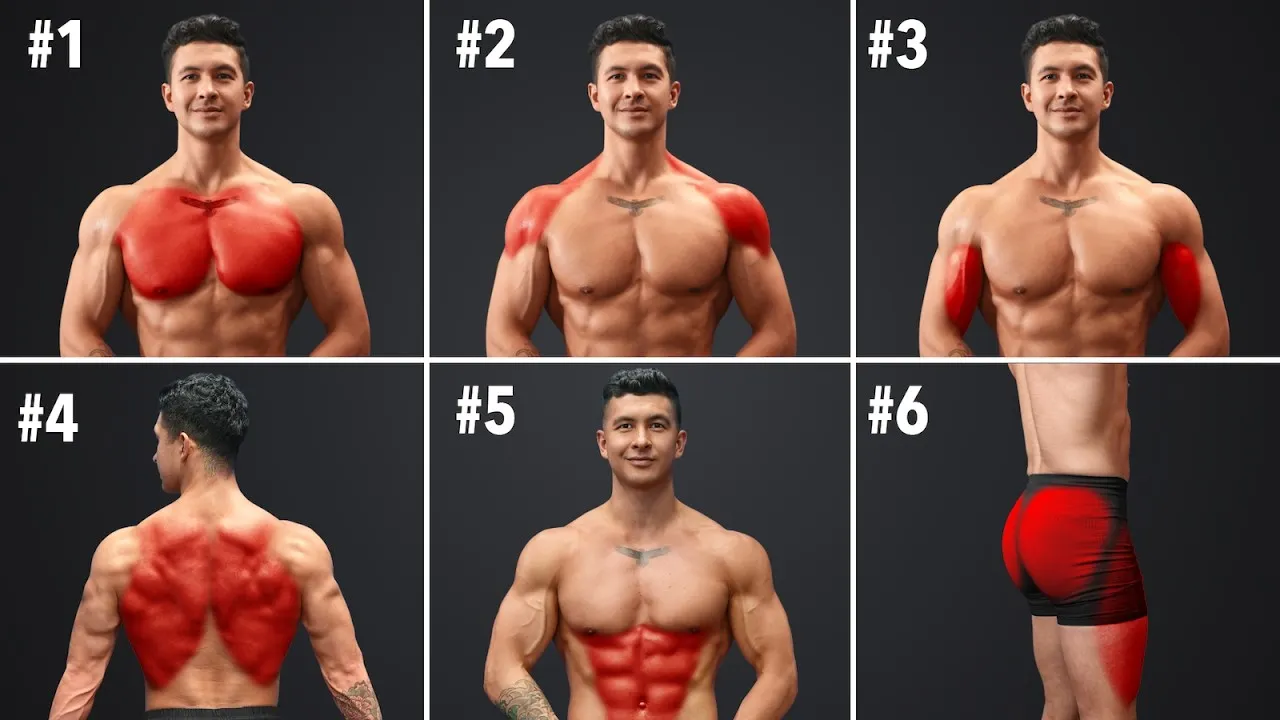
For individuals seeking an efficient and effective way to build muscle and strength, a comprehensive full-body workout routine performed three times a week can yield significant results. This approach, honed over years of coaching and training, emphasizes strategic exercise selection and personalized modifications to maximize gains while minimizing time spent in the gym. The core of this program involves six fundamental exercises, supplemented by a bonus exercise to address individual weaknesses.
Optimize Chest Development with the Low Incline Dumbbell Press
A cornerstone of this upper body regimen is the low incline dumbbell press, an exercise that rivals traditional flat presses in overall chest growth. Uniquely, it also enhances upper chest development and strengthens the shoulders and triceps. The key to maximizing its benefits lies in adjusting the incline angle to suit your individual anatomy.
A simple test using a smartphone placed against your chest can help determine the optimal angle. If the phone points straight up, indicating a flat sternum, a lower incline (one notch above the lowest setting) is recommended to prevent shoulder dominance. If the phone angles backward, suggesting a steeper sternum, a slightly higher incline (two notches above the lowest setting) is preferable.
Crucially, avoid the common mistake of pressing in a ‘T’ shape, which limits range of motion and increases injury risk. Instead, adopt an ‘arrow’ shape by tucking your shoulders, which allows for a deeper chest stretch and promotes shoulder safety. Beginners may find this exercise challenging initially; focusing on higher repetitions (10-15 per set) can help develop the movement pattern.
Women, due to their capacity for higher repetitions, can also benefit from this rep range. As you progress, transitioning to lower repetitions (6-8 per set) with heavier weights can be effective for building strength.
The Squat: A Lower Body Powerhouse with Variations
The barbell squat is lauded as a versatile lower body exercise, capable of stimulating glute, lower back, quad, and inner thigh development. However, the goblet squat is recommended as a foundational movement. Holding the weight at chest level encourages core bracing, enabling deeper and safer squats.
Continue with goblet squats until you can comfortably lift 50% of your body weight for 10 repetitions. Once ready for barbells, personalization becomes key. Elevating your heels can shift emphasis towards the quadriceps by allowing a more upright torso and forward knee drive.
Conversely, incorporating a bench or box behind you and performing a hip hinge to touch the bench can increase glute activation, particularly when maintaining a more vertical shin angle. Foot stance is also critical; experimenting with stances slightly wider than shoulder-width with outward-turned toes, hip-width with toes straight, or a wider stance with toes significantly outward will help you find the most natural and comfortable position for your hip structure.
Mastering the Pull-Up for Upper Back Strength
The pull-up is a highly effective exercise for transforming back strength and aesthetics. Performance can be categorized: 0-1 reps for beginners, 2-5 for average, 6-12 for fit, 13-20 for advanced, and 20+ for elite. For those unable to perform a pull-up, the inverted row is an excellent preparatory exercise, building both back and core strength.
Aim for sets of 15 repetitions. Once proficient, begin pull-ups with a neutral grip, which is often stronger for most individuals. Assisted pull-up machines or resistance bands can be used initially, with the goal of progressing to 10 unassisted repetitions.
Following this, transition to an overhand grip, expecting an initial drop in repetitions. Aim for sets of 5-8 strict repetitions. As you increase reps, progressively add weight to the pull-up bar, aiming to maintain 8 repetitions before adding more resistance.
Strengthen Your Posterior Chain with the Romanian Deadlift
The Romanian deadlift (RDL) is crucial for strengthening the lower back, building hamstrings, and preventing injury. A hip-width stance with toes pointing forward is generally optimal, and a simple jump-landing test can reveal your natural foot placement. The primary technique involves hinging at the hips rather than rounding the back.
Starting with a single dumbbell held by its ends can help master this motion. As you progress, use two dumbbells, keeping them close to your legs as you lower them along your thighs and shins. To emphasize glutes, slightly bend the knees more.
For greater hamstring focus, keep the knees straighter. When using a barbell, be mindful of your range of motion; stop when you can no longer maintain a flat back, even if it’s above the knee. This exercise is best performed for 6-10 repetitions per set, as higher reps with heavy loads can be excessively fatiguing.
Develop Mid and Upper Back Thickness with Lat Pulldowns
To build significant thickness in the mid and upper back, targeting the muscles between the shoulder blades is essential. These often-neglected muscles contribute to posture and a well-developed back. The lat pulldown with a wide overhand grip is effective.
Focus on pulling your elbows back in an ‘arrow’ shape towards your lower chest, squeezing the midback muscles. Lighter weights for higher repetitions (10-15 per set) are recommended to ensure the target muscles are engaged. If you struggle to feel your back working, practice the movement with straight arms, focusing on the scapular retraction (squeezing shoulder blades together).
Once this mind-muscle connection is established, incorporate the full pulling motion. Advanced trainees can employ a drop set technique: perform a set to failure, then follow with 3-5 repetitions focusing solely on the shoulder blade squeeze to ensure maximal back muscle fatigue.
Target All Shoulder Heads with Lateral Raise Supersets
Shoulders comprise multiple muscle heads, necessitating varied angles of attack for comprehensive development. A lateral raise superset is an effective strategy. Begin by performing dumbbell lateral raises in a ‘Y’ shape, slightly in front of your body, while lying chest-down on an incline bench.
This targets the side and front deltoids, contributing to shoulder width. Immediately after reaching failure, flip over and perform lateral raises with your chest on the bench, lifting the dumbbells out to the sides and slightly behind you. This variation emphasizes the rear deltoids, promoting shoulder roundness and a 3D appearance.
For women, placing a pad or hoodie between the chest and the bench can enhance comfort. It is crucial to use a weight that allows for proper form and muscle engagement, rather than ego lifting; 25 lbs can be sufficient for this exercise.
Personalize Your Workout with Accessory Exercises
To further tailor the program, select one or two accessory exercises based on your goals. Beginners can benefit from core work, such as the deadbug exercise, which strengthens the core and improves stability for all other lifts. For glute development, hip abduction exercises target the muscles responsible for the upper glute shelf.
Calf training can be enhanced by prioritizing exercises with straight legs, such as standing calf raises or leg press variations, as research suggests these are more effective than seated versions. For arm growth, a superset of incline dumbbell curls followed by overhead triceps extensions can target underdeveloped tricep heads.
Individuals seeking improved upper back thickness can perform Kelso shrugs on an incline bench, focusing on elevating the shoulder blades. Finally, to target the often-neglected upper chest fibers, cable flyes or pec deck exercises performed with a forward lean can shift the tension appropriately.
Integrating the Routine and Nutrition
This full-body workout, performed two to three times per week, provides a solid foundation for muscle growth and strength. For optimal transformations, however, pairing this training regimen with a well-structured diet plan is paramount. For personalized guidance on both training and nutrition, consider utilizing resources like the Build With Science Plus app.
Disclaimer: This information is for educational purposes only and does not constitute medical advice. Always consult with a qualified healthcare professional or certified personal trainer before beginning any new exercise program or making significant changes to your diet, especially if you have any pre-existing health conditions.
Source: The ONLY Workout You Need For 2026 (Do This 3x/Week) (YouTube)