Discover the Optimal Incline for Upper Chest Development
For years, a 45-degree incline has been the widely accepted ‘golden angle’ for targeting the upper chest. However, new insights suggest that this traditional recommendation might not be the most effective for maximizing upper chest activation. Research indicates that a range of inclines, potentially lower than 45 degrees, could offer superior results for muscle engagement and, consequently, growth.
Rethinking the Incline Bench Press
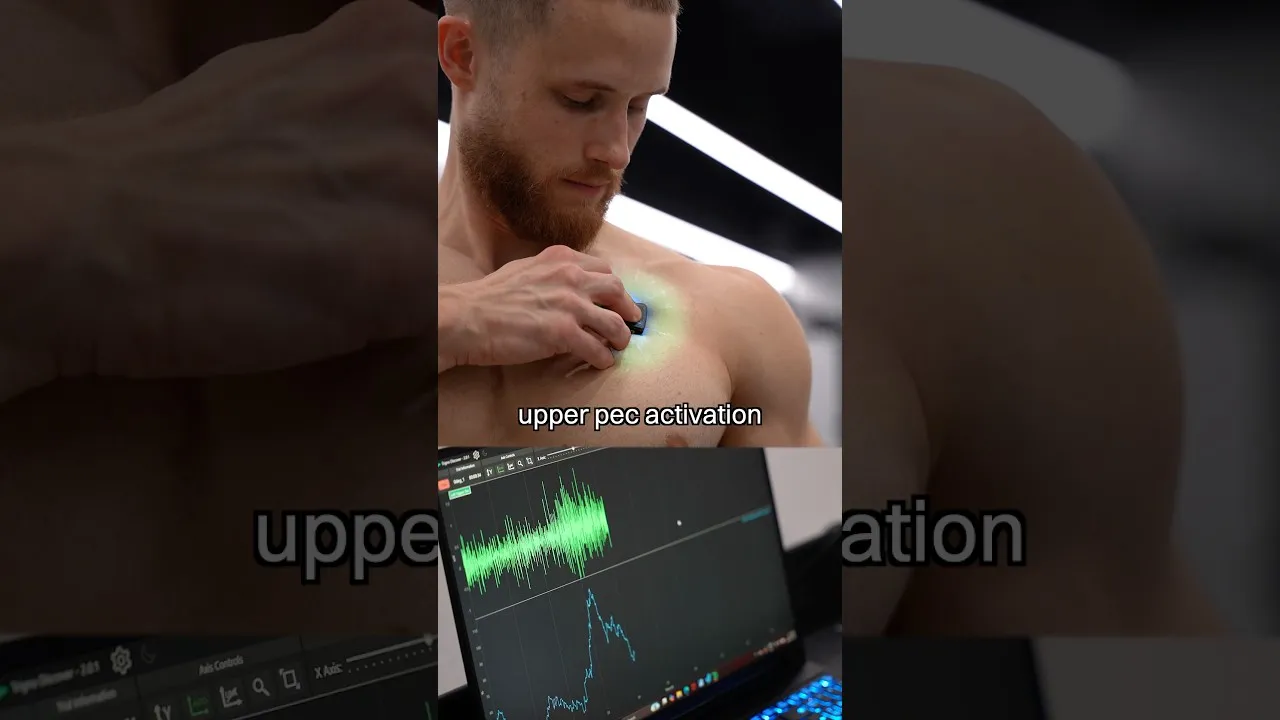
A recent exploration into upper chest activation during incline bench press exercises challenged the long-held belief in the 45-degree angle. By meticulously measuring upper pectoral muscle engagement across various incline settings, from flat (0 degrees) to vertical (90 degrees), the study revealed surprising findings. The experiment aimed to quantify which angle yielded the highest electrical activity in the upper pectoral muscles, a common proxy for muscle activation.
The Surprising Results
Contrary to expectations, the flat bench press (0 degrees) demonstrated a significant 59% activation of the upper chest. As the incline increased to 15 degrees, the activation rose slightly to 64%. A further increase to 25 degrees showed a marginal gain, reaching 66% activation.
The commonly cited ‘golden angle’ of 45 degrees registered at 67% activation. However, the data revealed that activation did not continue to increase linearly with steeper inclines. At 65 degrees, the activation dropped to 60%, and at a vertical 90 degrees, it plummeted to 35%.
What This Means for Your Workout
The findings suggest that while 45 degrees does provide good upper chest activation, it was not significantly superior to angles between 15 and 45 degrees. In fact, the activation levels were quite similar across this range.
This implies that the optimal angle for upper chest development might be more individualized than previously thought. Factors such as an individual’s anatomy, including spinal curvature (arch), can influence which angle provides the best muscle engagement.
Individualizing Your Approach
The study’s primary subject noted that if an individual has less of an arch in their back during the bench press, a slightly lower incline might actually allow for better focus and activation of the upper chest muscles. This highlights the importance of listening to your body and finding an angle that allows you to feel the target muscle working effectively.
While muscle activation is a key indicator, it’s important to remember that it doesn’t always perfectly predict muscle growth. The ultimate goal is to stimulate the muscle effectively enough to promote hypertrophy (growth).
Focus on Progressive Overload and Mind-Muscle Connection
Beyond finding the ‘perfect’ angle, the most crucial takeaway from this research is the principle of progressive overload and establishing a strong mind-muscle connection. Regardless of the specific incline angle chosen, the key to building muscle lies in consistently challenging your muscles over time and ensuring you can feel the upper chest working throughout the movement. This means focusing on proper form, increasing the weight or repetitions gradually, and concentrating on the sensation in your pectoral muscles.
Practical Recommendations
- Experiment with incline angles between 15 and 45 degrees to find what feels best for your upper chest.
- Prioritize feeling the upper chest muscles working during each repetition.
- Focus on progressive overload: gradually increase the weight, reps, or sets over time.
- Ensure proper form to maximize muscle engagement and prevent injury.
- Consider your individual anatomy, such as spinal curvature, when selecting an incline angle.
Who Should Pay Attention to This Information?
This information is particularly relevant for individuals looking to enhance their upper chest development, including bodybuilders, athletes, and fitness enthusiasts of all levels. While the study focused on a single subject, the principles of optimizing exercise angles and focusing on muscle activation apply broadly. It’s especially useful for those who feel their upper chest isn’t growing as effectively as other areas or who are seeking to refine their training routines.
Disclaimer
This article is for informational purposes only and does not constitute medical advice. The findings presented are based on a single subject’s experience and should not be generalized without further scientific validation.
Always consult with a qualified healthcare professional or certified personal trainer before beginning any new exercise program or making changes to your current routine. They can help you determine the safest and most effective approach based on your individual health status and fitness goals.
Source: I Found The Best Incline For The Upper Chest (YouTube)