Heavy vs. Light Weights: Which Builds More Muscle?
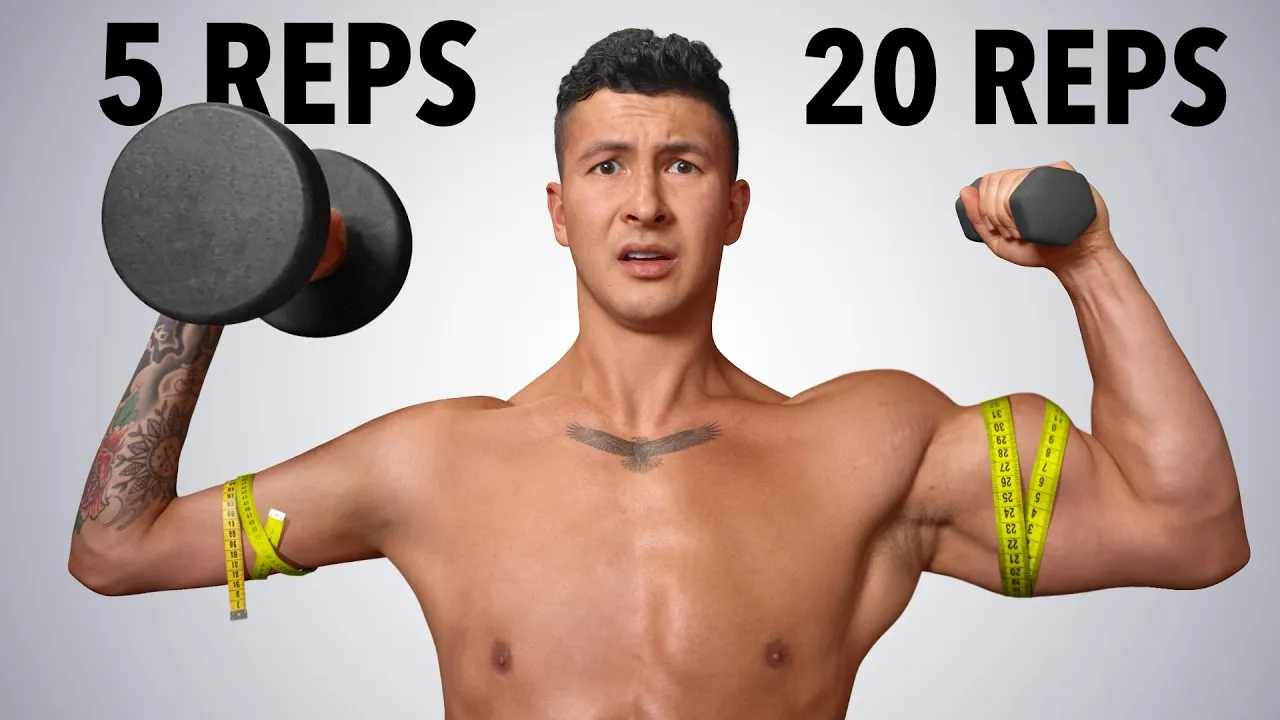
The age-old debate in the fitness world often boils down to a simple question: is it better to lift heavy weights for fewer repetitions or lighter weights for higher repetitions to build muscle? While some advocate for a lighter approach to achieve a “toned” physique, others insist that heavy lifting is the only path to significant muscle growth. To settle this, a 60-day experiment was conducted, pitting one side of the body against the other, training heavy on one side and light on the other, to see which strategy yields superior results in muscle growth and strength.
The Experiment: A Unilateral Approach
The experiment involved training each major muscle group unilaterally, meaning one limb at a time. This allowed for a direct comparison between the heavy and light training protocols on opposite sides of the same body. The core principles of the experiment were:
- Equal Volume: Both the heavy and light sides received the exact same total number of sets.
- Training to Failure: Every set was performed as close to muscular failure as possible.
- Repetition Ranges: The “heavy” side aimed for failure within 3-6 repetitions, while the “light” side targeted failure within 15-30 repetitions.
- Caloric Surplus: A slight calorie surplus was maintained to support muscle growth.
To establish a baseline and meticulously track changes, comprehensive measurements were taken before the experiment began. These included full-body MRI scans (chosen for their precision in measuring muscle growth, even differentiating individual muscles invisible to ultrasound), DEXA scans, ultrasound measurements, and body circumference recordings. The MRI, though expensive, provided highly detailed insights into muscle mass, with the experimenter noting that his right side was slightly larger, consistent with his dominant hand usage.
The Experience: Burn vs. Strain
The subjective experiences during the training were notably different. The light-weight, high-rep side often induced a significant “burn,” a sensation attributed to the buildup of metabolic byproducts like hydrogen ions within the muscles.
This burn intensifies as repetitions increase, signaling increased muscular effort and fatigue. While this metabolic stress is believed by some to be beneficial for muscle growth, it comes with discomfort and potentially more post-workout soreness.
Conversely, the heavy-weight, low-rep side offered a different challenge. While taxing from the outset, it did not produce the same intense burning sensation. Sets were completed much faster, and the overall time spent in the gym for these sessions was significantly shorter.
However, this approach came with its own set of issues. The experimenter reported joint pain, particularly in the knees and elbows, when performing heavy lifts, suggesting that high loads can place excessive stress on joints over time. This led to a modification where the heavy leg training was temporarily switched to lighter weights for higher reps to accommodate the pain.
Understanding Muscle Activation and Volume
The experiment delved into the mechanics of muscle activation. Heavy lifting, from the first rep, engages larger, more powerful muscle fibers that are crucial for significant muscle growth.
Lighter weights, on the other hand, rely on smaller fibers initially, recruiting the larger ones only as the smaller ones fatigue. This highlights the importance of pushing close to failure on the light side to ensure these larger fibers are adequately stimulated.
Volume, traditionally calculated as sets x reps x weight, also presented an interesting finding. The light-weight side accumulated significantly higher total volume due to the increased repetitions.
Some theories suggest that higher volume and time under tension are key drivers of muscle hypertrophy. However, the experiment aimed to see if the heavy side could achieve comparable or superior growth despite lower overall volume and time under tension.
Results: A Close Call with Nuances
After 60 days, the results were analyzed. Both the experimenter and a beginner participant named Dennis showed gains.
Dennis, who started with 18.4% body fat and 113.6 lbs of lean mass, ended up gaining 3 lbs, with nearly all of it being muscle, and his body fat percentage decreased slightly. This demonstrated that even with a focus on muscle building, body composition can improve without dedicated cardio, provided adequate protein intake and a slight calorie surplus.
For the experimenter, the results were surprisingly close. While both sides showed strength and size increases, the differences were minimal and often within the margin of error for statistical significance.
In almost all measured muscles, the light-weight side showed a very slight, almost imperceptible, increase in growth compared to the heavy side. The chest muscle, in particular, showed a slightly larger difference favoring the light side, potentially due to it being a new training stimulus for the experimenter at high reps.
Interestingly, a significant imbalance was noted in the iliopsoas muscle, a deep hip and back stabilizer. This muscle grew on the left (heavy) side but actually shrunk on the right (heavy) side.
The hypothesis is that the unilateral heavy leg exercises put more strain on this muscle for stabilization, leading to this asymmetry. This imbalance was suspected to have contributed to a back tweak after the experiment when returning to heavy deadlifts.
Key Health Takeaways
- Effort Over Weight: The most critical factor for muscle growth appears to be the effort and intensity applied during training, rather than solely the amount of weight lifted.
- Both Methods Work: Both heavy lifting (3-6 reps) and lighter lifting (15-30 reps) can stimulate muscle growth, with results being surprisingly similar after 60 days, though small trends favored lighter weights for hypertrophy in this study.
- Joint Health Consideration: Heavy lifting can place significant stress on joints. Lighter weights might be a more joint-friendly option, especially for individuals with pre-existing joint issues or those seeking to minimize injury risk.
- Metabolic Stress vs. Mechanical Tension: Heavy lifting primarily relies on mechanical tension, while lighter lifting emphasizes metabolic stress. Both likely contribute to muscle growth, but through different pathways.
- The “Sweet Spot”: The mid-range of repetitions (approximately 6-15 reps) with moderate weight is suggested as a potential “sweet spot” that balances joint health, reduced mental fatigue, and effective muscle stimulation.
- Imbalances are Possible: Unilateral training, especially with heavy weights, can lead to muscle imbalances if not managed carefully.
- Nutrition is Crucial: A slight calorie surplus and adequate protein intake are essential for supporting muscle growth, regardless of the training method.
Conclusion and Recommendations
The experiment concluded that while there might be a slight edge for lighter weights in terms of muscle growth magnitude over a short period, the difference is minimal and likely not significant enough for most individuals to warrant a complete overhaul of their training. Both approaches led to strength gains and muscle development.
The ideal approach might be a varied training strategy. Incorporating a mix of rep ranges and intensities can provide the benefits of both mechanical tension and metabolic stress, while also helping to prevent overuse injuries and potential imbalances. For individuals experiencing joint pain, focusing on lighter weights and higher repetitions, or exploring the mid-rep range, could be a more sustainable path.
Ultimately, consistency, proper form, and pushing close to muscular failure are the most important variables for anyone looking to build muscle, regardless of the weight on the bar.
Disclaimer: This article is for informational purposes only and does not constitute medical advice. Always consult with a qualified healthcare professional before beginning any new exercise program or making changes to your diet. The experiment described involved specific protocols and measurements; individual results may vary.
Source: I Trained One Side HEAVY vs LIGHT (60 Day Experiment) (YouTube)