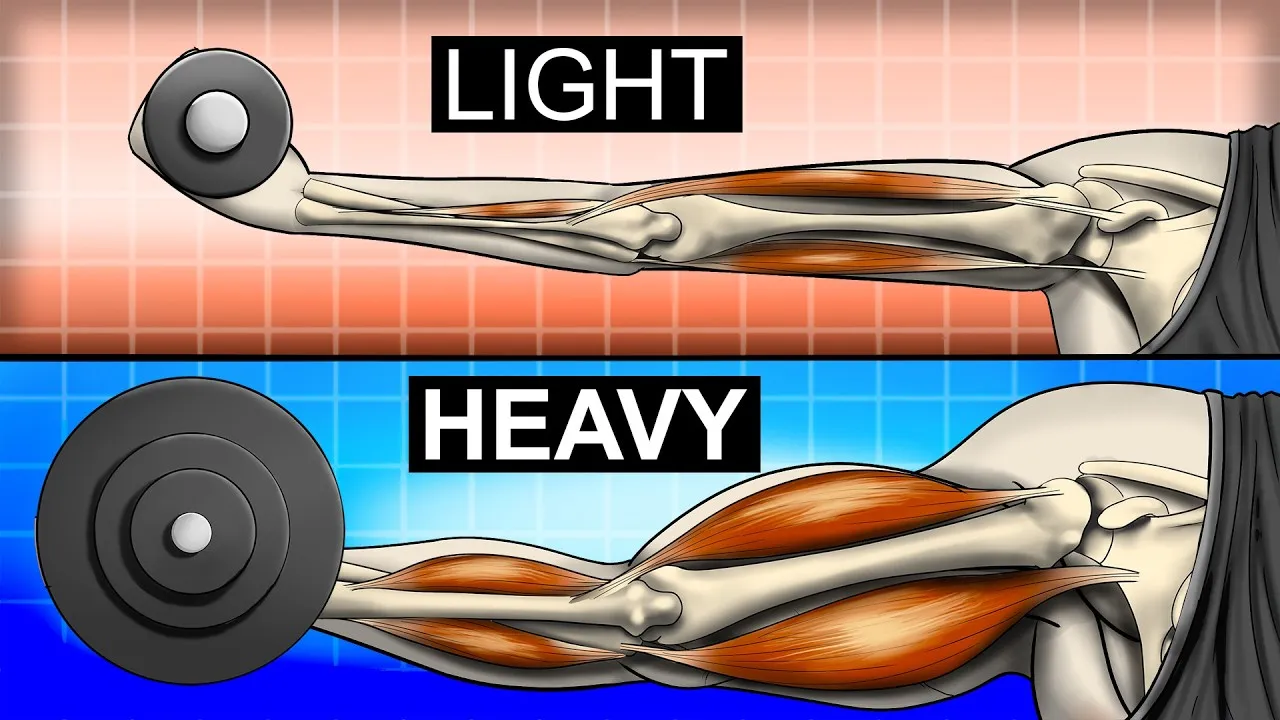
Build Strength Faster: Unlock Muscle with Heavy Lifts
Many gym-goers mistakenly believe that lifting heavy weights is solely for elite powerlifters and bodybuilders. However, evidence suggests that incorporating heavy lifting into your routine offers significant benefits for individuals at all fitness levels, from beginners to advanced athletes. Prioritizing heavier loads can accelerate strength gains, increase muscle mass, improve bone density, enhance hormonal profiles, boost athletic performance, and even cultivate mental toughness.
The Science of Strength: Why Heavy Lifting Works
Fundamentally, lifting heavy weights is a direct and efficient method for building maximal strength and power. Strength can be viewed as a skill, and like any skill, it improves with practice under increasingly challenging conditions.
When you lift heavy, your muscles are compelled to recruit more motor units – the nerve and muscle fibers that work together to produce movement. This process leads to significant neuromuscular adaptations.
Specifically, heavy lifting stimulates Type II muscle fibers. These fibers are responsible for generating high levels of force and power and respond more robustly to heavy resistance compared to lighter loads, which tend to activate more Type I fibers (associated with endurance). The enhanced recruitment and development of Type II fibers are directly linked to increased strength, muscle size, and explosiveness.
Your central nervous system becomes more efficient at recruiting these high-threshold motor units when you consistently lift heavy. This translates not only to better performance in the gym but also to improved functional strength for everyday tasks, such as lifting heavy objects or moving with greater ease.
How Much is ‘Heavy’?
To effectively stimulate strength gains, aim for weight loads that are approximately 75-90% of your one-repetition maximum (1RM) for a given exercise. If you’re unsure of your 1RM, a good guideline is to select a weight that allows you to complete 6-8 repetitions with good form, reaching near muscular failure by the last rep. This ensures that you’re challenging your muscles sufficiently.
Maximizing Muscle Growth with Heavy Lifting
While building muscle can be achieved through various training methods, lifting heavy weights is a potent driver of hypertrophy (muscle growth). A key factor in muscle growth is mechanical tension, and heavy loads generate significantly more of it. As mentioned, Type II muscle fibers, which are more prone to hypertrophy, are heavily recruited during heavy lifting.
The principle of progressive overload – gradually increasing the demands placed on your muscles over time – is crucial for continued muscle growth. While progressive overload can be applied with lighter weights by increasing repetitions, it can become less practical due to form breakdown or cardiovascular fatigue before muscular strength capacity is fully challenged. Increasing the weight lifted is often a more practical and effective strategy for ensuring your muscles are consistently adapting and growing.
Beyond Muscles: Bone Health and Joint Stability
The benefits of heavy lifting extend beyond muscle tissue. The mechanical stress placed on bones during heavy resistance training signals the body to increase bone mass, a process vital for maintaining bone density and reducing the risk of fractures. Studies indicate that resistance training, particularly with heavier loads, can enhance bone density across all age groups, not just in older adults seeking to prevent conditions like osteoporosis.
Heavy lifting also significantly improves joint stability. By engaging stabilizer muscles around the joints during compound movements like squats and deadlifts, you strengthen the supporting connective tissues.
This enhanced stability can lead to a lower risk of injury both in the gym and during daily activities. In some cases, strengthening the structures around a joint can even help alleviate existing joint pain, provided the training is performed with proper form and intelligent progression.
Hormonal Advantages
Consistent heavy lifting has been shown to positively influence your hormonal profile. It stimulates the secretion of anabolic hormones such as testosterone and growth hormone.
These hormones are critical for muscle protein synthesis (the process of repairing and building muscle), fat loss, and overall recovery. While higher rep ranges also offer benefits, heavier lifting tends to maximize the release of these hormones, potentially accelerating progress.
Boosting Functional Strength and Athletic Performance
Functional strength refers to the ability to exert force effectively in real-world situations. Heavy lifting movements often mimic the forces encountered in everyday life and sports, training your body to handle them more efficiently. Foundational heavy lifts like squats, deadlifts, bench presses, and overhead presses train movement patterns that have direct carryover to athletic performance across a wide range of sports.
Heavy lifting is essential for developing power output – the ability to apply force quickly. This is crucial for explosive movements in sports like sprinting, jumping, and throwing. The ability to generate more force, developed through heavy lifting, directly enhances an athlete’s potential for power and performance on the field or court.
Metabolic Boost and Fat Loss
While cardiovascular exercise burns calories during the activity, heavy lifting offers a dual benefit for fat loss and metabolism. It increases caloric expenditure during the workout and also elevates post-exercise oxygen consumption (EPOC), meaning your body continues to burn calories at an increased rate for hours afterward as it recovers and repairs muscle tissue.
Crucially, muscle tissue is metabolically more active than fat tissue. By increasing muscle mass through heavy lifting, you raise your basal metabolic rate, meaning you burn more calories throughout the day, even at rest. This makes heavy lifting a highly effective strategy for improving body composition when combined with proper nutrition.
The Mental Edge: Discipline and Toughness
Beyond the physical benefits, lifting heavy weights cultivates significant mental fortitude. Each challenging set requires pushing past both physical and psychological barriers. Overcoming the fear of failure, summoning the mental toughness to complete the last few reps, and maintaining focus under pressure all contribute to developing discipline and resilience.
This mental toughness developed in the gym can transfer to all areas of life, helping you tackle challenges in your career, personal development, and overall well-being. Learning to embrace discomfort and continuously challenge your limits through heavy lifting builds a mindset that enhances your ability to handle adversity and stress.
Important Considerations
It is crucial to prioritize proper form and technique when lifting heavy to minimize the risk of injury. Intelligent progression, rather than reckless increases in weight, is key. If you are new to lifting or have any underlying health conditions, it is highly recommended to consult with a qualified healthcare professional or a certified personal trainer before starting or modifying your exercise program.
Key Health Takeaways
- Accelerated Strength Gains: Heavy lifting directly stimulates neuromuscular adaptations, leading to faster increases in maximal strength and power.
- Enhanced Muscle Growth: Prioritizing heavier loads maximizes mechanical tension and recruits more Type II muscle fibers, which are crucial for hypertrophy.
- Improved Bone Density: The mechanical stress from heavy lifting signals the body to build more bone mass, strengthening bones and reducing fracture risk.
- Better Joint Stability: Heavy compound exercises strengthen the muscles and connective tissues supporting your joints, reducing injury risk.
- Hormonal Optimization: Lifting heavy can increase the secretion of anabolic hormones like testosterone and growth hormone, aiding muscle growth and fat loss.
- Boosted Athletic Performance: Heavy lifting improves functional strength and power output, which are critical for success in most sports.
- Increased Metabolism: Building muscle through heavy lifting raises your resting metabolic rate, leading to greater calorie expenditure throughout the day.
- Mental Fortitude: Consistently pushing your limits with heavy weights builds discipline, mental toughness, and resilience.
Disclaimer: This article is for informational purposes only and does not constitute medical advice. Always consult with a qualified healthcare provider or certified personal trainer before beginning any new exercise program or making any changes to your existing routine.
Source: 7 reasons Why You Should lift HEAVY (YouTube)