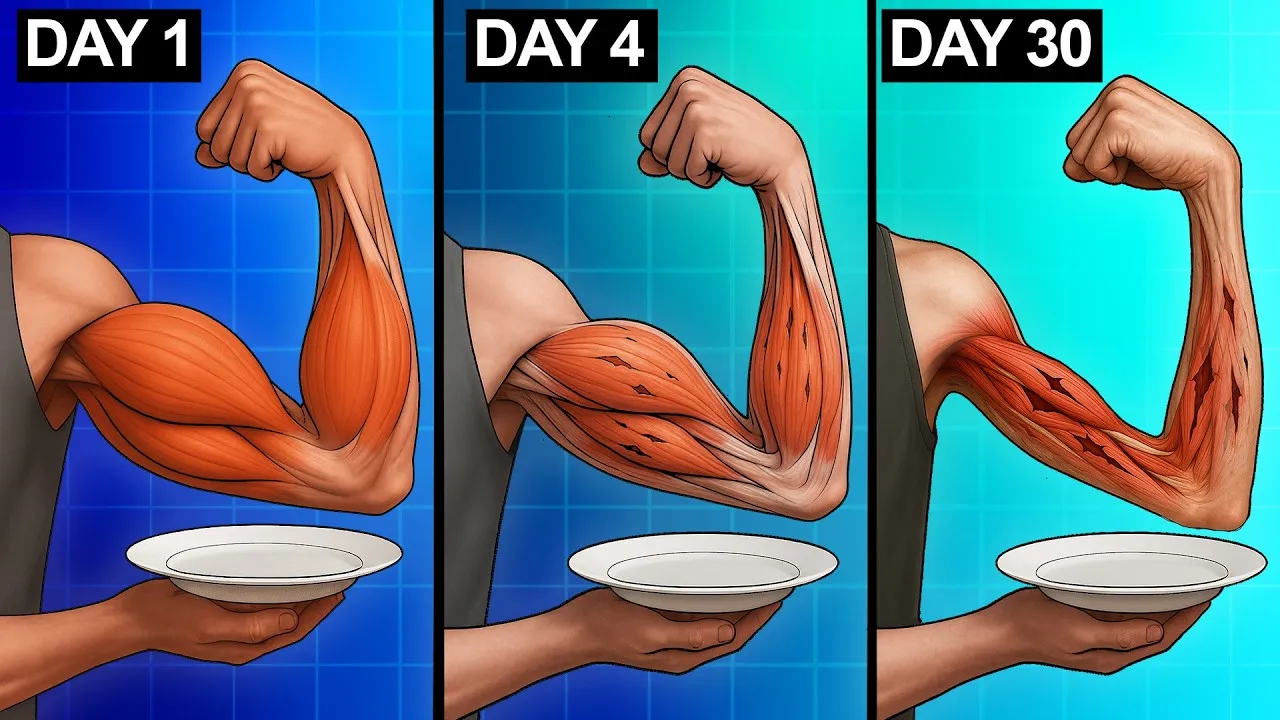
Fasting’s Muscle Impact: From Preservation to Breakdown
Fasting, particularly short-term periods, can offer surprising benefits for muscle health, fat loss, and metabolic function. However, extending fasting durations can shift the body’s response from beneficial adaptation to a survival mode that prioritizes breaking down muscle tissue for energy. Understanding these day-by-day changes is crucial for leveraging fasting safely and effectively.
The First 24 Hours: A Metabolic Reset
When you begin a fast, typically around the 16- to 24-hour mark, your body enters a state of calm. Glycogen, the stored form of carbohydrates in your liver and muscles, is still available. Your liver uses glycogen to maintain stable blood sugar levels, especially for your brain.
Muscle glycogen remains largely untouched unless you’re engaged in intense physical activity. As glycogen stores begin to drop, insulin levels decrease, which is a positive signal that allows your body to access stored body fat for energy.
During this initial phase, your body also increases the production of norepinephrine and growth hormone. Research indicates that growth hormone can increase up to fivefold during short-term fasting, offering significant anti-catabolic properties.
This means it helps protect your muscles, aids in fat burning, and supports recovery. While you might notice a slight decrease in muscle size due to glycogen depletion (which holds water), your actual muscle tissue remains intact, and strength and performance are generally unaffected.
Internally, your body prioritizes using glycogen, free fatty acids, and glucose from non-muscle sources for energy, minimizing muscle breakdown. Short-term fasting, especially when combined with training during the fasted state and adequate protein intake upon breaking the fast, can act as a muscle-preserving strategy.
This period also initiates cellular adaptations: mitochondria, the powerhouses of your cells, begin to adapt. Short-term fasting activates AMPK and boosts the expression of PGC1-alpha, a gene that stimulates the growth of new mitochondria, making your muscle cells more efficient at energy production, particularly in endurance-focused type 1 muscle fibers.
Autophagy, your body’s cellular cleanup process, also starts to increase. This system clears out damaged proteins and cellular waste, which is beneficial for longevity and metabolic health, without significantly impacting muscle proteins at this stage.
Days 3-7: Shifting to Ketosis and Early Adaptations
By the third day of fasting, your glycogen stores are nearly depleted. Your body adapts by relying more heavily on ketones, produced from fat, as its primary fuel source, especially for the brain.
This metabolic state, known as ketosis, is a survival mechanism that allows you to function without food while preserving lean mass. Ketones help reduce the body’s demand for glucose, thereby decreasing the need to break down muscle for energy.
Interestingly, a specific ketone body, beta-hydroxybutyrate, has been shown to suppress enzymes responsible for breaking down branched-chain amino acids like leucine. This provides a chemical mechanism for muscle sparing.
For healthy individuals with sufficient body fat and hydration, the body continues to prioritize fat for energy. Muscle breakdown remains minimal, particularly if resistance training is maintained. While you might feel weaker during workouts due to low glycogen, significant muscle loss is unlikely.
However, the body begins to utilize amino acids for essential functions like immune defense, enzyme production, and tissue repair. Since there’s no dietary intake, some amino acids are sourced from internal tissues, including a small amount from muscle. This minimal muscle loss is often attributed to the body’s demand for glutamine, an amino acid abundant in skeletal muscle, which is crucial for immune cell function during fasting.
At the cellular level, the mTOR pathway, responsible for protein synthesis, is dialed down, as building muscle is not a priority in a food-deprived state. Conversely, AMPK is upregulated, promoting fat oxidation and mitochondrial efficiency.
Autophagy continues, clearing damaged mitochondria and cellular debris, and even targeting senescent (aged or damaged) muscle cells. This phase can refine muscle tissue by removing damaged components.
As you approach day seven, the body’s preservation mode is increasingly challenged. With no external amino acid supply, and while fat and ketones are still utilized, the prolonged lack of protein forces trade-offs.
Gluconeogenesis, the process of converting non-carbohydrates into glucose, increases, with muscle tissue becoming a primary source. Muscle proteins are broken down into amino acids like alanine and glutamine, which are then converted to glucose in the liver for tissues that cannot use fat or ketones, such as red blood cells and parts of the brain.
Performance noticeably declines. Heavy lifting becomes difficult, with reduced repetitions and prolonged recovery times. You may experience more significant delayed onset muscle soreness.
Measurable lean mass loss becomes apparent. Muscle biopsies at this stage would show reduced protein synthesis, a smaller muscle fiber cross-sectional area, and diminished anabolic hormones like IGF-1 and testosterone.
Cortisol levels remain elevated, aiding fat mobilization but also contributing to muscle protein breakdown. Muscle tissue starts to function as a supply depot.
Circadian rhythms within muscle cells can also be disrupted. Prolonged fasting can interfere with the muscle’s internal clock, potentially impairing protein synthesis, muscle contraction force, and hormonal responsiveness.
Day 30 and Beyond: Survival Mode and Muscle Catabolism
By day 30 of fasting, the body is in a severe survival strategy. Most glycogen is depleted, fat stores are heavily utilized, and muscle catabolism becomes a significant energy source.
Visible effects include muscle atrophy, leading to a thinner, weaker physique. Strength and coordination are significantly reduced, and even endurance capacity suffers as the basal metabolic rate lowers to conserve energy.
Cellular function declines: mitochondrial function decreases, myosin (the protein responsible for muscle contraction) is reduced, and the neuromuscular junction becomes less efficient. Capillary density drops, impacting oxygen delivery.
Intramuscular fat may increase, potentially impairing insulin sensitivity. Chronic fasting can also reduce satellite cell activation, which is crucial for muscle repair and growth, making recovery and adaptation more difficult.
Without adequate protein, processes like protein synthesis, collagen turnover, and muscle fiber regeneration slow down dramatically. The mTOR pathway is largely shut off, preventing muscle growth, repair, and adaptation. This prolonged state impacts not only skeletal muscles but also critical muscles like the diaphragm and heart.
While short fasts can reduce inflammation, extended fasting can paradoxically increase muscle-specific oxidative stress and inflammation due to the breakdown of structural proteins and reduced satellite cell pools. This makes the muscles more vulnerable and recovery much harder.
A critical concern with prolonged fasting is the risk of refeeding syndrome. After extended periods without food, the body becomes extremely sensitive to nutrient reintroduction. A sudden intake of carbohydrates, especially without adequate electrolytes, can lead to a dangerous drop in blood phosphate and potassium, potentially causing cardiac issues, confusion, and even death.
Recovery and Refeeding Considerations
Breaking a short fast (e.g., after 3 days) can lead to rapid recovery. Protein synthesis resumes, mTOR is reactivated, and muscles become highly receptive to nutrients.
With adequate protein, electrolytes, and intelligent training, lost muscle mass and metabolic benefits can often be regained. Muscles exhibit improved glucose uptake and nutrient partitioning due to enhanced insulin sensitivity and GLUT4 activity (the protein that facilitates glucose entry into muscle cells).
However, after prolonged fasting (e.g., 30 days), recovery is a delicate and lengthy process. The gut needs time to adapt, muscles are not primed for rapid nutrient uptake, and hormonal systems are suppressed. A slow ramp-up of food intake is essential, and it can take weeks or months to rebuild muscle, with a higher risk of regaining fat due to a reduced metabolic rate.
Key Health Takeaways
- Short-term fasting (1-3 days) can be beneficial: It can enhance fat oxidation, boost growth hormone, improve insulin sensitivity, and promote cellular repair (autophagy).
- Muscle preservation is key in short fasts: When combined with resistance training and adequate protein refeeding, short fasts can help retain or even enhance muscle mass.
- Prolonged fasting (beyond 3 days) shifts the body’s priority: The body begins to break down muscle tissue for energy and essential functions as glycogen depletes and fat stores are heavily utilized.
- Ketosis offers muscle sparing: During fasting, ketones help reduce the body’s reliance on breaking down muscle for glucose.
- Muscle loss accelerates with duration: After about 7 days, muscle protein breakdown increases to provide amino acids for essential functions and gluconeogenesis. By 30 days, significant muscle catabolism occurs.
- Autophagy’s dual role: While beneficial for clearing damaged cells in short fasts, prolonged fasting can lead to autophagy affecting more functional tissues.
- Refeeding is critical: Breaking a fast requires adequate protein, hydration, and electrolytes. Improper refeeding after prolonged fasts can lead to dangerous conditions like refeeding syndrome.
- Recovery varies: Short fasts allow for rapid muscle recovery and improved nutrient partitioning, while recovery after prolonged fasting is slow and challenging.
Context and Considerations
This information applies to generally healthy adults. Individuals with pre-existing medical conditions, such as diabetes, kidney disease, or eating disorders, should consult a healthcare professional before considering any form of fasting. The duration and intensity of fasting discussed here range from intermittent fasting patterns to extended periods, highlighting a spectrum of physiological responses.
Disclaimer
This article is for informational purposes only and does not constitute medical advice. The information presented is based on research and scientific understanding but does not replace the advice of a qualified healthcare provider. Always consult with your doctor or a registered dietitian before making any changes to your diet or fasting regimen.
Source: What Happens to Muscle When You Stop Eating (YouTube)