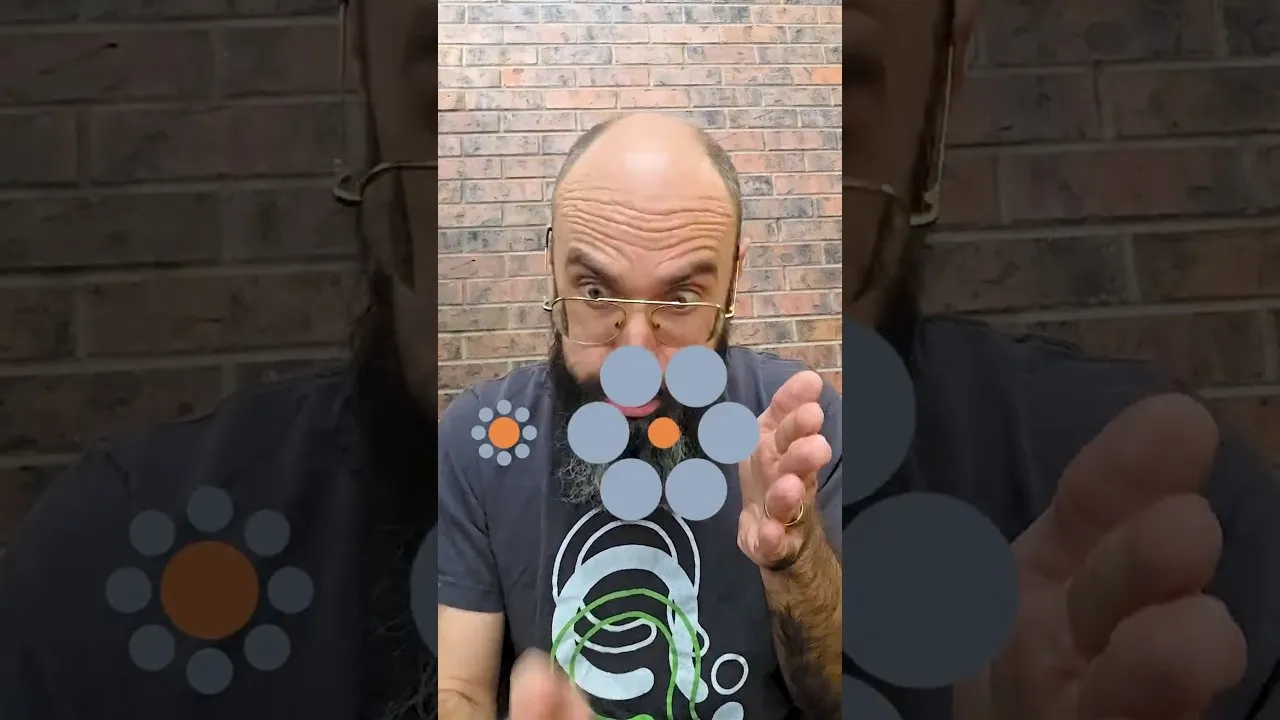
Master the Dynamic Ebbinghaus Illusion: A Visual Trick
Optical illusions have fascinated us for centuries, challenging our perception of reality. While the classic Ebbinghaus illusion is well-known, a more dynamic and powerful version emerged in 2014, earning the title of ‘Illusion of the Year.’ This article will guide you through understanding and experiencing the dynamic Ebbinghaus illusion, revealing how movement can dramatically amplify visual tricks.
What You Will Learn
In this tutorial, you will learn:
- The principles behind the classic Ebbinghaus illusion.
- How the dynamic Ebbinghaus illusion enhances the original effect.
- How to experience the dynamic Ebbinghaus illusion yourself.
- The potential scientific reasons behind this amplified illusion.
Understanding the Classic Ebbinghaus Illusion
Before diving into the dynamic version, let’s revisit the foundation. The Ebbinghaus illusion, over a century old, demonstrates how our perception of an object’s size can be influenced by the objects surrounding it. Typically, a central circle surrounded by larger circles appears smaller than an identical central circle surrounded by smaller circles.
Example:
- Imagine a central red circle.
- If you place large blue circles around it, the central red circle will appear smaller.
- If you place small blue circles around it, the central red circle will appear larger.
While intriguing, the classic Ebbinghaus illusion’s impact is often described as moderately interesting. The dynamic version, however, takes this effect to a new level.
Introducing the Dynamic Ebbinghaus Illusion
The dynamic Ebbinghaus illusion, recognized as the Illusion of the Year in 2014, significantly amplifies the perceptual distortion. It achieves this by introducing movement, leading to a much more pronounced effect—reportedly at least four times stronger than its static predecessor. This illusion is so striking that it can make the central object appear to dramatically grow and shrink, despite its actual physical size remaining constant.
How to Experience the Dynamic Ebbinghaus Illusion
You can easily experience this powerful illusion yourself with a simple setup. The key is to maintain focus on a central element while its surroundings move.
- Prepare Your View: Find a visual representation of the dynamic Ebbinghaus illusion. This is often presented as a central yellow dot surrounded by other shapes that move outwards or inwards. You can typically find examples online by searching for ‘dynamic Ebbinghaus illusion.’
- Focus on the Central Dot: Once you have the illusion displayed, direct your gaze to the central yellow dot. It is crucial to keep your eyes fixed on this single point. Do not look at the surrounding shapes or try to track their movement.
- Observe the Effect: With your eyes steadily focused on the central yellow dot, observe what happens. You should notice the central dot appearing to change in size—growing larger and then smaller—even though the actual visual stimulus is not altering its dimensions.
- Continue Staring: Keep staring at the central dot for a short period. You will likely perceive a continuous cycle of the dot expanding and contracting.
Tip:
The effectiveness of this illusion relies heavily on maintaining a steady gaze on the central element. Any shift in focus will diminish the perceived effect.
Why Does Movement Enhance the Illusion?
The researchers who developed the dynamic Ebbinghaus illusion hypothesized that movement plays a critical role in amplifying the perceptual distortion. Our brains are constantly working to interpret a vast amount of visual information to construct our perception of the world. They do this by integrating various cues, such as the size of the retinal image and perceived distance.
However, when elements in a visual scene are moving, certain cues can become more uncertain. For instance, the exact size of the retinal image or the perceived distance to an object might be harder for the brain to precisely determine when things are in motion.
Expert Note:
When cues become uncertain due to movement, the brain may adjust its reliance on different information. It might start to depend more heavily on contextual clues—like the size of the surrounding objects—to make a judgment about the central object’s size. This shift in processing can lead to a more exaggerated perception of size differences, making the central disc appear to change size dramatically relative to its context.
In essence, the brain might be compensating for the uncertainty introduced by motion by placing greater emphasis on the surrounding context, thus amplifying the Ebbinghaus effect. It’s as if the brain says, ‘Things are moving, so it’s harder to be sure about physical size. Let me rely more on what I see around it to guess how big it is,’ leading to the dramatic perceived size changes.
Conclusion
The dynamic Ebbinghaus illusion is a powerful demonstration of how our perception is not a direct reflection of physical reality but rather an active construction influenced by various factors, including movement and context. By experiencing this illusion, you gain a deeper appreciation for the complex workings of the human visual system.
Source: The Dynamic Ebbinghaus Illusion (YouTube)