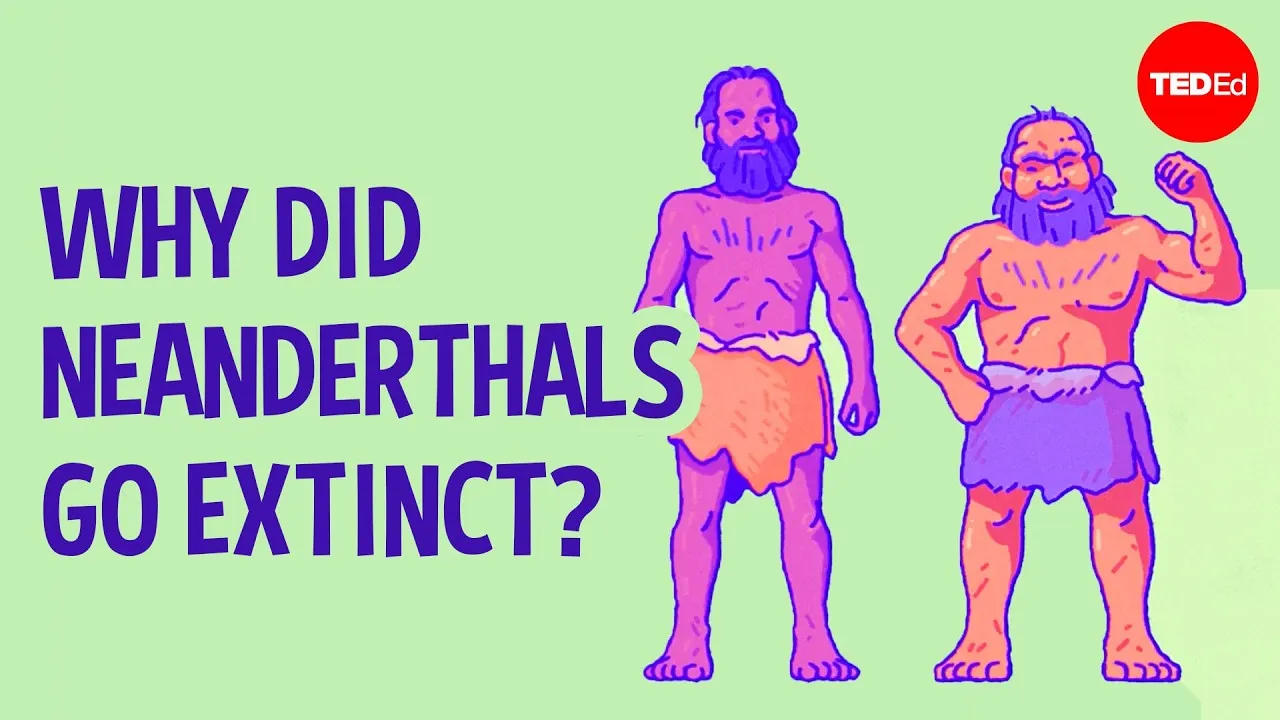
Debunk Neanderthal Myths: Discover Their Complex Lives
For decades, Neanderthals have been unfairly depicted as brutish, unintelligent cavemen. This article aims to dismantle those long-held misconceptions by exploring the latest archaeological and genetic evidence.
You will learn about their physical characteristics, their surprisingly complex social behaviors, their tool-making skills, and their potential for symbolic thought. We will also touch upon the genetic legacy they left behind in modern humans.
Understanding the Discovery and Early Misconceptions
The story of Neanderthals began in 1856 when quarry workers in Germany’s Neander Valley unearthed mysterious fossils. These remains, identified as a skullcap and femur bones, belonged to an extinct human species, Homo neanderthalensis, or Neanderthals. This discovery occurred at a time when the scientific community was beginning to accept longer geological timelines and evolutionary theory, making the idea of an ancient, distinct human species conceivable.
However, early interpretations were heavily influenced by prejudice and a lack of comprehensive data. Neanderthals were often portrayed as unintelligent, hairy, and ape-like, complete with stooped postures and opposable toes—illustrations that did not align with the skeletal evidence. This negative portrayal, often termed “Neander slander,” persisted for many years.
Revisiting Neanderthal Physicality and Lifespan
As more hominin species and over 300 Neanderthal individuals were discovered in the following century, a clearer picture of their physical nature emerged. Compared to modern humans (Homo sapiens), Neanderthals had distinct characteristics:
- Larger, deeper-set eyes.
- Shorter, more muscular builds.
- Higher caloric needs due to slightly larger bodies, including their hearts and brains.
For over 350,000 years, Neanderthals inhabited Europe and Western Asia. Significantly, they coexisted with Homo sapiens for at least the final 10,000 years of their existence.
Evidence of Complex Social Structures and Care
Contrary to the image of solitary, primitive beings, archaeological finds reveal that Neanderthals led complex lives and exhibited strong social bonds. A notable example comes from a Neanderthal skeleton found in a cave in northern Iraq dating back to the 1950s.
This individual had a severed right arm, an injured leg, and was likely partially blind and deaf. The fact that this person survived for a significant time after these debilitating injuries strongly suggests that their community provided extensive, daily support and care.
Similarly, a skeleton discovered in a French cave belonged to an older Neanderthal who likely had difficulty walking and had lost so many teeth that their food may have needed to be ground for them. The discovery sites for both individuals also showed signs of burial, indicating that Neanderthals extended their concerns beyond immediate survival to care for their ailing and deceased members.
Advanced Hunting and Tool-Making Capabilities
The perception of Neanderthals as solely hunters of large game using brute force has also been revised. Analysis of cut marks on rabbit bones, along with tools showing traces of scales and feathers, suggests that Neanderthals were skilled hunters capable of capturing small game. They may have employed sophisticated methods such as snares and fast-moving projectiles.
Their technological prowess is further evidenced by their tool-making abilities:
- They fashioned various types of tools, sometimes attaching components with glue made from heated birch bark.
- They shaped hardwood digging sticks using fire.
- They created reinforced, 3-ply string from bark fibers.
Potential for Symbolic Thought and Art
Perhaps one of the most significant shifts in our understanding of Neanderthals is the growing evidence suggesting they possessed symbolic thought, engaging in activities beyond immediate practical needs, such as art and language—traits long considered exclusive to Homo sapiens.
Evidence supporting this includes:
- The selective removal of bird’s flight feathers, possibly for personal adornment.
- The painting and perforation of shells.
- The wrapping of eagle talons in animal tissue.
- Markings made on a giant elk’s toe bone.
- Three cave paintings in Spain, if the estimated 65,000-year-old dating is accurate.
The discovery of broken, rearranged, and burned stalagmites deep within a French cave has led scientists to speculate about their potential spiritual or ceremonial significance to Neanderthals.
Genetic Interbreeding and the Braided Stream of Evolution
The first complete sequencing of the Neanderthal genome in 2010 revealed another groundbreaking fact: our species, Homo sapiens, interbred with Neanderthals. All modern humans carry some Neanderthal DNA, up to about 4%, a result of hundreds of distinct interbreeding events.
Theories about why Neanderthals eventually disappeared vary, including rampant cannibalism, disease, climate change, and aggressive competition with Homo sapiens. However, a leading idea is that Neanderthals lived in smaller, more dispersed groups. As they interbred with the larger populations of Homo sapiens, they were gradually absorbed into the broader human gene pool.
This understanding has led to a shift in how we view human evolution. Instead of a linear, tree-like progression, scientists now often conceptualize it as a “braided stream,” where different hominin groups diverged and then rejoined at various points in history. As research continues, each new discovery challenges our assumptions and highlights the shared heritage between Neanderthals and modern humans.
Source: The biggest myths about Neanderthals – Bruce Hardy (YouTube)