Understanding Moral Responsibility with the JoJo Thought Experiment
The concept of moral responsibility is complex. We often hold individuals accountable for their actions, but what happens when their upbringing significantly shapes their understanding of right and wrong?
The JoJo thought experiment, devised by philosopher Susan Wolf, provides a fascinating framework for exploring this question. This article will guide you through the core ideas of the JoJo thought experiment, helping you understand the nuances of moral responsibility, the influence of upbringing, and the philosophical debates surrounding these concepts.
What You Will Learn
- The core scenario of the JoJo thought experiment.
- The philosophical concept of the “Deep Self View” and its implications for moral responsibility.
- Susan Wolf’s perspective on how upbringing affects moral responsibility.
- The compatibilist and incompatibilist views on determinism and responsibility.
- How the thought experiment challenges our understanding of moral competence.
The JoJo Thought Experiment Scenario
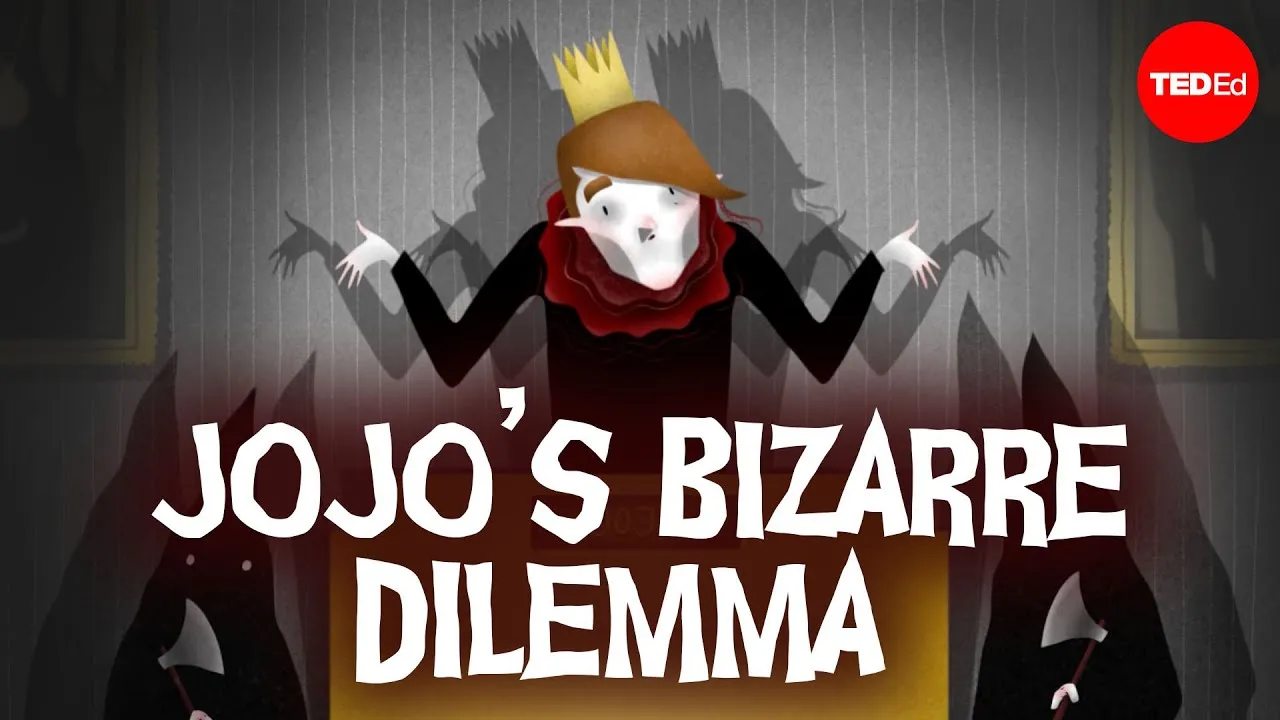
Imagine a ruthless dictator, Jo the First, who rules his country with an iron fist. His subjects live in fear, and any dissent is met with permanent banishment. To onlookers, his rule is cruel and unjust.
However, his son, JoJo, grows up in this environment entirely unaware of any wrongdoing. He witnesses his father’s strength, his subjects’ obedience, and their praise, never experiencing or observing fear or violence.
JoJo eventually inherits his father’s throne and continues his tyrannical style of rule. While his actions are clearly wrong to an outside observer, the experiment poses a critical question: Given JoJo’s unique and sheltered upbringing, does he bear full moral responsibility for his actions?
Step 1: Understanding the “Deep Self View”
Philosophers Gary Watson and Harry Frankfurt propose the “Deep Self View” to address moral responsibility. According to this view, individuals are morally responsible for actions that align with their “true self” – actions that reflect their deepest values and commitments.
- Core Principle: Actions stemming from one’s core values make one responsible.
- External Influences: Responsibility is lessened for actions performed under duress, intoxication, or other external pressures that override one’s true self.
Applying this to JoJo, his cruel actions stem directly from the values he developed in his upbringing. He has no external excuse like duress or intoxication. Therefore, according to the Deep Self View, JoJo would be considered morally responsible for his actions because they originate from his deepest, albeit warped, values.
Step 2: Considering the Influence of Upbringing (Susan Wolf’s Perspective)
Susan Wolf, who created the JoJo scenario, offers a different perspective. While she agrees that JoJo’s actions reflect his deep self, she argues that we must also consider how that deep self came to be.
- Upbringing Matters: Wolf believes that JoJo’s atypical environment significantly shapes his moral development.
- Reduced Responsibility: Even if JoJo acts on his own values, his upbringing makes him less morally responsible for his cruelty compared to someone who had a normal childhood and then chose to become tyrannical.
Wolf’s argument suggests that the origins of one’s values are crucial when assessing moral responsibility. If someone’s fundamental values are compromised by their environment from birth, can we hold them fully accountable in the same way as someone with a different formative experience?
Step 3: Exploring Determinism and Moral Responsibility
The JoJo experiment touches upon a broader philosophical debate: the conflict between determinism and moral responsibility.
- Incompatibilism: This view holds that if all events, including human actions, are predetermined by factors like genetics and environment, then no one can be truly morally responsible for anything.
- Compatibilism: In contrast, compatibilists argue that even if our actions are the inevitable outcome of past events, we can still be held morally responsible for them.
The JoJo case highlights this tension by presenting a character whose actions seem predetermined by his environment. The question is whether his predetermined nature absolves him of responsibility.
Step 4: Assessing Moral Competence
Wolf uses JoJo’s case to focus on a specific aspect of moral responsibility: moral competence. JoJo, having grown up without exposure to concepts of right and wrong, may lack the capacity to understand or learn them.
- Lack of Opportunity: JoJo never had a meaningful chance to learn moral distinctions.
- Inability to Self-Reflect: His continued cruelty as an adult suggests a lack of self-reflection and an inability to change his values.
Wolf argues that if JoJo lacks basic moral competence – if he genuinely doesn’t know right from wrong and cannot learn it – then it is misplaced to hold him fully accountable for his actions. This raises the question of whether true moral responsibility requires a certain level of moral understanding and the capacity for self-correction.
Step 5: The Question of Inevitability
A crucial follow-up to Wolf’s argument is whether JoJo’s moral incompetence was truly inevitable, even given his upbringing.
- Hypothetical Sister (JoJa): Imagine JoJo had a sister, JoJa, raised in the exact same environment. If JoJa rejected their father’s tyranny and developed different values, it suggests JoJo had a similar potential path. This potential for a different outcome increases his moral responsibility.
- Intervention: What if a rogue court member attempted to teach young JoJo about justice and morality, but he still chose tyranny? The more opportunities JoJo had to develop moral competence, the less his upbringing can excuse his actions.
These hypothetical scenarios suggest that the degree of JoJo’s moral responsibility is linked to the opportunities he had to develop moral competence and whether his path was truly unavoidable.
Conclusion: Your Decision on Moral Responsibility
The JoJo thought experiment doesn’t offer a definitive answer but rather prompts critical thinking. It forces us to confront difficult questions:
- How should we define and measure moral responsibility?
- To what extent does upbringing absolve an individual of blame for their actions?
- Can moral competence transcend even the most adverse environments?
Ultimately, deciding how we should determine moral responsibility, and whether JoJo’s tyranny was inevitable, is a philosophical exercise left to the reader.
Prerequisites
- Basic understanding of ethical concepts.
- Familiarity with philosophical thought experiments.
Expert Notes
- The JoJo thought experiment is a variation on themes explored in Harry Frankfurt’s work on free will and moral responsibility.
- Susan Wolf uses this scenario to highlight the importance of the “reasons-responsiveness” condition for moral responsibility – the ability to recognize and respond to moral reasons.
Source: The infamous JoJo thought experiment – Michael Vazquez and Sarah Stroud (YouTube)