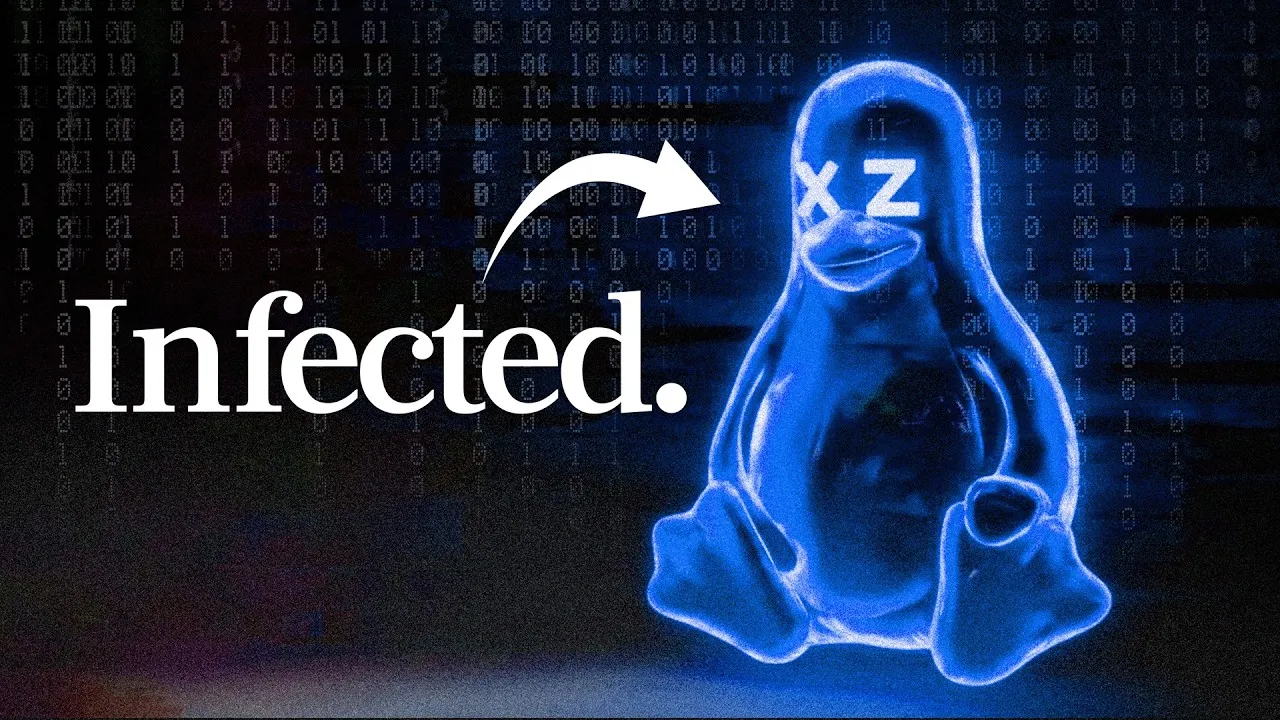
Unveiling a Critical Vulnerability in Open Source Software
In 2021, a significant threat emerged, exposing a critical weakness in a widely used operating system that underpins a vast portion of the internet. This vulnerability, if exploited, could have granted unauthorized access to millions of servers, enabling espionage, ransomware, or even the disruption of national infrastructure. The story of how this potential disaster was averted, and the underlying vulnerabilities it revealed, begins with a simple, yet persistent, problem: a jamming printer.
The Genesis of Open Source and the Free Software Movement
The narrative takes us back to the early days of computing, specifically to the AI lab at MIT in the late 1970s. The arrival of the Xerox 9700, one of the first commercial laser printers, was a significant technological advancement.
However, it was plagued by frequent paper jams, causing considerable frustration for researchers like Richard Stallman. Stallman, a proponent of open access to technology, sought a software solution to alert users to jams, a common practice for him in resolving similar issues.
His endeavor was initially blocked when Xerox refused to provide the printer’s source code, a key moment that highlighted a growing trend of proprietary software and restricted access. This encounter deeply affected Stallman, leading him to recognize the societal implications of such closed systems. He observed a shift from the collaborative spirit of early computing, where systems like Unix were freely shared among researchers, to an era of increasing control and non-disclosure agreements (NDAs) imposed by companies like AT&T.
Stallman’s disillusionment with the trend of ‘building walls to divide people’ led him to found the Free Software Foundation in 1985. The foundation championed four essential freedoms for software users: the freedom to run the software for any purpose, to study it, to change it, and to share it. To codify these freedoms, Stallman developed the General Public License (GPL).
Driven by his vision, Stallman initiated the GNU Project, aiming to create a free and open-source Unix-like operating system. The project successfully developed numerous essential components, including the GCC compiler and the Bash shell. However, a crucial element remained missing: the kernel, the core that manages the system’s hardware.
The Birth of Linux and the Open Source Ecosystem
The missing piece of the puzzle arrived in 1991. During a visit to Helsinki, Stallman met Linus Torvalds, a computer science student who was independently developing his own kernel. Inspired by Stallman’s presentation, Torvalds decided to release his kernel under the GPL.
Initially considered names like ‘Freax,’ the kernel was eventually named Linux, a portmanteau of Linus and Unix. When combined with the GNU Project’s components, it formed a complete, free, and open-source operating system.
This fusion marked a paradigm shift in software development. The open-source model, exemplified by Linux, allowed anyone to inspect, modify, and improve the code. This collaborative approach fostered rapid innovation and adaptation, leading to Linux’s widespread adoption across diverse applications, from personal computers and smart devices to the most critical infrastructure.
Linux’s adaptability made it ubiquitous. It powers the vast majority of internet servers, is the foundation for Android, and is found in countless electronic devices.
Its security and reliability have made it indispensable for high-security sectors, including government agencies, financial institutions, and defense organizations. Indeed, all of the world’s top 500 supercomputers run on Linux.
The Vulnerability of Dependencies: The XZ Story
The strength of the open-source ecosystem, however, relies on a critical assumption: the security of its components. Linus’s Law, ‘With enough eyeballs, all bugs are shallow,’ suggests that widespread code review leads to robust software.
Yet, the open-source world is an intricate web of dependencies – smaller, specialized tools and libraries that larger projects rely upon. Often, these essential components are maintained by single volunteers who dedicate their time out of passion, not payment.
This reliance on individual maintainers creates a potential point of failure. The story of the XZ Utils vulnerability, discovered in early 2024, starkly illustrates this risk.
Lasse Collin, a Finnish developer, had maintained the XZ compression tool, a vital component used in many Linux distributions, for nearly two decades. Facing burnout and personal challenges, Collin expressed his limitations in maintaining the project.
Into this situation stepped Jia Tan, who presented himself as a helpful contributor, gradually taking on more responsibility. Appearing diligent and skilled, Jia eventually took over as the maintainer of XZ.
However, Jia Tan was not who he seemed. He was a malicious actor who identified XZ as a critical vulnerability within the broader Linux ecosystem, specifically targeting its dependency on OpenSSH, the de facto standard for secure remote logins.
The Mechanics of the Attack: A Trojan Horse in XZ
The attack, orchestrated by Jia Tan, was sophisticated and multi-staged. The primary goal was to create a backdoor into OpenSSH, the protocol that secures remote server access. This protocol, developed by Tatu Ylonen in the mid-1990s, addressed two fundamental security challenges: establishing a secure, encrypted connection (akin to a secret handshake) and authenticating the identity of the communicating parties (ensuring you’re talking to the right server or user).
Jia Tan’s strategy involved exploiting the open-source supply chain. He recognized that while OpenSSH itself is heavily scrutinized, its numerous dependencies might not receive the same level of security auditing. XZ Utils, being a critical compression library used by many systems, including those that build OpenSSH, became his target.
Step 1: The Trojan Horse
Jia Tan began by subtly manipulating the XZ project on GitHub. He redirected bug reports to his own email and made minor modifications to helper tools. The crucial part of his plan, however, was to embed malicious code without it being obvious in the source code repository.
He hid his payload within binary data blobs – sections of non-human-readable code used for testing compression algorithms. These blobs are rarely inspected by developers, making them an ideal hiding place.
Jia modified the build process of XZ. Buried within automatically generated code, a small, easily overlooked change was introduced. This modification would quietly unpack the malicious payload from the binary blob and insert it into the XZ library during the build, effectively creating a Trojan horse within a critical system component.
Step 2: The Goldilocks Trigger
The embedded malicious code needed a trigger and a specific target. Jia’s aim was to compromise the RSA authentication mechanism within SSH. This process typically involves verifying a user’s cryptographic key.
Jia’s payload was designed to intercept this process. When SSH attempted to authenticate a user by calling a specific function (like RSA Decrypt), Jia’s code would execute first. It would then check for a secret ‘master key’ known only to him.
If this key was present, the backdoor would grant him access. If not, it would proceed to execute the legitimate authentication function, leaving no trace of its intervention.
To achieve this, Jia exploited a feature in modern systems that use shared libraries. Instead of bundling every required library within an application, systems link to shared libraries dynamically. The Global Offset Table (GOT) is a crucial component that the system uses to find the correct memory addresses for functions within these shared libraries.
Jia’s plan was to overwrite the GOT entry for the RSA authentication function, redirecting it to his malicious code. He intended to use a less common mechanism called an IFUNC (Indirect Function) resolver, which allows for selecting different implementations of a function based on system hardware, as a means to inject his code into the GOT.
Averting Disaster: The Discovery and Mitigation
Fortunately, the vigilance of the open-source community, combined with meticulous security practices by organizations like Red Hat, led to the discovery of this sophisticated attack. The subtle nature of the modifications and the exploitation of dependencies meant that the threat remained hidden until very close to its intended activation, reportedly around March-April 2024, coinciding with the release schedule for Red Hat Enterprise Linux 10. The discovery prevented a potentially catastrophic breach of internet security.
Lessons Learned and Best Practices
The XZ vulnerability is a clear reminder of the fragility of complex software ecosystems and the critical importance of supply chain security. It highlights the risks associated with over-reliance on single maintainers for essential open-source components and the need for more robust auditing of dependencies.
Recommendations for Users and Organizations:
- Vigilance in Software Updates: While updates are crucial for security, exercise caution and perform thorough testing, especially for critical infrastructure.
- Dependency Auditing: Organizations should invest in tools and processes to audit the dependencies of their software, identifying potential risks.
- Support Open Source Maintainers: Consider contributing financially or technically to critical open-source projects to ensure their long-term sustainability and security.
- Diversify Maintainership: Encourage projects to have multiple maintainers to avoid single points of failure.
- Utilize Security Tools: Employ security solutions like NordVPN’s Threat Protection Pro, which can block malicious websites and downloads, adding a layer of defense against supply chain attacks.
The incident underscores that the security of the internet relies not just on the integrity of major software packages but also on the countless small, often overlooked, components that form its foundation. Continuous diligence, collaboration, and a proactive approach to security are paramount in safeguarding our digital world.
Source: The Internet Was Weeks Away From Disaster and No One Knew (YouTube)