Explore a Remarkable Ecosystem Hidden in Darkness
Imagine a world where life thrives in perpetual darkness, sustained by an unlikely food chain. This article guides you through the discovery of the world’s largest spider web, found deep within a cave on the border of Greece and Albania. You’ll learn how an entire ecosystem, including tens of thousands of spiders, survives and flourishes without sunlight, relying on a unique food source originating from sulfur-eating bacteria.
How to Find the World’s Largest Spider Web
Locate the Cave Entrance
Begin your journey to the border region of Greece and Albania. The entrance to this remarkable cave is often described as dark and unassuming.
Navigate Through Water
Once inside the cave, prepare for a challenging trek. You will need to wade through water that can reach chest height. This underwater passage extends for approximately 50 meters.
Expert Tip: Ensure you are equipped with waterproof gear and are comfortable navigating in low-light, submerged conditions. The water depth and temperature can vary.
Observe the Spongy Substance
After navigating the water, you will enter a large chamber. Here, you will notice a thick, spongy substance covering an area of up to 100 square meters. This is the foundation of the unique ecosystem.
Witness the Spider Web
Upon closer inspection of the spongy substance, you will find that it is teeming with an astonishing number of spiders. Estimates suggest as many as 100,000 spiders inhabit this area, creating what is recognized as the world’s largest spider web.
Observation: It is unusual to find such a dense population of spiders in a single location, especially one devoid of sunlight.
Understand the Food Chain
The survival of this massive spider web population in complete darkness is a scientific marvel. The key lies in a unique food chain:
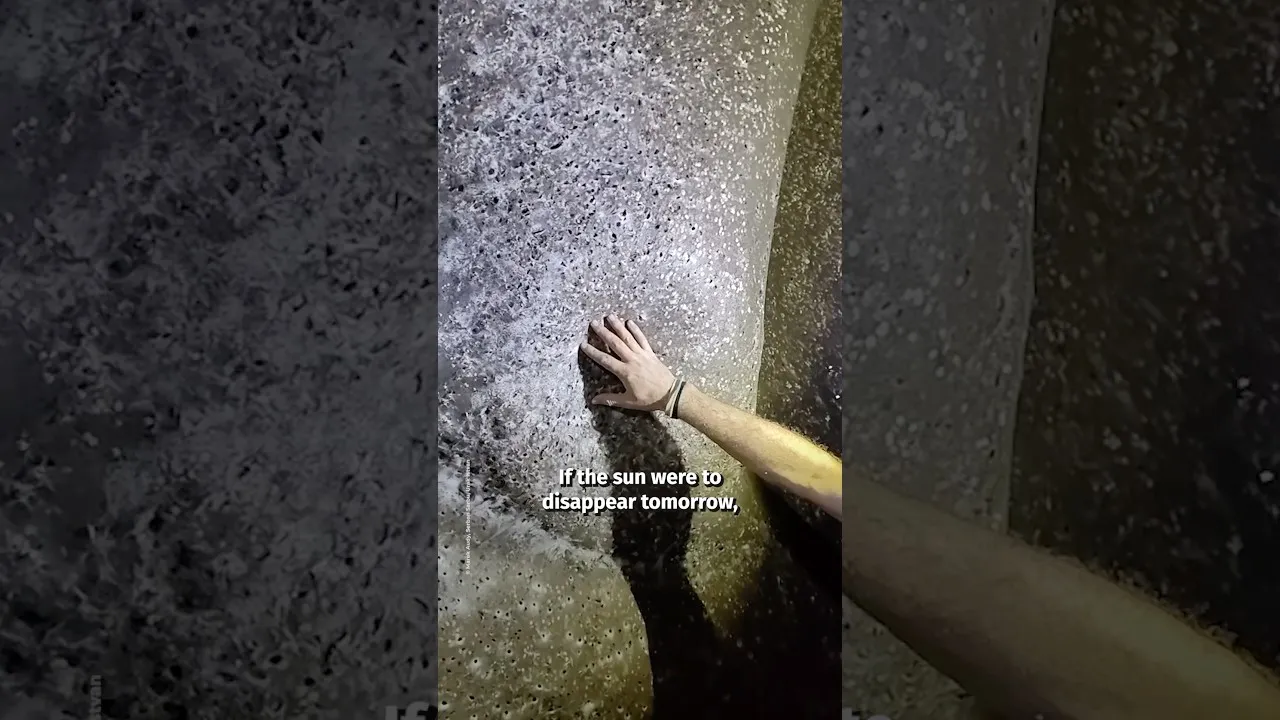
- Cave Walls: The cave walls are covered in a white slime.
- Sulfur-Eating Bacteria: Under a microscope, this slime reveals the presence of sulfur-eating bacteria, thriving on high sulfur concentrations within the cave’s rock formations.
- Mayflies: These bacteria form the base of the food chain, as mayflies consume the slime.
- Spiders: The immense population of mayflies then provides a virtually inexhaustible food source for the cave spiders.
Note the Spider Species Interaction
Scientists studying this web observed two species of spiders coexisting: a larger one and a smaller one. Typically, larger spiders prey on smaller ones. However, in this unique environment, they were found living in harmony, likely due to the abundant food supply.
Fascinating Insight: The sheer abundance of food allows for a level of cooperation or tolerance between different spider species that would be rare in other environments.
Prerequisites
- Comfort with dark, enclosed spaces.
- Ability to navigate through chest-high water.
- Interest in biology and unique ecosystems.
- Potentially, specialized caving or exploration gear, depending on the specific cave conditions and accessibility.
Source: World’s Largest Spiderweb (YouTube)