Understanding the Power of Translation in Literature
Have you ever wondered how stories and ideas travel across borders and languages? This article digs into the key role of translation in making literature accessible and enriching our understanding of it. We’ll explore how translators act as bridges between cultures, enabling us to experience the depth and breadth of works originally written in different languages, using examples from Latin American literature.
The Infinite Library and the Search for Meaning
Imagine a library containing every possible book, a concept explored by Jorge Luis Borges in “The Library of Babel.” This infinite collection holds not only every great work but also endless gibberish. This metaphor highlights a fundamental question: who decides what a book means? Is it the author, the scholar, or the reader?
Borges suggests that even seemingly nonsensical combinations of words might hold a profound, albeit hidden, significance. This idea emphasizes that literature is not static; it’s a dynamic encounter that generates possibilities, especially when we consider the act of translation.
Literature as an Open Encounter
Borges’s work, like much of Latin American literature, invites readers to actively participate in constructing meaning. This is further illustrated by Roberto Bolaño’s “The Savage Detectives.” The novel features a mysterious, wordless poem and an elusive poet, Cesárea Tinajero, whose work has largely disappeared.
The narrative doesn’t provide easy answers, instead presenting a fragmented story that encourages readers to become detectives themselves, piecing together clues and forming their own interpretations. This openness to interpretation is a hallmark of literature, and translation plays a vital role in extending this openness to a global audience.
The Indispensable Role of Translators
Without translators, the rich mix of Latin American literature would remain inaccessible to many. Translators are not mere conduits of words; they are skilled artists who bridge linguistic and cultural divides.
They grapple with nuances, connotations, and rhythms of language to convey the spirit of the original work. As Edith Grossman, a renowned translator, stated, translators are “a living bridge between two realms of discourse, two realms of experience, and two sets of readers.” Their work ensures that authors like Gabriel García Márquez, Samanta Schweblin, and Alejandro Zambra can reach audiences worldwide.
A History of Translation in Latin America
The practice of translation in Latin America has a long and varied history. It began centuries ago with the adaptation of religious texts and later played a significant role in disseminating political ideas that fueled independence movements.
In the 20th century, translation became instrumental in introducing Latin American literary giants to the global stage. Many prominent Latin American authors were also prolific translators themselves, including Julio Cortázar and Jorge Luis Borges, who translated works by English authors into Spanish, further enriching the literary exchange.
The Art and Challenge of Translation
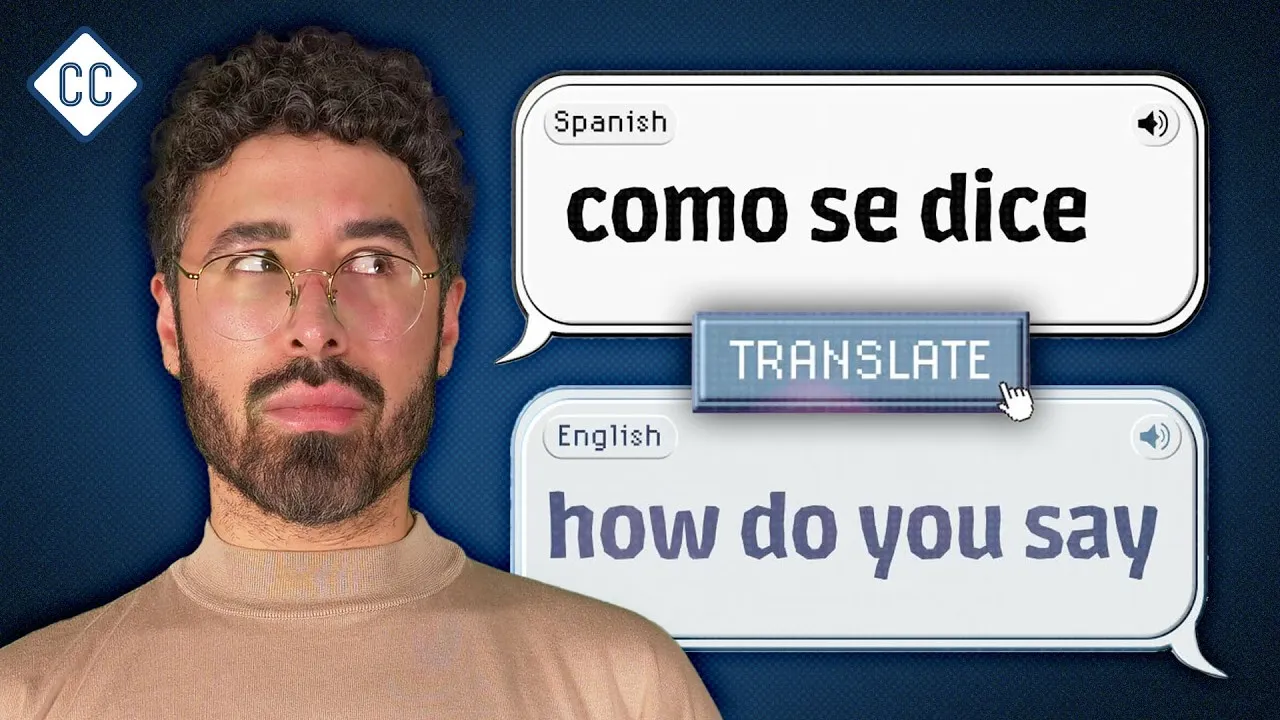
Translating is far more complex than using a simple online tool. A word’s meaning can shift dramatically between languages.
For instance, the Spanish idiom “El mundo es un pañuelo” literally translates to “The world is a handkerchief,” but its meaning aligns with the English “It’s a small world.” Capturing the essence of a poem or novel, which often relies on intricate wordplay and rhythm, requires immense skill and creativity. This is evident in the retranslation of works like Juan Rulfo’s “Pedro Páramo,” where early translations struggled to capture the novel’s opacity, with one translator omitting entire sentences and another embellishing the text.
Recognizing Translators as Creative Partners
Historically, translators have often been overlooked, with their contributions not always credited on book covers. However, pioneers like Edith Grossman fought for translators to be recognized as essential creative forces, not just passive technicians.
The ongoing effort to highlight translators’ contributions is crucial for acknowledging their role in making literature a shared global experience. Today, influential translators like Megan McDowell continue to introduce new Latin American voices to English-speaking readers, expanding the literary landscape.
Literature as a Communal Act
Ultimately, literature is a collaborative endeavor. It involves authors crafting the initial words, translators bridging linguistic gaps, filmmakers adapting stories, and readers bringing their unique perspectives.
Each interaction, each interpretation, adds layers to a work’s meaning. As Borges suggested, the universe of literature is vast and full of possibilities, and translation is a key mechanism that unlocks these possibilities, allowing stories and ideas to travel, evolve, and resonate across the globe.
Source: The importance of translation: Crash Course Latin American Literature #13 (YouTube)