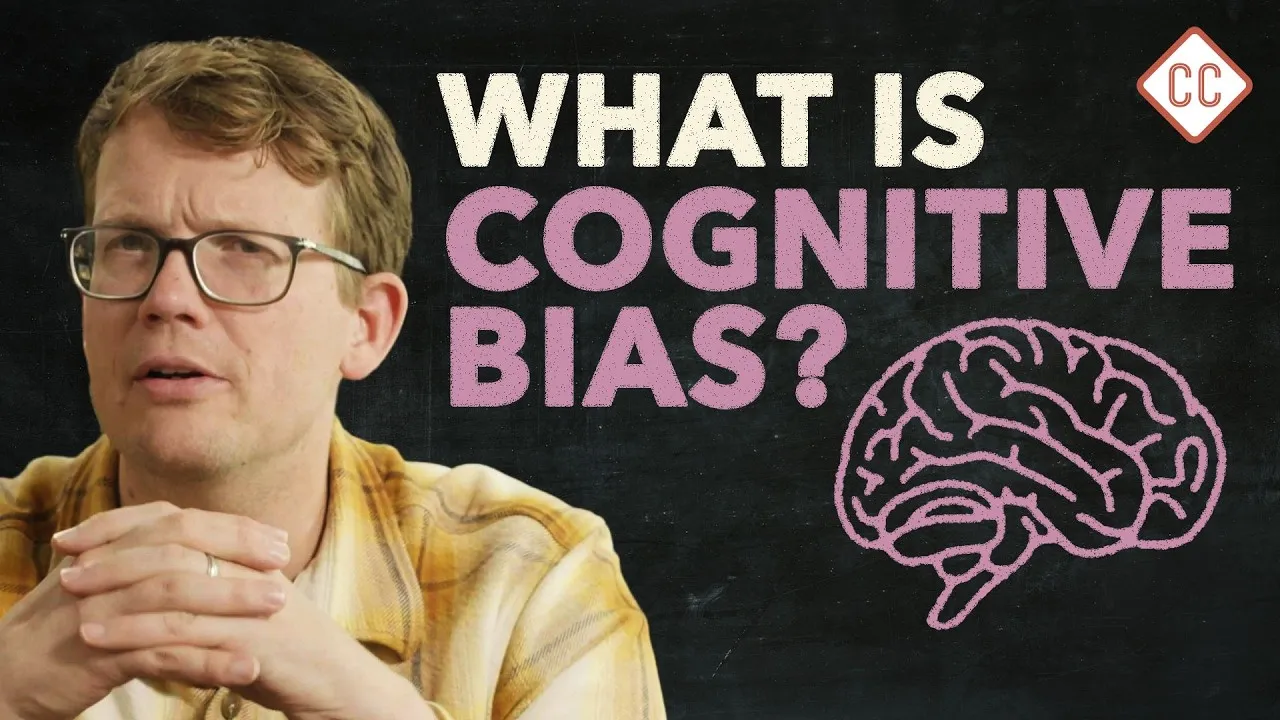
Understand Cognitive Bias to Improve Your Thinking
Our brains are incredible tools, constantly processing information and making decisions. However, the very mechanisms that help us survive and thrive can also lead us astray.
These are known as cognitive biases – predictable patterns in our thinking that can influence our judgments and perceptions without us even realizing it. This article will guide you through understanding what cognitive biases are, how they affect us, and how to mitigate their influence using scientific thinking.
What Are Cognitive Biases?
Cognitive biases are essentially mental shortcuts, or heuristics, that our brains use to simplify information processing and make decisions quickly. These shortcuts are often helpful for everyday tasks, like knowing not to touch a hot stove.
However, when applied to complex questions or when our intuition is unreliable, these shortcuts can lead to errors in judgment. Unlike explicit bias, which is conscious, cognitive biases operate unconsciously, influencing our decision-making based on ingrained patterns and beliefs we may not even be aware of.
Common Cognitive Biases Explained
Several common cognitive biases can significantly impact how we perceive the world:
1. Availability Bias
This bias occurs when we overestimate the importance or likelihood of events based on how easily information comes to mind. For instance, after a highly publicized plane crash, people may feel anxious about flying, even though flying remains statistically very safe.
The vivid, easily recalled news of the crash outweighs the less dramatic, but more common, statistics about car accidents. Algorithms and media cycles often amplify this bias by focusing on sensational events.
2. Confirmation Bias
Confirmation bias is our tendency to seek out, interpret, and remember information that confirms our existing beliefs, while ignoring or downplaying information that contradicts them. This is why the myth of learning styles persists; people who believe in them may dismiss scientific evidence against their effectiveness because they perceive positive results from methods that align with their beliefs. It’s a powerful force that can reinforce incorrect assumptions.
3. Anchoring Bias
This bias describes our tendency to rely too heavily on the first piece of information offered (the “anchor”) when making decisions. For example, the initial price suggested for a product can heavily influence our perception of its value, even if that price is arbitrary.
4. Hindsight Bias
Often referred to as the “I-knew-it-all-along” phenomenon, hindsight bias is the tendency to believe, after an event has occurred, that one would have predicted or expected the outcome. This makes past events seem more predictable than they actually were.
The Role of Scientific Thinking in Overcoming Bias
While our brains are prone to these biases, humanity has developed a powerful tool to counteract them: scientific thinking. Science isn’t just a collection of facts; it’s a systematic process for interrogating the world and building knowledge that is durable, communal, and evidence-based. This process is specifically designed to identify and reduce the influence of cognitive biases.
Key Scientific Methods for Bias Reduction
Several scientific methodologies are crucial in minimizing bias:
a. Randomized Controlled Trials (RCTs)
RCTs are a cornerstone of research, particularly in medicine. They involve multiple steps designed to reduce bias:
- Random Selection: Participants are chosen randomly to prevent researchers from unconsciously influencing the selection based on their preconceptions.
- Control Groups: Participants are divided into groups. One group receives the treatment being tested, while another (the control group) receives a placebo (an inactive substance) or an existing treatment. This allows for a clear comparison of outcomes.
- Placebos: Using placebos helps to isolate the effect of the actual treatment from the psychological effect of simply receiving a treatment.
RCTs help scientists compare results objectively, minimizing the risk that individual beliefs or expectations skew the findings.
b. Double-Blind Studies
To further eliminate bias, some trials are conducted as double-blind studies. In these studies, neither the participants nor the researchers administering the treatments know who is receiving the active treatment and who is receiving the placebo. This prevents both participant and researcher expectations from influencing the results.
How You Can Combat Cognitive Bias
Overcoming cognitive biases is an ongoing process, but several strategies can help:
1. Acknowledge and Accept Your Biases
The first and most crucial step is recognizing that everyone, including yourself, has cognitive biases. Denying their existence is a major red flag. Understanding that these biases are a natural part of human cognition, rather than a personal failing, empowers you to identify their influence on your thoughts and decisions.
2. Seek Diverse Perspectives
Bias thrives on limited experience. Actively engage with people who have different backgrounds, beliefs, and perspectives from your own.
This exposure challenges your assumptions and broadens your understanding of reality. Science relies on a diverse community of experts to vet claims and ensure robust knowledge building, and personal growth benefits from the same principle.
3. Prioritize Evidence Over Intuition
While gut feelings can be useful, science demands evidence. When encountering information that challenges your deeply held beliefs, pause and consider the evidence presented.
Be willing to critically evaluate your own assumptions and consider the possibility that you might be wrong. This requires cognitive flexibility – the ability to consider alternative explanations beyond your initial reaction.
4. Practice Cognitive Flexibility
Cognitive flexibility is your capacity to adapt your thinking and consider multiple possibilities or explanations. It’s the ability to say, “Perhaps my initial understanding was incomplete or incorrect.” Cultivating this skill allows you to be more open to new information and less entrenched in your existing beliefs.
5. Understand the Scientific Process
By learning how science works – its methods, its reliance on peer review, and its community-driven nature – you gain a powerful lens through which to evaluate information. This knowledge helps you better understand scientific reporting in the media, on social media, and in everyday conversations, enabling you to respond more critically and thoughtfully.
Conclusion
Cognitive biases are an inherent part of human thinking, stemming from our brain’s need for efficient processing. While they can lead us astray, scientific thinking offers a robust framework for mitigating their influence.
By understanding common biases like availability and confirmation bias, and by actively employing strategies such as seeking diverse perspectives, valuing evidence, and practicing cognitive flexibility, you can significantly improve your decision-making and your understanding of the world. Science, with its emphasis on evidence and community vetting, is one of our best tools for navigating a complex reality and outsmarting our own mental shortcuts.
Source: Introduction to Cognitive Bias: Crash Course Scientific Thinking #1 (YouTube)