Build Muscle Effectively: 6 Key Exercises for Full-Body Growth
Achieving a comprehensive physique doesn’t require an exhaustive list of exercises. According to fitness expert Dr. Mike Israetel, a select group of six fundamental movements can effectively target all major muscle groups, promoting overall muscle growth and strength. This approach emphasizes efficiency, ensuring that each exercise works multiple muscles simultaneously, making it ideal for individuals seeking a streamlined yet effective training regimen.
Targeting Upper Body Muscles Efficiently
The journey to a well-rounded physique begins with strategic upper body training. Dr. Israetel highlights the close-grip incline bench press as a powerful compound exercise.
Unlike the standard incline press, the close grip variation significantly enhances the engagement of the triceps and front deltoids alongside the upper pectorals. The key to maximizing this exercise lies in the grip width and the ability to touch the bar to the upper chest, ensuring proper form and elbow tuck to protect the shoulder joint.
For back and bicep development, the underhand pull-up is presented as a superior choice over traditional pull-ups. By adopting an underhand grip, the biceps are more directly involved in the pulling motion, while the entire back, including the lats and rear deltoids, receives a robust stimulus. Emphasizing a full stretch at the bottom with a dead hang and controlled eccentric movement (lowering phase) is crucial for maximizing muscle activation and growth.
Chest development is further enhanced with variations of the bench press. While a camber bar bench press is recommended for its ability to facilitate a deeper stretch and increased tension, the principle of reaching the chest with the bar and maintaining an upright torso can be applied to standard barbells, dumbbells, and even machines. This focus on range of motion and chest activation is paramount for effective pectoral development.
Lower Body and Compound Strength
Addressing the lower body, Dr. Israetel introduces a combination exercise: the barbell bent-over row and stiff-legged deadlift combo. This innovative movement targets the hamstrings, glutes, and lower back during the stiff-legged deadlift portion, followed by the upper back and rear deltoids during the rowing phase. The execution involves a deep hinge with knees back to maximize hamstring tension, followed by a row to the abdomen.
This dual-action exercise is a time-saver, hitting multiple muscle groups efficiently. For those without access to a barbell, dumbbells can be used effectively by adjusting the movement to focus on pulling the dumbbells towards the hips and then extending them for the hamstring stretch.
To ensure comprehensive leg development, the high-bar squat is recommended. This variation, with the bar positioned higher on the traps, allows for a more upright torso, biasing the quadriceps and adductors.
It also engages the glutes and lower back. The cue to push the butt back while keeping the chest up and allowing the knees to travel forward over the toes is essential for proper form and maximum quad activation.
The Unique Side Delt and Forearm Finisher
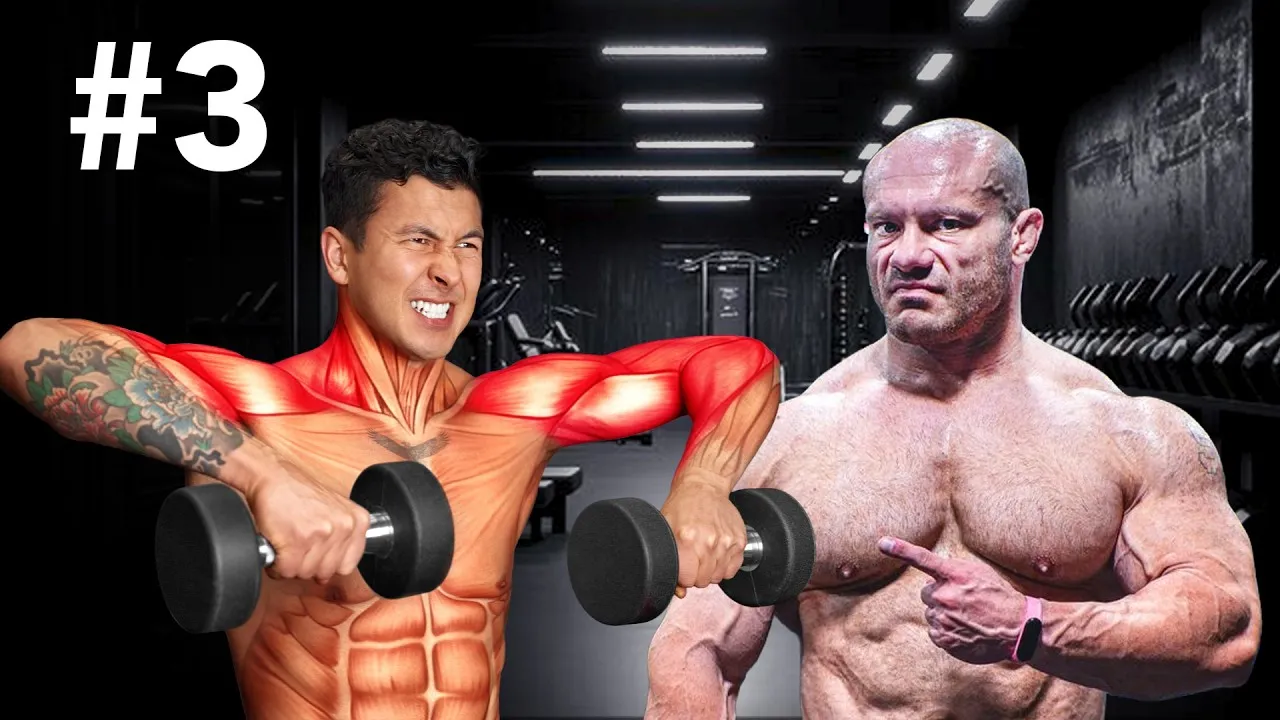
The final exercise in this elite six is the dumbbell upright row, specifically targeting the often-neglected side deltoids, which contribute significantly to shoulder width and a more aesthetically pleasing physique. This exercise also engages the upper traps and, with a closer grip and pulling motion towards the chest, can involve the forearm flexors and biceps.
The key cue is to drive the elbows as high as possible, focusing on the lateral deltoid contraction. For individuals who experience shoulder discomfort with upright rows, standard lateral raises are a viable alternative.
Programming and Practical Application
Dr. Israetel suggests two primary methods for incorporating these six exercises into a training routine. The first involves performing all six exercises in the 5-10 rep range for strength and muscle hypertrophy, ideally twice a week.
The second approach involves performing the same exercises but in a higher rep range (10-15) for increased volume and endurance, also twice a week. This split allows for variation and reduces the risk of overuse injuries.
This streamlined approach emphasizes compound movements that work multiple muscle groups, making it highly efficient for individuals with limited time or those who prefer a focused training plan. Whether you’re a beginner or an experienced lifter, integrating these six exercises can form the foundation of a potent muscle-building program.
Key Health Takeaways
- Focus on compound exercises that target multiple muscle groups simultaneously for maximum efficiency.
- The close-grip incline bench press effectively works the upper chest, front delts, and triceps.
- Underhand pull-ups provide a strong stimulus for the back and biceps.
- The barbell bent-over row and stiff-legged deadlift combo efficiently targets the hamstrings, glutes, lower back, and upper back.
- High-bar squats emphasize quadriceps and adductor development.
- Dumbbell upright rows are excellent for developing side deltoids, traps, and forearm muscles.
- Consistency with these core exercises, performed 2-3 times per week with appropriate rep ranges, can lead to significant muscle growth.
Disclaimer: This article is for informational purposes only and does not constitute medical advice. Always consult with a qualified healthcare professional or certified personal trainer before beginning any new exercise program or making any changes to your existing routine. They can help you tailor a plan that is safe and effective for your individual needs and health status.
Source: The 6 Exercises That Grow Every Muscle (ALL YOU NEED) (YouTube)