Discover the Number of Incomplete Cube Configurations
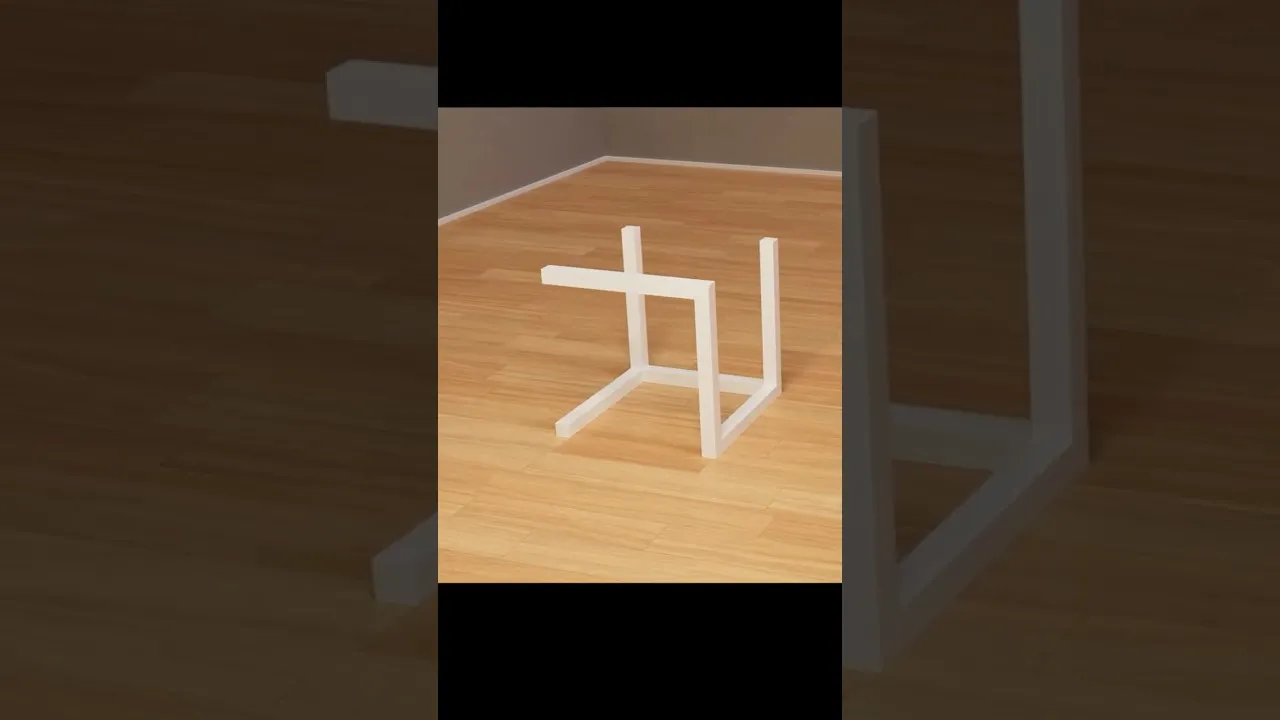
This article explores a fascinating mathematical puzzle: determining the number of distinct ways a cube can be incomplete by removing some of its edges. We’ll consider two incomplete cubes the same if one can be rotated to match the other. This problem, while rooted in pure mathematics, has connections to modern art and can be approached using concepts from group theory, specifically Burnside’s Lemma.
You will learn about:
- The definition of an “incomplete cube” in this context.
- The importance of considering rotational symmetry.
- The underlying mathematical principles that help solve this counting problem.
Understanding the Problem
Imagine a standard cube. A cube has 12 edges.
An “incomplete cube” is formed by removing one or more of these edges, leaving a partial frame. The core challenge is to count how many unique structures can be formed this way, keeping in mind that rotations of the same structure are not considered different.
The Symmetry Challenge
The key difficulty in this problem lies in identifying and accounting for the symmetries of the cube. A cube has numerous rotational symmetries.
For example, rotating a cube by 90 degrees around an axis passing through the centers of two opposite faces results in a configuration that is indistinguishable from the original. If we simply count all possible subsets of edges that can be removed, we will overcount because many of these subsets will represent the same incomplete cube structure after rotation.
Connecting to Group Theory and Burnside’s Lemma
To rigorously solve this type of counting problem with symmetries, mathematicians often employ tools from group theory. Burnside’s Lemma is a powerful theorem that provides a systematic way to count distinct configurations under symmetry operations. In essence, Burnside’s Lemma helps us to average out the configurations that are identical under rotation.
The process involves:
- Identifying all possible rotational symmetries of the cube.
- For each symmetry operation, determining how many of the total possible incomplete cubes remain unchanged (i.e., are fixed) by that operation.
- Applying Burnside’s Lemma formula, which involves summing the number of fixed configurations for each symmetry and dividing by the total number of symmetry operations.
Sol LeWitt’s Artwork Connection
Interestingly, this abstract mathematical puzzle has a real-world connection to art. The artist Sol LeWitt, in 1974, created a work based on similar ideas of incomplete structures and their variations. The process of solving this counting problem can be seen as rediscovering fundamental principles of group theory, mirroring the conceptual approach of artists like LeWitt who explore structure, variation, and perception.
Solving the Puzzle (Conceptual Approach)
While a full derivation using Burnside’s Lemma is beyond a brief article, the conceptual steps to arrive at the answer involve:
- Total Possible Edge Subsets: A cube has 12 edges. For each edge, it can either be present or absent. This gives 212 = 4096 total possibilities if we didn’t consider symmetry.
- Identify Rotational Symmetries: Determine all unique ways a cube can be rotated back onto itself. These include the identity (no rotation), rotations by 90, 180, and 270 degrees about axes through face centers, rotations by 180 degrees about axes through midpoints of opposite edges, and rotations by 120 and 240 degrees about axes through opposite vertices. There are 24 such rotational symmetries.
- Count Fixed Configurations for Each Symmetry: For each of the 24 rotations, count how many of the 4096 potential edge removals result in a configuration that looks identical after the rotation is applied. For example, the identity rotation fixes all 4096 configurations. Other rotations will fix fewer.
- Apply Burnside’s Lemma: Sum the counts from step 3 for all 24 symmetries and divide the total by 24.
Example: The Complete Cube
The complete cube (no edges removed) is one configuration. It is fixed by all 24 rotational symmetries. This is just one of the distinct configurations.
Example: A Single Edge Removed
If you remove a single edge, there are 12 ways to choose which edge to remove. However, due to symmetry, all these 12 possibilities are equivalent.
You can rotate the cube to make any removed edge appear in the ‘same’ position. So, removing a single edge represents only 1 distinct incomplete cube configuration.
Expert Note
The application of Burnside’s Lemma, also known as the Cauchy-Frobenius Lemma, is crucial for problems involving counting distinct objects under a group of symmetry operations. It elegantly handles the overcounting that arises from rotational or other symmetries.
Conclusion
Solving the puzzle of incomplete cubes requires understanding symmetry and applying powerful mathematical tools like Burnside’s Lemma. The number of distinct incomplete cube configurations, considering rotational symmetry, is a result derived from these principles, highlighting the beautiful intersection of mathematics and art.
Source: Incomplete open cubes (YouTube)