Understanding Okinawa’s Complex Relationship with the US Military
This article digs into the complex and often contentious relationship between Okinawa and the United States military presence on the island. We will explore the historical context, the reasons behind the significant US military footprint, the impact on the local Okinawan population, and the ongoing challenges arising from this unique coexistence.
The Unique Setting of Okinawa
Okinawa, a subtropical island in Japan, presents a striking dichotomy. On one hand, it’s a popular tourist destination, drawing visitors with its beautiful beaches, vibrant markets like Makkeshi Public Market, and lush national parks.
Kokusai Street buzzes with activity, and tourists explore the island’s natural beauty or take ferries to nearby islands. The island, with a permanent population of 1.5 million, experiences a significant influx of tourists, with around 700,000 visitors arriving monthly.
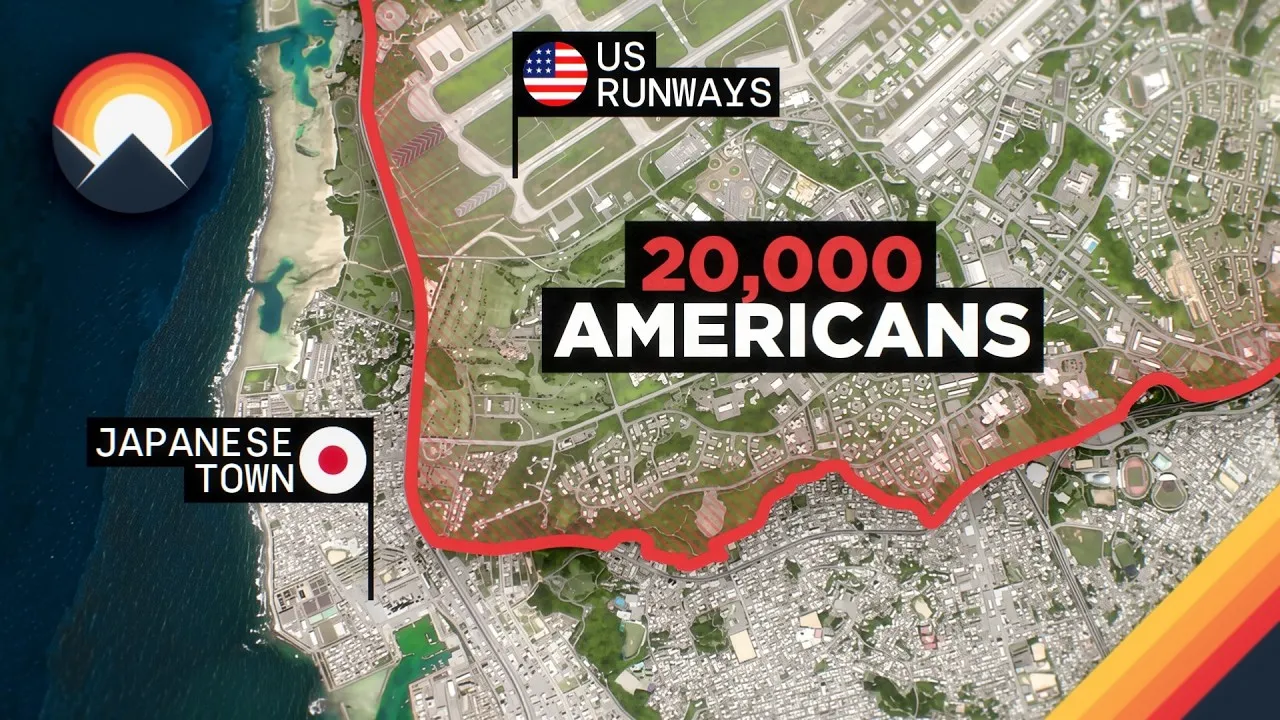
However, Okinawa is also home to a substantial and sprawling US military presence, most notably Kadena Air Base, the largest American air base in the Pacific. This base alone houses around 20,000 personnel and boasts the largest assortment of aircraft and helicopters in the Air Force’s Pacific command. The scale of this military installation, complete with suburban housing, schools, recreational facilities, and even a golf course, creates a distinct American enclave within the densely populated Japanese prefecture.
Historical Roots of the US Military Presence
The Battle of Okinawa and Post-War Occupation:
The significant US military presence traces its origins back to the Battle of Okinawa in 1945, the longest and one of the bloodiest battles in the Pacific theater. US troops landed in April 1945 and immediately captured the Kadena airstrip, using it as a base for assaults.
Following the battle and Japan’s subsequent surrender, the US established operations on the island. During the post-war occupation and the escalating Cold War, Okinawa’s strategic location made it an ideal base for the US to maintain a foothold in the Pacific, particularly with the rise of North Korea and China.
Japan’s Constitution and the Security Treaty:
Japan’s post-war constitution, specifically Article 9, prohibits the nation from maintaining an army and engaging in warfare. This led Japan to rely on the United States for its defense, allowing the US to station military forces within the country.
The treaty governing this relationship also stipulated that Okinawa, if taken over by the US, would be administered solely by the United States, separate from Japanese administration. This arrangement suited both the US and Japan, as Japan was in no position to object to the US expanding its presence on territory that was no longer under its direct administration, and the bases served to protect Japan’s interests.
Okinawan Identity and Historical Grievances
Despite being part of Japan since 1879 and its current administrative status, Okinawans maintain a distinct cultural identity. They are proud of their unique heritage as Ryukyu Islanders, with a history and culture that differs from mainland Japan.
While Japan does not officially recognize Okinawans as a minority, the UN has suggested considering them an indigenous group to better protect their dialect and culture. The island’s proximity to East Asian hubs like Shanghai, Fukuoka, and Taipei has also led to significant Chinese cultural influence alongside Japanese traditions and a more relaxed way of life.
The Battle of Okinawa resulted in immense loss for the Okinawan people, with estimates of civilian and conscripted casualties ranging around 150,000, making them the leading casualty group. During the American occupation, Okinawan interests were often secondary.
The island adopted the US dollar, cars began driving on the right, and as US military focus shifted to Korea and Vietnam, bases expanded, consuming valuable land and forcing the Okinawan population into denser urban development. This led to frustration and a strong push for a return to Japanese rule, which was achieved in 1972.
The Impact of the US Military Presence Today
Even after returning to Japanese rule, the fundamental reliance on the US for defense meant the status quo of the military bases remained largely unchanged. Today, approximately 30,000 active-duty US military members and around 50,000 accompanying American civilians live and work on the island.
These bases are not just military installations; they are self-contained American communities, complete with educational systems (pre-K through 12th grade), recreation centers, shopping facilities, and suburban housing. For those born on these bases, like celebrities Robert Griffin III or Zack Brian, their first citizenship is American.
Challenges and Conflicts Arising from Coexistence
Jurisdiction and Legal Protections:
The Status of Forces Agreement (SOFA) established in 1960 between Japan and the US governs the conduct of US military personnel off-base. While MPs can patrol off-base under specific circumstances and have jurisdiction over US service members, this agreement has been a source of significant tension.
A notable incident involved an American military police officer body-slamming an American veteran on Gate 2 Street, an area frequented by base personnel. This occurred during a crackdown on late-night drinking, a measure implemented in response to domestic violence cases involving service members.
Expert Note: The SOFA grants the US primary jurisdiction for crimes committed on base or while on duty. Even for off-base, off-duty crimes, the US retains the right to consent to or withhold extradition if a service member returns to base. This has led to a significantly lower prosecution rate for crimes committed by US military personnel in Okinawa compared to the national average in Japan (13% vs. 44% from 2001-2018), fueling Okinawan perceptions of unfair treatment and vulnerability.
Environmental Concerns and Accidents:
The sheer density of military installations alongside densely populated urban areas raises concerns about accidents and pollution. The crash of a helicopter from Futenma Air Station into a neighboring university in 2004, while resulting in no fatalities, highlighted the risks. The arrival of the MV22 Osprey and frequent incidents of helicopter parts falling onto school properties have amplified these fears.
The SOFA restricts Japan’s ability to inspect bases for pollution unless a confirmed spill reaches a certain volume. Investigations have revealed significant contamination from spills of diesel fuel, sewage, and banned chemicals like PCBs. Redacted test results in official reports further fuel local distrust regarding the extent and cleanup of environmental damage.
Land Use and Economic Impact:
Approximately one-fifth of Okinawa’s land is occupied by US military facilities. While the island receives compensation for this land, critics argue that the rent is meager compared to the economic potential of the land if used for civilian purposes.
Examples like the former Aasi Meadows Golf Course, now a thriving commercial center with housing, a mall, and a hospital, demonstrate the substantial economic benefits of returning land to local control. A study indicated a 32-fold increase in economic impact when a former US housing project was redeveloped into a commercial and residential area.
The Geopolitical Context and Future Outlook
Okinawa’s strategic location continues to make it vital for US military strategy in the Pacific, particularly given China’s assertive stance towards Taiwan. Kadena Air Base, being the closest US base to Taiwan, is considered a critical asset for projecting American power and potentially acting as a first responder in regional conflicts. Despite local frustrations over noise pollution and environmental concerns, the base’s size and importance are unlikely to diminish without shifts in US military strategy driven by geopolitical developments.
While Japan has a say in land allocation, its national security interests often align with those of the US. Despite acknowledging Okinawan grievances, national security concerns tend to outweigh the island’s plight. Japan is even increasing its own military capabilities on other Okinawan islands, indicating a broader regional defense strategy that prioritizes military presence.
Recent Developments and Local Concerns
Readiness exercises, such as BH261 conducted by the 18th Airwing at Kadena in November 2025, focus on rapid runway repair. While presented as a standard operational test, for Okinawans, it signals Kadena’s potential role not just as a forward operating base but also as a potential target, increasing anxiety about the island’s safety. This underscores a long-standing concern: Okinawa remains subject to the decisions of powerful nations, with its future increasingly intertwined with third-party geopolitical rivalries.
For decades, Okinawans have called for change. While changes are occurring, the direction and benefit for the local population remain uncertain, as the island continues to grapple with the complex legacy and ongoing reality of its significant US military presence.
Source: Okinawa vs the US Military: The Decades-Long Feud (YouTube)