Understanding the Logistics Failures of Hurricane Katrina
Hurricane Katrina, while a powerful storm, was not the most intense to hit the U.S. Mainland. Yet, it resulted in a level of human tragedy far exceeding that of more powerful storms.
This article digs into the operational failures that defined the response to Hurricane Katrina, leading to preventable deaths and highlighting critical weaknesses in disaster management. We will examine the initial stages of the response, FEMA’s coordination role, the challenges faced in evacuations, and the breakdown of communication and supply chains.
The Initial Response and FEMA’s Role
The U.S. Weather agencies effectively tracked Hurricane Katrina from its formation. As the storm intensified and its path became clear, the Federal Emergency Management Agency (FEMA) initiated Level 1 disaster operations at its headquarters and regional offices. All 15 of FEMA’s emergency support functions were activated, with offices operating 24/7.
It’s important to understand that FEMA’s primary role is not to directly provide aid but to coordinate response efforts. It acts as a liaison, identifying the needs of local and state emergency offices and then coordinating with other federal agencies and the private sector to procure necessary resources and expertise.
FEMA’s Mobilized Resources
Even before landfall, FEMA mobilized significant resources. By Saturday, two days before the storm hit, FEMA’s Region 6 office deployed one of its five Mobile Emergency Response Support (MERS) units to Camp Bogard, Louisiana. This unit comprised 275 vehicles carrying:
- Large power generators
- Heating and cooling systems
- Telecommunication systems
- Thousands of gallons of fuel and water
- Water purification systems
Each MERS unit includes a mobile emergency operation vehicle, equipped to serve as a mobile headquarters and communications hub. In addition to the MERS unit, FEMA pre-positioned nearly 550,000 liters of water, 700,000 pounds of ice, and 330,000 meals ready-to-eat at Camp Bogard and other locations. A Federal Coordinating Officer was appointed to coordinate federal response with the Louisiana Office of Emergency Preparedness.
Evacuation Challenges and Communication Breakdowns
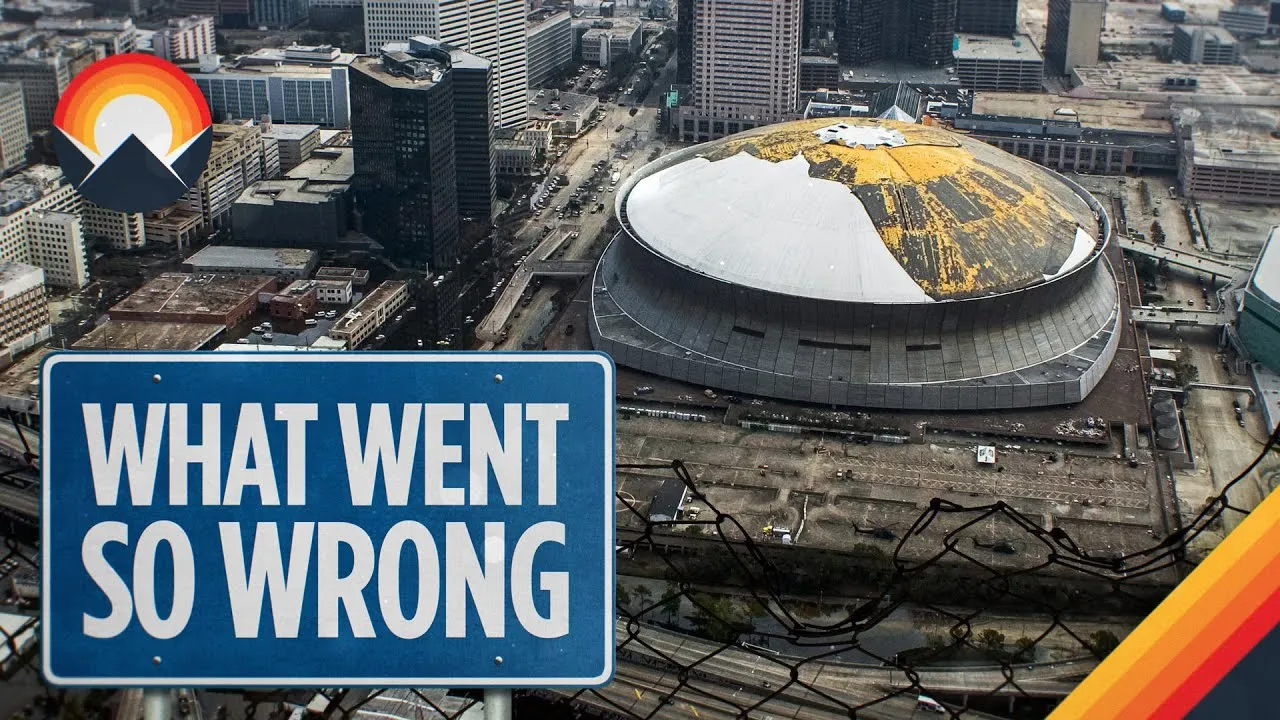
Despite the apparent preparedness, the response began to show limitations as Katrina approached. High winds prevented some food and water supplies from reaching the Superdome, a designated shelter, exacerbating already constrained resources.
Disagreements arose between city officials and FEMA regarding the Superdome’s suitability as a shelter, with engineering reports suggesting it might not withstand a Category 3 hurricane. The American Red Cross also deemed the stadium too dangerous to staff during the storm, opting to provide resources only afterward, partly due to concerns that opening it could discourage evacuation.
Evacuation Strategies and Failures
New Orleans had a specific evacuation plan. The southernmost parishes successfully executed their evacuation orders, with officials managing traffic and conducting door-to-door notifications. However, other parishes, including Lower Orleans, Upper Orleans, and Jefferson parishes, were meant to implement a contraflow traffic strategy, converting highway lanes into one-way exits.
Critically, these evacuations were only ‘recommended,’ and the urgency was not effectively conveyed. By the time Mayor Ray Nagin issued a mandatory evacuation order on Sunday, less than a day before landfall, an estimated 70,000 people remained in the city.
Many of these individuals lacked transportation or were elderly or disabled, unable to evacuate alone. Designated pickup zones were established, but buses only transported vulnerable populations to the Superdome, which was already sheltering approximately 12,000 people by Sunday evening.
The Storm Hits and Infrastructure Fails
On Monday, August 29th, Hurricane Katrina made landfall. While New Orleans was spared the direct eyewall, the subsequent storm surge caused catastrophic flooding. Reports of levee failures began to emerge, later verified by a Coast Guard flyover.
The levees designed to protect the city failed, allowing floodwaters to inundate New Orleans. This flooding critically compromised the city’s emergency operations center (EOC) located at City Hall, destroying its emergency generator. The EOC, along with the mayor’s office, had to relocate to the Hyatt Regency.
However, communication infrastructure was severely damaged. Phone lines and internet access were largely non-functional, preventing city officials from communicating their needs to state and federal agencies.
The Communication and Logistics Crisis
The breakdown in communication created a massive command and control problem. The federalist system of disaster relief relies on local governments requesting resources. However, with downed cell towers, flooded landlines, and no internet, the city could not transmit its needs.
This was compounded by the lack of satellite phone backups and insufficient communication resources prepositioned near the city. FEMA attempted to establish communications by sending MERS vehicles, including ‘Red October,’ into the city.
However, progress was slow due to debris, and rising floodwaters eventually prevented the vehicles from reaching the city core. This meant that for days after landfall, state and federal resources in Baton Rouge waited for direction from New Orleans officials.
Failed Commodity Distribution
The inability to establish stable communication lines led to a collapse in the logistics chain for essential supplies. The system designed for requests to be made by city and parish operations centers, vetted by the state, and executed by FEMA, devolved into a chaotic game of telephone. Commodities were requested by word-of-mouth and radio, haphazardly entered into the state system without vetting, and often arrived at FEMA unverified or incorrect.
This resulted in the wrong goods being delivered, incorrect quantities, or supplies simply not arriving at all. Truck drivers were sent on fruitless journeys, unsure of where to store or distribute goods, highlighting a complete failure in the logistics of getting necessary resources to those in need.
Evacuating Shelters and the Human Cost
Planning for evacuations before a disaster had been a focus, but planning for post-disaster evacuations was inadequate. The Superdome, intended as a shelter for up to 12,000 people, suffered roof damage, compromising power and water. By Tuesday, it offered little shelter, with dwindling supplies and rising floodwaters.
Despite these conditions, people continued to arrive, swelling the Superdome’s population to 23,000 by Wednesday. The facility’s electricity failed, backup generators were insufficient, plumbing and refrigeration systems broke down, and food spoiled. The official mobilization of buses for evacuation didn’t begin until Wednesday morning, with the Department of Transportation tasked with securing buses nationwide.
The initial plan was to move evacuees to the Houston Astrodome, but many city buses were submerged. The search for buses and drivers across the state was fraught with difficulty, further hampered by rumors of violence, which were amplified by degraded communications and potentially biased media reporting.
The Convention Center and Overpasses
Conditions were even worse at the Convention Center, where thousands sought shelter with no supplies, security, or responders. Thousands also gathered on elevated points like the I-10 Cloverleaf and levees, exposed to the elements. The Coast Guard conducted extensive rescue operations, plucking people from rooftops and bringing them to these impromptu safety zones.
However, those rescued often faced days of waiting with meager rations, extreme heat, and the horrific sight of bodies floating by. By Friday, evacuations from the Superdome and Convention Center began in earnest, with thousands transported to the Astrodome and other overflow locations. The last evacuees were cleared from the overpasses a full week after the storm.
Long-Term Impacts and Lessons Learned
The aftermath of Hurricane Katrina revealed deep-seated issues. The physical infrastructure failures were compounded by a breakdown in disaster response logistics. The catastrophic failures in communication and supply chain management exacerbated the tragedy, disproportionately affecting the city’s poor and Black populations.
The trauma of the event and the failures in response led to the displacement of tens of thousands, fundamentally changing the city’s demographic and social fabric. While New Orleans has since rebuilt and improved its infrastructure and emergency preparedness, the lessons learned from the failed logistics of Hurricane Katrina serve as a clear reminder of the critical importance of robust communication, effective coordination, and well-planned supply chains in disaster response.
Source: The Failed Logistics of Hurricane Katrina (YouTube)