How to Discover the Science Behind Impact Flashes
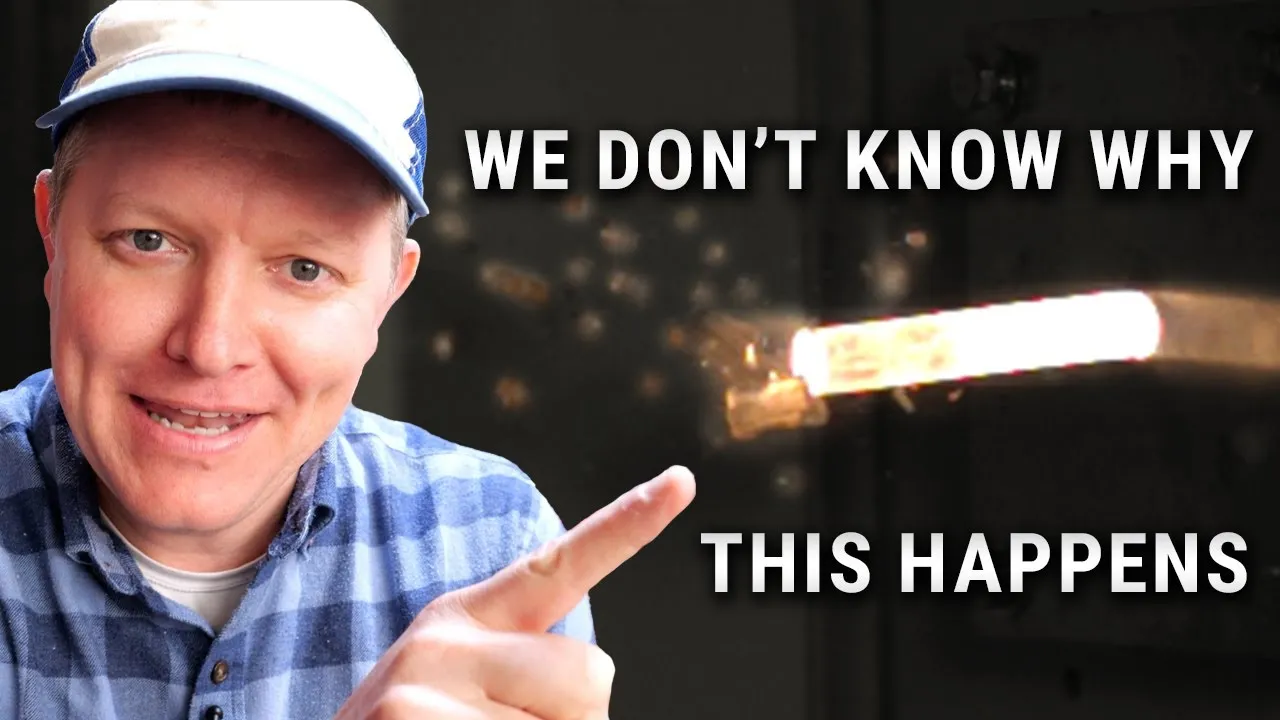
Have you ever watched a video of two objects colliding at high speed and noticed a brief flash of light at the moment of impact? This phenomenon, often appearing as a quick spark or even a small flame, has puzzled observers for years.
While it might seem like magic, these impact flashes are a result of fascinating scientific principles. This article will guide you through the experiments and explanations that help demystify these brief, brilliant moments.
What You Will Learn
In this article, we will explore:
- The visual evidence of impact flashes across various materials and scenarios.
- The scientific concepts that attempt to explain these flashes, including triboluminescence, fractoluminescence, and mechanoluminescence.
- The setup and results of experiments designed to investigate impact flashes, particularly the Taylor impact test.
- The role of gas compression and adiabatic heating in generating light during impacts.
- How these phenomena can be observed and studied using high-speed cameras.
Prerequisites
No specific scientific background is required to understand this article. However, a basic understanding of physics concepts like pressure, temperature, and material properties can enhance comprehension. Familiarity with scientific terminology will also be helpful.
Understanding the Phenomenon: Early Observations
The mystery of impact flashes has been observed in a wide range of situations:
- Baseball vs. Glove: In a high-speed recording of a baseball hitting a leather glove, a distinct flash of light was observed at the point of impact. This was unexpected, as one might assume simple friction, but the visual suggested something more akin to striking a match.
- Baseball vs. Plastic Bucket: Similar flashes were seen when a baseball impacted a plastic bucket filled with sprinkles, indicating the phenomenon isn’t limited to similar materials.
- Bullet vs. Prince Rupert’s Drop: The collision of a metal bullet with a Prince Rupert’s drop (a form of glass) also produced light.
- Bullet vs. Bullet: When two lead bullets impacted, a significant flash and explosion were observed.
- Lifesavers vs. Hammer: Crushing Wintergreen Lifesavers with a hammer generated sparks, a blue light that seemed to emanate from the fracture itself.
- Mayonnaise Gallon vs. Projectile: Firing a projectile into a gallon of mayonnaise resulted in a fiery explosion, a dramatic demonstration of rapid chemical reaction and energy release.
- Glass Spheres Collision: Two large glass spheres colliding at high speed produced a notable flash of light, captured by ultra-high-speed cameras.
- Bullet Through Bullet: An attempt to shoot one bullet through a hollowed-out bullet resulted in a large flash of light upon impact, with everything melding together.
Exploring Potential Explanations
Several scientific terms and phenomena have been proposed to explain these flashes:
- Triboluminescence: This occurs when certain crystalline materials are fractured, scratched, or stressed, producing light. The blue flashes observed when crushing Lifesavers, which are crystalline, are a prime example. The light seemed to originate from the fracture itself, and even on the side opposite the impact where the material was ripping apart.
- Fractoluminescence: Similar to triboluminescence, this specifically refers to light produced during the fracturing of materials.
- Mechanoluminescence: A broader term for light produced by mechanical action on a solid. Researchers have used this to explain flashes when plastics are impacted, suggesting the breaking of polymer bonds creates light.
- Friction: While a simple explanation, the intense friction generated at high impact speeds could potentially create enough heat to produce light.
- Electrostatic Discharge: The rapid movement of dissimilar materials could lead to a buildup of static electricity, resulting in a small electrical discharge or spark.
- Kopp–Etchells Effect: This phenomenon involves flashes of light caused by sand particles impacting helicopter rotors at high speeds.
Glass is an amorphous solid, not crystalline, which raises questions about whether triboluminescence is the sole explanation for flashes involving glass impacts.
The Taylor Impact Test: A Controlled Experiment
To investigate these phenomena more scientifically, the Taylor impact test was employed. This method, developed by G.I.
Taylor, uses mathematical models to describe the strength of materials upon impact. It involves firing a cylinder at a flat plate at high velocity and observing the resulting deformation (mushrooming).
Setting Up the Taylor Impact Test
- The Apparatus: A 12-gauge shotgun was bolted to a steel table. A custom-built box was designed to contain the experiment and allow for observation.
- The Projectile: Cylinders made of various materials, including polycarbonate and PETG plastics, were used. These were loaded into a sabot, which fits the barrel diameter and strips away as the projectile is fired.
- The Target: A flat plate, typically stainless steel, served as the impact surface.
- High-Speed Imaging: Ultra-high-speed cameras (like the LC 320s and V2511) were crucial for capturing the fleeting moments of impact at hundreds of thousands or even millions of frames per second.
Conducting the Experiments and Observing Results
- Polycarbonate Impact: When a polycarbonate rod was fired at high velocity into the steel plate, a dramatic flash of bright light occurred at impact. This flash appeared to have a directional component, almost like a small puff of fire emanating from the side of the impact surface.
- The “Booger Theory” (Directionality): The directional nature of the flash led to a hypothesis that it might be related to the obliquity (slight angle) of the impact. If the cylinder hits at a slight angle, it could trap and expel gas from between the cylinder and the plate in a specific direction, creating a visible effect. This was likened to a “little booger of clay” being squished out to one side.
- Mechanoluminescence and Gas Compression: Researchers have proposed that this flash in plastics could be mechanoluminescence due to the breaking of polymer bonds. However, the directional nature and the observed puff of fire suggested another possibility: the rapid compression of gases trapped between the impactor and the target.
- Adiabatic Compression and Fire Syringe: To test the gas compression theory, a fire syringe was used. This device rapidly compresses a gas (like air or a mixture with oxygen) in a sealed cylinder. According to the ideal gas law, rapid compression (adiabatic compression, where heat cannot escape) significantly increases temperature. When cotton fluff was placed inside, it ignited due to the heat generated by compressing air. Using pure oxygen resulted in a more intense ignition.
- Argon and Oxygen: Experiments were conducted with argon and oxygen mixtures. While it was difficult to definitively measure, there was a perception that the argon-oxygen mix produced a brighter flash, though the data was inconclusive.
- PETG and Wood Impacts: Firing PETG and then wood projectiles against the steel plate also produced flashes. Even with a slower PETG impact and a wood projectile that shattered, a directional flash was observed, reinforcing the idea that gas compression might be a significant factor. The wood impact, despite unburned powder, still showed a fireball, suggesting that the impact itself, even with splintering, could generate sufficient heat.
The Role of Gas and Shock Ignition
The consistent observation of directional flashes, particularly with plastics, and the success of the fire syringe experiment strongly suggest that the compression and subsequent heating of gases play a critical role in generating these impact flashes. The theory is that as the projectile impacts, it rapidly compresses any trapped air or other gases between itself and the target surface. This adiabatic compression can raise the gas temperature to its ignition point, causing a brief flash.
The concept of shock ignition of gases is being considered. When gases are forced to move at extremely high speeds, especially at an angle during impact, they can create shock waves that lead to ignition.
Conclusion: A Complex Phenomenon
The flashes observed during high-speed impacts are not caused by a single phenomenon but likely a combination of factors depending on the materials involved:
- Triboluminescence/Fractoluminescence: For crystalline materials like Lifesavers, the breaking of their internal structure is a primary source of light.
- Mechanoluminescence: For polymers, the breaking of molecular bonds under stress contributes to light emission.
- Adiabatic Gas Compression and Shock Ignition: In many cases, especially with non-crystalline materials or when gases are trapped during impact, the rapid compression and heating of gases appear to be the dominant cause of the visible flash. This effect can be so pronounced that it resembles a small explosion or fire.
By employing high-speed cameras and controlled experiments like the Taylor impact test, scientists are continually refining their understanding of these captivating, short-lived displays of light that occur at the boundary of extreme physics.
Source: The Unsolved Mystery of Impact Flashes – Smarter Every Day 307 (YouTube)