Master Space Photography: Tips from ISS Astronauts
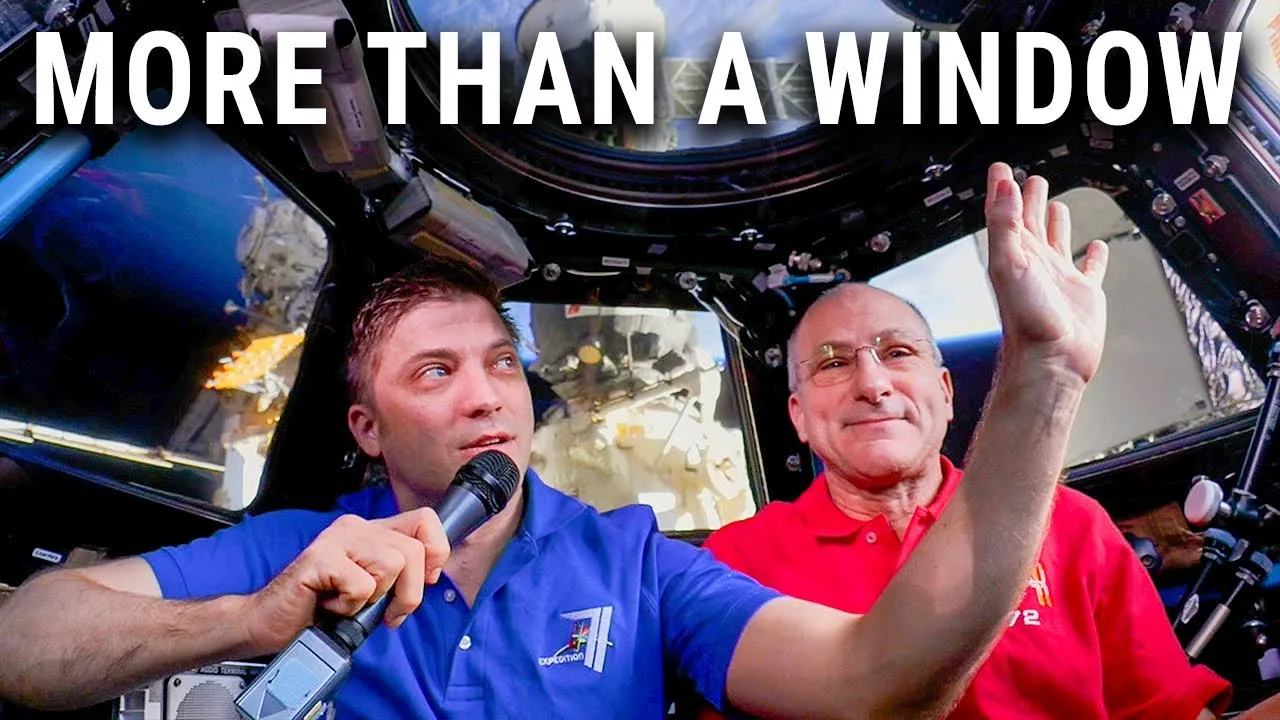
Ever wondered what it takes to capture stunning photographs from the International Space Station (ISS)? In this article, we’ll dive into the techniques and insights shared by astronauts Don Pettit and Matthew Dominick during a unique interview from the ISS Cupola. Learn how they manage challenging lighting, utilize specialized equipment, and overcome the unique constraints of photographing in microgravity.
Overview of What You’ll Learn:
- How astronauts use neutral density filters to balance extreme lighting conditions in the Cupola.
- The types of lenses and camera gear favored for astrophotography from the ISS.
- Techniques for photographing the Earth from orbit, including managing motion blur.
- Strategies for capturing celestial events and phenomena like sprites.
- The challenges and rewards of photography in the cramped environment of the Cupola.
Prerequisites:
No specific technical knowledge is required. This guide is for anyone interested in photography, space exploration, or the unique challenges of capturing images from orbit.
Step-by-Step Guide to Space Photography Insights:
1. Understanding and Managing Extreme Lighting
Photographing from the ISS, especially from the Cupola, presents extreme lighting challenges. The contrast between the bright Earth and the darkness of space can easily blow out camera sensors. Astronauts employ several strategies to manage this:
- Neutral Density (ND) Filters: Astronauts like Don Pettit have adapted techniques used in Hollywood filmmaking. They use thin, neutral density filters applied to the Cupola windows. These filters reduce the intensity of incoming light, allowing for balanced video and photography. Don specifically mentions using four-stop ND filters, which reduce light intensity by a factor of 16 (4 EV). This helps prevent the “whites” (brightest parts of the image, like clouds) from being overexposed, preserving detail.
- Balancing Exposure: The goal is to avoid blowing out the whites, as this leads to a loss of detail. While some detail loss in the shadows (darkest areas) is more acceptable, preserving detail in the brightest regions is crucial for aesthetically pleasing images. Astronauts aim to balance the exposure across the entire range of lighting.
- Camera Settings: For still photography, a flash can be used to balance internal lighting with the bright exterior. However, for video, ND filters are essential. When shooting, astronauts are mindful of their camera’s histogram to ensure they aren’t saturating the sensor.
Expert Note: Overexposing the whites means losing all detail, making the image appear as pure white. Preserving some detail in the clouds, even if the shadows are less defined, generally results in a more visually appealing photograph.
2. Essential Camera Gear and Lenses
The ISS is equipped with sophisticated cameras, but often astronauts use their personal or mission-provided gear. Key equipment mentioned includes:
- Nikon Z9 Cameras: These are predominantly used for still photography.
- Wide-Angle and Specialized Lenses:
- 24mm f/1.4 Lens: Used for daytime imagery, though it’s described as fairly slow for some applications.
- 50mm f/1.2 Lens: A favorite for nighttime imagery due to its wide aperture, acting as a “giant light bucket” to capture maximum light.
- Ultra-wide and Fisheye Lenses: Including 8mm and 16mm fisheye lenses for the Z9, providing an extremely wide field of view.
- Wide-Angle Adapter: Used on the video camera to increase its field of view, though not equivalent to a standard mirrorless camera’s ultra-wide lens.
- Camcorder (Sony XF705): This camera is hardwired into the space station for the downlink feed, often used with a wide-angle attachment that can be spun off to change perspective in real-time.
- Remote Shutter Releases: Essential for controlling the camera without introducing shake, especially during long exposures or when capturing rapid sequences. Some have a lock feature for continuous shooting.
Tip: The f/1.2 aperture of the 50mm lens is crucial for capturing detail in low-light conditions, such as photographing the Earth at night or celestial objects.
3. Photographing the Earth from Orbit
Capturing the Earth’s beauty from space requires adapting photography techniques to the unique conditions of orbit:
- Managing Motion Blur: The ISS travels at approximately 17,500 miles per hour. This high orbital speed, combined with Earth’s rotation, can cause significant motion blur. To counteract this:
- Fast Shutter Speeds: For daytime shots, very fast shutter speeds (e.g., 1/32,000th of a second for a hurricane shot) are necessary.
- Hand Tracking: During nighttime photography, astronauts may manually track the Earth’s movement through the viewfinder to minimize blur. This involves keeping the camera’s crosshairs centered on a specific point on Earth.
- Nighttime Cityscapes: To capture city lights without streaks, shutter speeds typically range from 1/200th to 1/300th of a second.
- Orbital Speed Impact: The high speed means that even relatively fast shutter speeds (like 1/4 second with a 50mm lens) can cause noticeable streaks in stars or city lights due to the combined motion of the station and Earth’s rotation.
Warning: Be aware that orbital speed significantly impacts exposure settings compared to terrestrial photography. What might be a standard exposure on Earth could result in extreme motion blur in orbit.
4. Capturing Transient Luminous Events (TLEs) and Celestial Phenomena
Astronauts have a unique vantage point for observing and photographing atmospheric phenomena like Sprites:
- Sprite Hunting: Astronauts like Matthew Dominick and Don Pettit actively search for TLEs. They use weather forecasts to identify thunderstorms and target areas just after sunset when thunderstorms are most energetic.
- Nadir View: To capture a “nadir view” (directly overhead), they aim cameras straight down. They use telephoto lenses (around 200mm) for this purpose.
- High Burst Rate Photography: To increase the chances of capturing fleeting events like Sprites, they use remote shutters with a lock feature to take thousands of photos in rapid succession (e.g., 2,000-3,000 images with a 1/50th or 1/60th second exposure, with only 5 milliseconds between shots).
- Star Trails: For intentional star trail photography, long exposures (e.g., 30 seconds) are used, often with repetitive exposures stacked in post-processing (like Photoshop). For sharp, pinpoint stars with a 50mm lens, exposures typically need to be shorter than about a quarter of a second.
Tip: Identifying thunderstorms and targeting them during their peak energy phase after sunset is key to observing and photographing TLEs.
5. Photography in the Cupola: Space and Technique
The Cupola is an iconic observation module, but it’s also a very confined space:
- Cramped Conditions: The Cupola is less than 6 feet in diameter. Astronauts often have to work around each other, sometimes with up to six people present for special events. This requires careful maneuvering and spatial awareness.
- Stabilization Techniques:
- Using Handrails and Foot Holds: Astronauts utilize small handrails and footholds built into the walls to brace themselves while photographing.
- Prehensile Feet: With practice, astronauts develop an intuitive ability for their feet to naturally grip surfaces, aiding stability even when their hands are occupied.
- Body Awareness: They rely on a sense of their body’s length and position to avoid touching the window while maintaining a stable shooting platform.
- Camera Control: The need for stability means astronauts often use remote controls or carefully position themselves. They might have one person stabilize the camera while another adjusts settings, or use a mount.
- Capturing the Environment: By using wide-angle lenses and sometimes allowing the camera to float or be maneuvered remotely, they can give viewers a sense of the weightlessness and the unique perspective from within the Cupola.
Expert Insight: The ability to use one’s feet for stabilization, a skill that develops with time in space, is crucial for maintaining composure and sharpness when photographing in microgravity.
6. Understanding the ISS Environment and Equipment
The ISS is a complex environment where everyday objects and activities take on new dimensions:
- Mechanical Operation: Even in space, opening windows or shutters often involves purely mechanical devices with seals that interface directly with the vacuum of space.
- Spacecraft Tours: Astronauts can provide “tours” of the exterior using robotic arms to point out docked spacecraft like SpaceX’s Dragon and Cygnus, as well as the Soyuz, which is a crew transport vehicle.
- Onboard Activities: Daily life includes tasks like operating exercise equipment (e.g., ARED for weightlifting), which involves pulling against a vacuum, further highlighting the unique physics of the station.
- Cargo and Supplies: Spacecraft like Cygnus bring essential cargo, including food, scientific equipment, and even treats like ice cream, demonstrating the logistical support required for long-duration missions.
Did You Know? The Cupola is so small that an astronaut can often reach across its entire diameter by stretching their arms out. This emphasizes the need for efficient use of space and careful maneuvering.
Conclusion
Photographing from the ISS is a remarkable feat that combines technical skill, specialized equipment, and an intimate understanding of the space environment. The insights from astronauts Don Pettit and Matthew Dominick reveal the dedication and ingenuity required to capture the breathtaking views from orbit. By managing extreme lighting with ND filters, utilizing fast lenses, and adapting to the challenges of microgravity, astronauts continue to share the wonders of space with the world.
Source: Live Interview from the ISS Cupola – Smarter Every Day 303 (YouTube)