AI in Warfare: Claude and OpenAI Forge Military Partnerships
The integration of advanced artificial intelligence into military operations is no longer theoretical, but a rapidly unfolding reality. Recent developments reveal that AI models like Anthropic’s Claude and OpenAI’s technology are being utilized in sensitive, high-stakes military contexts, sparking debate about AI’s role in national security and ethical considerations.
Claude’s Role in US-Israel Military Operations Confirmed
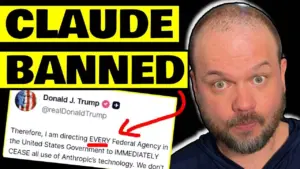
Reports from multiple reputable outlets, including the Wall Street Journal, Axios, and The Guardian, have confirmed that U.S. Central Command (Centcom) utilized Anthropic’s Claude AI during joint operations with Israel against Iran. Codenamed “Roaring Lion” by Israel and “Operation Epic Fury” by the United States, these strikes saw Claude employed for critical tasks such as intelligence assessments, target identification, and the simulation of battlefield scenarios. This deployment occurred despite a previous, widely reported stance from former President Trump that had seemingly restricted the use of Anthropic’s technology within the federal government.
Centcom declined to comment on the specific systems used, but the consistent reporting from numerous sources leaves little doubt about Claude’s involvement. The extent to which Claude is embedded within military networks suggests that its removal would be a complex and lengthy undertaking.
Anthropic’s Stance on AI Use: Red Lines and Refinements
Anthropic, the creator of Claude, has clarified its position on the use of its AI models. The company states it supports all lawful military and security applications with two specific exceptions, or “red lines.” Firstly, Anthropic asserts that current AI models are not yet reliable enough for autonomous weapons systems due to the risks of friendly fire and civilian casualties. This point has seen a refinement in messaging, evolving from a blanket prohibition on autonomous weapons to a more nuanced statement about current reliability limitations.
The second red line prohibits the use of their AI for mass domestic surveillance, which Anthropic argues violates fundamental rights. The company’s CEO, Dario Amodei, has emphasized that new AI capabilities necessitate an update in legal frameworks, particularly concerning surveillance.
He points out that the sheer volume of data individuals generate daily—through cameras, smart devices, and phones—was previously unmanageable. However, AI can now process this data to create detailed profiles, track locations 24/7, and potentially predict political preferences or beliefs, raising significant privacy concerns.
OpenAI Secures Department of War Contract Amidst Debate
In parallel, OpenAI has reportedly signed a contract with the U.S. Department of War for the use of its AI technology. This development comes as OpenAI CEO Sam Altman has engaged in public discussions, including an Ask Me Anything (AMA) session on X (formerly Twitter), addressing the complexities of AI deployment and government partnerships.
Altman has voiced strong opinions regarding the control and deployment of AI systems. He argues that private companies should not dictate terms to the U.S. Government, a sentiment that aligns with the Pentagon’s perspective. However, he also champions the need for AI developers to have a say, particularly concerning ethical boundaries and safety.
Altman believes that AI’s potential for profound global impact, including existential risks, necessitates careful consideration and responsible development. He specifically highlighted concerns about AI enabling dystopian surveillance states (P1984 scenarios) as well as apocalyptic outcomes (P-doom).
Altman Defends Anthropic, Criticizes Government Actions
Sam Altman has been a vocal supporter of Anthropic amidst its recent challenges with the U.S. Government. He has publicly stated that OpenAI does not believe Anthropic should be designated as a supply chain risk, a move he considers potentially devastating and an overreach of power.
Altman suggested that if Anthropic had been offered the same terms as OpenAI for its Department of War contract, they likely would have accepted. He views the potential designation of Anthropic as a supply chain risk as a “boneheaded move” and a crossing of a line, regardless of any disagreements between the Pentagon and Anthropic.
Altman has also advocated for the government to consider extending the same contract terms to other AI labs, emphasizing a desire for de-escalation and a collaborative approach. He acknowledges competitive feelings towards Anthropic but stresses that the development of safe superintelligence and the widespread sharing of its benefits are paramount. Altman’s public stance suggests a genuine effort to mediate and support a fellow AI leader, even a competitor, in a difficult situation.
Why This Matters: The Shifting Landscape of AI and National Security
The involvement of leading AI models in military operations signifies a critical juncture. For Anthropic, the confirmation of Claude’s use in lethal operations, coupled with the ongoing dispute over government contracts, highlights the complex balancing act between technological advancement and ethical constraints. The company’s stated red lines, particularly regarding autonomous weapons and mass surveillance, are becoming increasingly relevant as AI capabilities grow.
For OpenAI, securing a contract with the Department of War indicates a strong partnership with the U.S. Military. Sam Altman’s public commentary highlights the broader debate about governance, control, and the potential for AI to either empower or endanger society. His defense of Anthropic suggests a recognition that the health and diversity of the AI ecosystem are crucial for national and global interests.
The situation also raises questions about potential government overreach and the implications of designating a major AI player like Anthropic as a supply chain risk. Such a designation could have severe financial and operational consequences, potentially stifling innovation and impacting the U.S.’s competitive edge in AI. The debate centers on whether private companies should have the power to dictate terms to the government or if elected officials should hold the ultimate authority, with AI developers providing input on safety and ethics.
As AI continues its rapid integration into critical sectors, the interplay between technological potential, national security imperatives, and ethical governance will remain a central theme in the evolution of artificial intelligence.
Source: Claude kill count going up (YouTube)