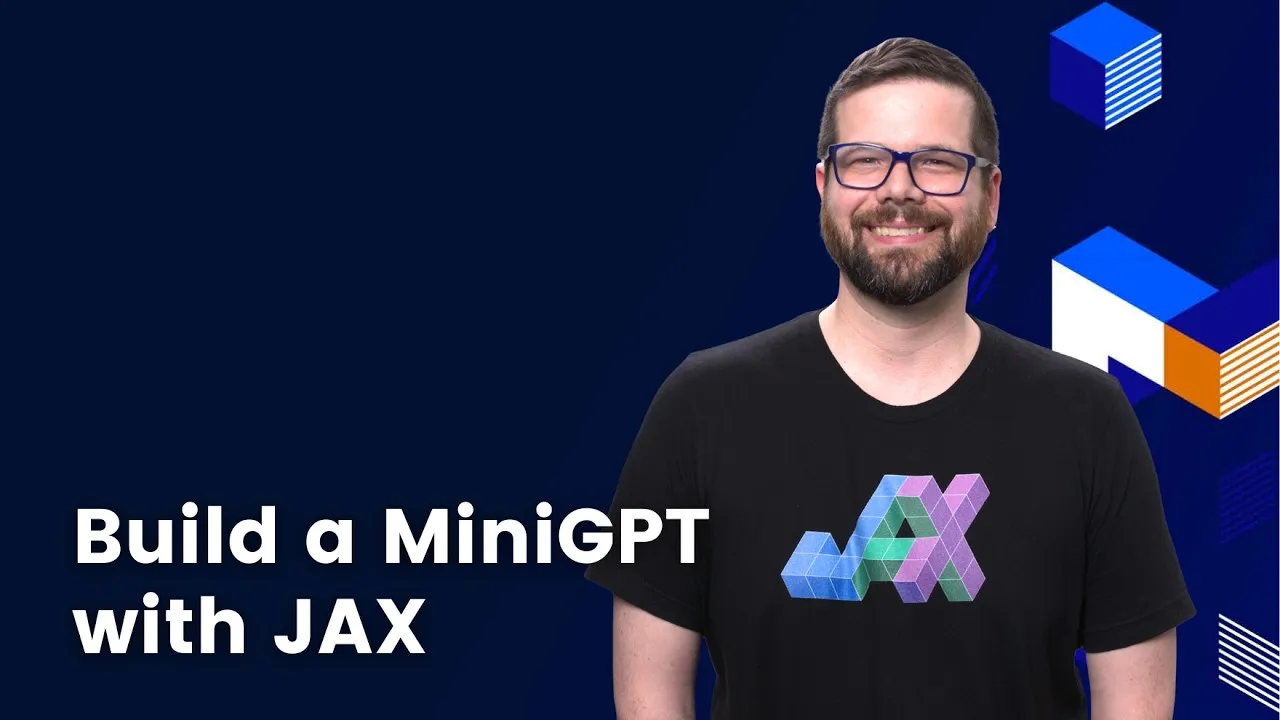
New Course Demystifies LLM Training with Google’s JAX
A new online course, developed in partnership with Google and artist Rashadant, is set to democratize the complex process of building and training large language models (LLMs). Titled “Build and Train an LLM with JAX,” the program offers hands-on experience in creating a small, 20-million-parameter LLM from the ground up using JAX, Google’s powerful numerical computing library.
Understanding JAX: The Foundation for Modern AI
JAX is presented as a core component of Google’s AI development ecosystem. While it bears resemblance to NumPy, a widely used library for numerical operations in Python, JAX is specifically optimized for the demands of machine learning, particularly LLM training. Its key advantages include automatic gradient computation, which is essential for training neural networks, and exceptional speed, enabling faster iteration and development.
The course highlights JAX’s capability to compile and distribute computations across numerous CPUs, GPUs, or TPUs (Tensor Processing Units). This distributed computing power is crucial for training the massive models that underpin today’s advanced AI applications. Indeed, Google’s prominent models such as Nano Banana, Vio, and Gemini are all built and trained using JAX, underscoring its significance in the industry.
Inside the LLM Training Course
The curriculum focuses on practical application, guiding learners through the construction of a GPT-2 style LLM. The process is broken down into several key stages:
- Model Architecture Design: Participants will learn to define the structure of the LLM.
- Data Preparation: Utilizing JAX’s data loading tools, learners will prepare a dataset of stories for model training.
- Model Training: The course covers the process of training the LLM and saving intermediate states (checkpoints).
- Interactive Deployment: Finally, students will load a pre-trained model and engage with it through a graphical interface, simulating a conversational AI experience.
Beyond the core LLM development, the course also digs into the broader JAX ecosystem. This ecosystem comprises a suite of libraries and tools designed to facilitate the training of LLMs at scale, potentially across thousands of accelerators like TPUs and GPUs. The flexibility and scalability offered by JAX allow for rapid experimentation with model architectures and efficient scaling for larger projects.
Why This Matters: Democratizing AI Development
The development of large language models has traditionally been the domain of well-resourced research labs and tech giants due to the immense computational power and specialized knowledge required. Courses like “Build and Train an LLM with JAX” aim to lower this barrier to entry.
By providing a structured, hands-on learning path, Google and its partners are empowering a wider range of developers, researchers, and enthusiasts to understand and participate in the creation of cutting-edge AI. Learning the core concepts behind LLM development, even with a smaller model, offers invaluable insights into the techniques used for state-of-the-art systems. This could foster innovation in various fields as more individuals gain the skills to build and customize AI models for specific applications, from creative writing tools to specialized chatbots and data analysis assistants.
Availability and Future Implications
The course, as described in the transcript, is available for learners to enroll in. While specific pricing details were not disclosed, the focus is on providing the knowledge and tools to build and train a 20-million-parameter model, a significant step for educational purposes.
The underlying JAX library is open-source, making it accessible for ongoing development and experimentation. This initiative by Google signifies a continued commitment to advancing AI accessibility and fostering a more collaborative AI development community.
Source: Build and Train an LLM with JAX (YouTube)