Nvidia Ignites Autonomous Vehicle Race with Open-Source AI
The landscape of self-driving car technology is set for a seismic shift following Nvidia CEO Jensen Huang’s announcement of a groundbreaking, open-source autonomous driving framework. This move is poised to democratize access to advanced AI for vehicle autonomy, potentially accelerating the widespread adoption of self-driving vehicles globally and challenging the dominance of established players like Waymo and Tesla.
Nvidia’s “Drive” Platform: A Major shift
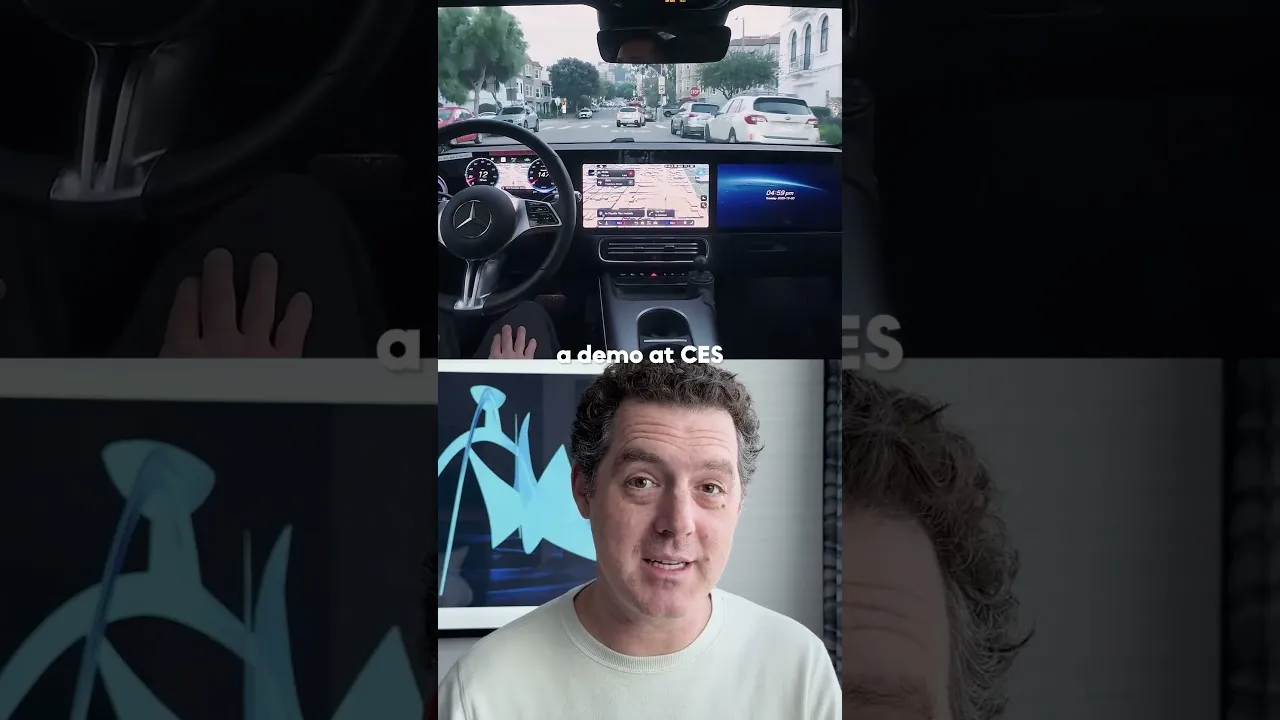
Nvidia, a titan in graphics processing units (GPUs) and AI hardware, has launched its comprehensive, full-stack autonomous driving framework, making it freely available to developers and automakers. This initiative aims to significantly lower the barrier to entry for creating and deploying self-driving capabilities. Initially, Nvidia is collaborating with automotive giant Mercedes-Benz, showcasing a compelling demonstration at CES of a Mercedes vehicle navigating the complex urban environment of San Francisco with remarkable proficiency.
Simulating the World: Nvidia’s Data Advantage
A key challenge in developing robust autonomous driving systems has been the acquisition of vast amounts of real-world driving data. Companies like Waymo and Tesla have leveraged millions of miles of road data to train their sophisticated AI models. However, Nvidia, by its nature, does not collect this type of data directly.
The solution presented by Nvidia is a powerful simulation engine. This engine generates realistic driving scenarios, encompassing everything from routine commutes in clear weather to challenging conditions like heavy rain and snow, and crucially, rare but critical “edge cases” such as impending accidents.
By creating a virtually limitless supply of diverse and challenging driving data through simulation, Nvidia empowers developers to train and refine their autonomous driving models without the prohibitive costs and logistical hurdles associated with real-world data collection. This simulated data is critical for ensuring the safety and reliability of AI driving systems, especially in handling unpredictable situations that are infrequent in real-world driving but essential to master.
Open Source: Fostering Innovation
The decision to make the entire framework open source is a strategic move designed to foster widespread innovation. By providing the tools and infrastructure at no cost, Nvidia encourages a broader community of developers, researchers, and automakers to contribute, iterate, and build upon the platform.
This collaborative approach has the potential to accelerate advancements in AI for autonomous driving at an unprecedented pace. It allows smaller companies and startups, who may not have the resources of industry giants, to develop and deploy sophisticated self-driving solutions.
The “Full Stack” Approach
Nvidia’s “full stack” offering signifies that the framework covers all essential components required for autonomous driving. This likely includes everything from sensor processing and perception (understanding the environment) to prediction (anticipating the behavior of other road users) and planning (deciding the vehicle’s next actions), all powered by Nvidia’s advanced AI hardware and software. This integrated approach simplifies the development process for automakers, providing a cohesive and optimized solution.
Why This Matters: Democratizing Autonomy
The implications of Nvidia’s open-source autonomous driving platform are profound. Historically, developing the AI necessary for Level 4 or Level 5 autonomy has been an incredibly resource-intensive endeavor, largely confined to a few well-funded companies. By removing the cost barrier and providing a robust, simulated data pipeline, Nvidia is democratizing access to this transformative technology.
This could lead to several positive outcomes:
- Increased Competition: More companies entering the autonomous vehicle space will drive innovation and potentially lower costs for consumers.
- Faster Development Cycles: The open-source nature and powerful simulation tools will likely speed up the R&D process.
- Enhanced Safety: Broader testing and validation through simulation, especially of edge cases, can contribute to safer autonomous systems.
- New Mobility Services: The proliferation of autonomous technology could enable new forms of ride-sharing, delivery services, and personal transportation.
Looking Ahead
While the initial partnership with Mercedes-Benz highlights the platform’s immediate potential, Nvidia’s open-source strategy suggests a vision for a future where autonomous vehicles are not a novelty but a ubiquitous part of our transportation infrastructure. The success of this initiative will depend on community adoption, the continued refinement of the simulation tools, and the ability of various partners to integrate the framework into their vehicle platforms effectively. However, the announcement undeniably marks a key moment, potentially ushering in a new era of mobility.
Source: self-driving cars EVERYWHERE (YouTube)